 Retro Replay Retro Gaming History, Reviews & Emulation
The disc was homemade. The console was supposed to be finished. Then an NES menu appeared on the television.
You bought a Dreamcast for Sega’s games. Finding an NES menu on it felt like discovering an extra room in a house you thought you knew. There were Nintendo games on your television, running through a Sega controller. Before long, owners were trying Super Nintendo games, handheld favorites and computer adventures that had never belonged on the machine’s retail shelf.
At first, all this happened on the Dreamcast under the television. Later, its own games would turn up on PCs and phones, while arcade players found opponents online. Getting there took years of small victories and thoroughly annoying failures. It took programmers willing to try again, people answering strangers’ questions, and websites that gave the whole unruly crowd somewhere to gather. Sometimes they helped one another. Sometimes they fell out spectacularly.


2000: The way in was a music disc
Sega’s ordinary Dreamcast games used GD-ROMs, its proprietary disc format. But the machine could also load code through MIL-CD, a format devised for music discs with extra audiovisual material. A feature built to dress up an album helped open the console to software Sega had never commissioned. The community’s MIL-CD history traces that unexpected entrance.
Marcus Comstedt reverse-engineered an Action Replay CDX disc, built a library using GNU tools, and published a Hello World demonstration in June 2000. There was no spectacular game to show off. The breakthrough was that someone outside Sega’s licensed development system could make the console run his own code.

Marcus Comstedt Opened a route into Dreamcast development and worked on DreamSNES and ScummVM.
For owners of compatible machines, a CD-R became a ticket into that world. Preparing it could be maddening, but the experiment did not require soldering anything inside the console. Some later hardware revisions lacked the necessary support; the compatibility record remains useful when choosing a machine today.
A reindeer at the door
For many owners, the opening into unofficial software had a much stranger mascot than Sonic. Utopia’s boot disc displayed a rotating reindeer while the player prepared to swap discs. It arrived in June 2000 alongside the emerging trade in copied Dreamcast games. The March 2005 Retro Revival account, preserved by Neperos, remembers that brief, peculiar ritual.
The reindeer was a peculiar doorman, but there was a real opening behind it. Utopia used the console’s alternate boot route; an ordinary CD had not magically become a GD-ROM. Sega’s special discs were still there. Now a CD writer could put other software in front of the same machine.
Self-booting discs soon made the swap unnecessary. Echelon’s original 2000 self-boot document explicitly aimed to save people from downloading the same games again in a new format. Its language belongs to the release-group world, but it also shows why disc preparation became such a large part of Dreamcast culture. A working program and a bootable CD were separate accomplishments.
Comstedt and other programmers had already been finding their own ways in. The boot disc reached a much broader crowd, including people writing new software and people copying retail games. They were sharing a console, not necessarily a cause. That awkward overlap would follow Dreamcast homebrew for years.
Somebody has to write the tools
A bootable disc could get your program onto the machine. It could not tell you how to draw a menu, read a controller or make the sound hardware cooperate. Megan Potter, whose period development credits use Dan Potter, helped supply that missing foundation through libdream.
Megan Potter Created libdream and led the early KallistiOS work behind Dreamcast homebrew.
With Jordan DeLong and Mike Brent, known as Tursi, Potter adapted earlier Dreamcast work into a library others could use. KallistiOS later grew from those efforts. Its name and concepts came from Potter’s earlier PC hobby operating system, though the Dreamcast version did not simply reuse its code. The project’s own history traces that progression.
Jordan DeLong Helped turn early Dreamcast experiments into libdream and KallistiOS.
Mike Brent (Tursi) Contributed to the early libdream development effort.
In a preserved 2001 interview, Potter recalled DeLong’s original Ghetto Pong as a red square and green paddles. Menus, sound and graphics were added around that simple experiment. It is a reassuring beginning for anyone intimidated by the later software: even this scene’s important tools had people making a square move before anything looked impressive.
That saved the next programmer from starting at the same blank screen. Someone bringing an emulator across could work on the game instead of first having to persuade the Dreamcast to draw a menu. Owners rarely saw those borrowed foundations. They saw the menu, pressed a button and hoped the next thing would work.
Then came something much easier to get excited about. DreamSNES made its public debut in October. Comstedt, Peter Bortas and Per Hedbor had brought Super Nintendo emulation to Sega’s console. The original release page warned that it was slow and better suited to the curious than to anyone expecting a perfect replacement for a SNES.
Peter Bortas Helped build DreamSNES, bringing Super Nintendo games to Sega’s console.
Per Hedbor Worked on DreamSNES’s interface, size and music playback.
That warning did not make the sight of a Nintendo game on a Dreamcast any less delightful. It gave owners a reason to try a disc and programmers a reason to ask how much further the machine could go.
There was somewhere to compare discoveries. 007Cheater founded DCEmulation on September 25, according to the site’s own history. Downloads could attract people to the site; the questions that followed gave them reasons to stay.
007Cheater Founded DCEmulation, bringing downloads, developers and players together.

2001: An NES moves into the living room
Ken Friece’s first NesterDC release arrived in February. By June, version 3.0 was attracting notice on emulation news sites. The project archive preserves the quick succession of those early builds.
Ken Friece Created NesterDC, giving the Dreamcast an early NES emulator.
The NES made a lovely houseguest. Its games already belonged on a television; a pad felt right in your hands. Their small files left room for a generous collection on one disc. Once you had beaten the disc-building puzzle, choosing a game from NesterDC could feel pleasantly ordinary. That was a victory in itself.
Later that year, Takayama Fumihiko continued NesterDC after Friece left the project. The handover gave an already promising emulator room to grow. Save states, cheat support and improved compatibility would help turn a successful demonstration into something owners could use repeatedly.
Takayama Fumihiko Continued NesterDC and expanded its saving and compatibility features.
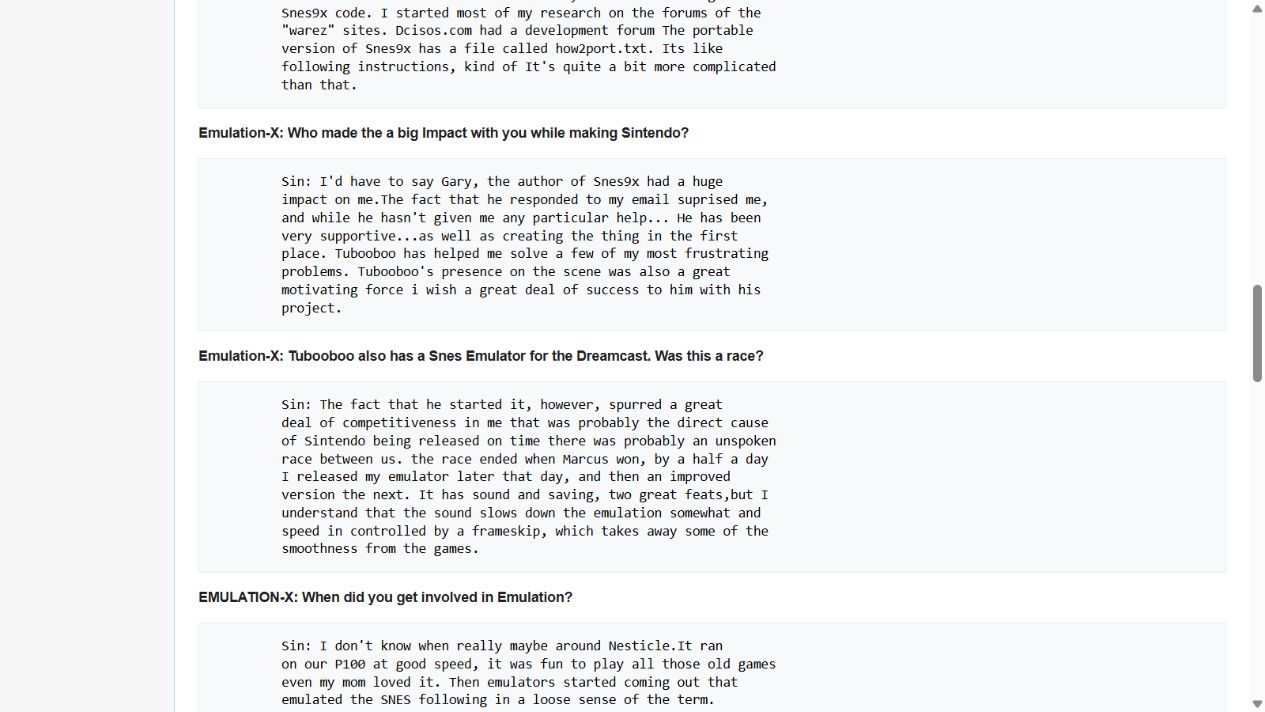
The SNES remained a tougher proposition. Jamin Vander Berg, known as Sin, based Sintendo on Snes9x. Its portable C code gave him a more practical starting point than a PC emulator tied closely to a different processor. In his preserved interview, he remembered a race in which Comstedt had got a release out roughly half a day ahead of him. He also gave a wonderfully ordinary reason for wanting the project to work: hearing Chrono Trigger’s music while playing.
Jamin Vander Berg Developed Sintendo under the name Sin, pursuing SNES games on Dreamcast.
The DreamSNES team had its own division of labor. Bortas worked on much of the emulator; Hedbor handled areas including its size, menu and MPEG playback; Comstedt worked on low-level hardware support and assembly. Their preserved team interview makes the project sound like three people sharing problems rather than a mysterious program appearing from nowhere.
More people could learn to join them. The Dreamcast Developer subsite opened in June with resources for would-be programmers. Independent tools such as KallistiOS meant each newcomer did not have to rediscover the console from scratch.
A PlayStation game, on a Sega machine
Retail customers had a different route into the surprise. Randy Linden’s bleemcast! work produced dedicated Dreamcast discs for three PlayStation games: Gran Turismo 2, Tekken 3 and Metal Gear Solid. Each disc was prepared for its particular game; buying one did not turn the Dreamcast into a general PlayStation replacement. The preserved FAQ explains the approach.
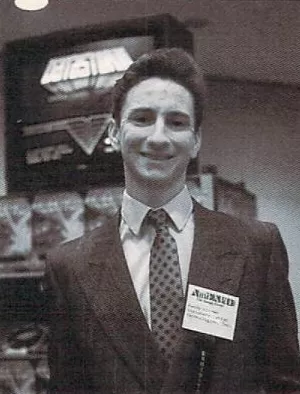
Randy Linden Helped bring PlayStation games to Dreamcast through bleemcast!.
Enhanced output made the demonstration striking. Here was a game associated with Sony running on Sega’s hardware, sold as a product rather than passed around as a hobby experiment. But a commercial company had bills and disputes to survive. When bleem! closed late in 2001, GameSpot reported its departure. The hobby scene could carry on without waiting for another retail release.

The disc that brought the scene to E3
In May 2001, the DC Tonic compilation took independent Dreamcast software to E3. Cryptic Allusion, Ganksoft, Moving Target Software Design and Napalm collaborated on a collection of games and demonstrations. The KallistiOS history records the effort and the attention it received from Sega.
A visitor at the show did not have to understand the tools to understand the disc. Put it in, pick something, watch it run. The software had escaped the programmer’s workbench and the screenshots on a website. Here was a collection somebody else could actually try.
Sega’s hardware business was slipping away in 2001. The people making DC Tonic were not going to reverse that on their own, and they did not need to. They had made things they wanted other people to play. A machine losing its place in the shops could still have something new waiting on a homemade disc.
Meanwhile, another Dreamcast was taking shape inside a PC
The homebrew scene asked how much other hardware could fit inside Sega’s console. A different group was asking whether the whole Dreamcast could fit inside a computer program.
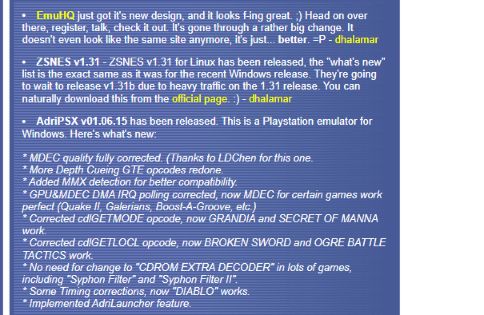
Early projects such as Icarus made that possibility tantalizing before there was a polished emulator for ordinary players to download. Cyrus64 worked on Icarus with ZeZu, later known as ZNullptr. In the developers’ 2020 interview, they remembered its early graphics and commercial-game milestones. Those experiments belong before the better-known public breakthroughs.
ZNullptr (ZeZu) Worked on Icarus, nullDC and Reicast, including Dreamcast graphics emulation.
Cyrus64 Worked with ZeZu on the early Dreamcast emulator Icarus.
A screenshot could be both thrilling and a little cruel. It showed a familiar game running somewhere, on somebody’s computer. Then you went looking for a download and found that there was nothing ready for you yet. Icarus helped make the Dreamcast-on-PC dream feel possible; players still had to wait for their turn.

2002: Valentines, pumpkins and a stack of coasters
DreamSNES owners received a Valentine’s Day update with a rewritten CPU core in SH-4 assembly, improvements to VMU saving and a visible save indicator. Later fixes repaired multiplayer and saving problems; the Halloween release added C4 support and corrected SA-1 handling. The dated release notes show the work accumulating.
A save indicator might sound humble beside a new processor core. After an evening with a long game, knowing that the VMU had actually received your progress was a fairly persuasive feature.
In February, Mr N00b greeted the improvements with a forum declaration:
Mr N00b A DreamSNES forum reader whose enthusiasm survives in the 2002 discussions.
“Dreamsnes is almost PERFECT!”Mr N00b, DCEmulation forums, February 2002
Other players found more reasons to hesitate. Games, settings and individual tolerances differed. Seeing a favorite title run could be enough to delight one owner while its slowdown drove another away.
First, though, the disc had to boot. Failed CD-Rs became “coasters,” and experiments could produce enough to furnish a small apartment. In another February discussion, rudy complained:
rudy A Dreamcast owner who gave the scene’s failed discs a memorable complaint.
“Dreamsnes emulators always cost me more coasters”rudy, DCEmulation forums, February 2002
DCGrendel’s DreamInducer offered a way to make each successful disc more useful: a launcher for several homebrew programs sharing one CD. Later Selfboot Inducer tools made assembling such collections easier. The maintainer’s history distinguishes the original 2002 contest entry from the subsequent tools. If one program disappointed, another on the menu might rescue the evening.
DCGrendel Created DreamInducer, giving multiple Dreamcast homebrew programs a shared disc menu.
The Dreamcast discovers computer adventures
ScummVM’s Dreamcast port was announced on February 3. Comstedt had committed the code, and Mark Thomas’s development site offered binaries. The announcement connected the project directly to DCEmulation.
Mark Thomas Helped Dreamcast adventure fans find ScummVM development builds.
ScummVM ran supported games through newly written implementations of their engines, without recreating an entire PC. It could bring a computer adventure to the television while leaving the game’s puzzles, scripts and data intact.
DreamSNES and ScummVM also used libronin, the Dreamcast library developed by Comstedt, Bortas and Hedbor and first released that February. KallistiOS was an important foundation, but it was not the only one. Different programmers could build different routes into the same console.
BlackAura’s NxDoom brought another kind of computer game across. Its October release record lists VMU saves and support for additional game data. Like ScummVM, this was a way to run a particular family of games rather than an imitation of the whole computer they had once occupied.
BlackAura Worked on Dreamcast ports and helped users understand the obstacles between a download and a working game.
Handheld games had their own compromises. In a September DCGnuboy discussion, nakamichi reported better performance in Zelda: Oracle of Ages alongside worse audio and stability than an earlier build. That was one player’s comparison, but it explains why a new download did not always send the old one straight to the bin.
nakamichi Tested Dreamcast emulators and reported the awkward parts of using them.
NesterDC 7.1 arrived on December 2. Its preserved README describes compressed VMU saves, temporary saves in memory and its controller features. A Sega accessory remembering your progress in a Nintendo game was becoming something owners could take for granted.

2003: Bring your light gun
Making a game appear on screen solved only part of the problem. A controller could stand in for an NES pad quite comfortably. A light-gun game asked for something else.
Warmtoe’s modified NesterDC 7.1+ added Dreamcast light-gun support in early 2003, according to the project record. The change reached beyond menus and compatibility lists to the thing in the player’s hand. Sega’s accessory could now help recreate an experience associated with Nintendo’s hardware.
Warmtoe Added light-gun support to NesterDC and worked on the Genesis Plus DC interface.
Meanwhile, perfectly ordinary filenames were still causing trouble. In a May forum thread, Acidfly2000 asked why names behaved differently between NesterDC and other emulators. BlackAura explained the disc extensions involved, including Rock Ridge and Joliet. A file that looked correct on the computer could be presented differently when software read the CD.
Acidfly2000 Asked the filename question that many disc makers could recognize.
For the owner, the symptom was much simpler: the game was there, but the menu did not seem to know it. These exchanges are why the forums were part of using the software. The right answer could save the next disc from becoming another coaster.
A new brawler joins the old games
In November 2003, Senile Team released Beats of Rage for DOS. Its official history records the ports that followed, including Dreamcast. The Streets of Rage-inspired engine let people build their own beat ’em ups without writing a new engine for each one. It was a different kind of homebrew pleasure: somebody could make a game instead of waiting for another retail sequel.
Roel van Mastbergen later recalled the three brothers’ desire for another Streets of Rage game. Beats of Rage grew out of that appetite. The console’s unofficial scene could welcome an engine port alongside its emulators, and its players could spend another evening clearing a screen of enemies. This was new software running on Dreamcast, rather than an emulator reproducing a Genesis. It helped explain why the scene was becoming more than a collection of old games.

Roel van Mastbergen A Senile Team developer whose work runs from Beats of Rage to Intrepid Izzy.
2004: The SNES wears a programmer down
Scherzo released SuperFamicast in January, using Snes9x with KallistiOS to pursue another route to SNES games. The project archive preserves the releases. A new contender gave players hope, but it did not remove the work between a recognizable picture and a game that felt right.
Scherzo Created SuperFamicast and NesterDC SE, pursuing both working games and a better way to browse them.
In an April progress post, Scherzo discussed the difficulty of pushing toward full-speed play and welcomed help with the source. He was also thinking about a new NesterDC edition. Some of those ideas were ambitions, including network play, rather than features readers could already download.
His June update explained the change in direction more personally. NES work was enjoyable and moving forward; SuperFamicast had become frustrating. He described the break as a vacation from the SNES project. It was an unusually clear glimpse of the person behind a stalled release.
Players could ask whether a console was powerful enough. A developer had another question to live with: whether working on the problem was still something he wanted to do that evening. The NES project gave Scherzo an answer worth following.
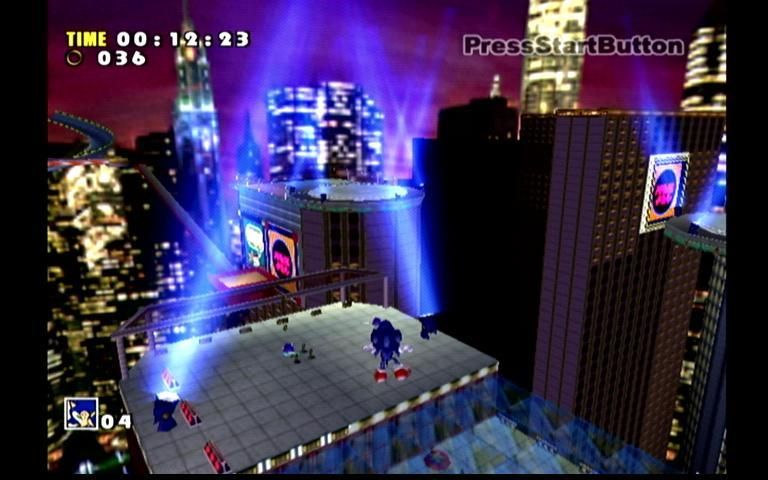
Chankast makes the wait feel shorter
On May 29, 2004, the wait for playable Dreamcast games on a PC grew much shorter. Chankast arrived as a public Windows emulator capable of playing commercial Dreamcast games. Its original announcement named baktery, unai and garrofi, described several months of demanding work, and warned that the alpha was far from perfect. DCEmulation’s contemporary announcement thread preserved the team’s words and directed readers toward downloads.
baktery One of the three developers named in Chankast’s original announcement.
unai Helped develop Chankast’s breakthrough Dreamcast emulator.
garrofi A credited member of the Chankast development team.
The surprise was practical. People with suitably capable PCs could try Sega’s games rather than just inspect the developers’ screenshots. The old orange swirl had become something a Windows user could coax onto a monitor.
Sonic Adventure was exactly the kind of game that made this ambition easy to grasp. Its movement, camera and enormous scenery were part of the Dreamcast’s personality. Seeing that kind of game outside the original console made the machine feel less tied to one aging box. It also gave errors somewhere very visible to hide—or fail to hide.
An emulator could draw a convincing still and then betray itself as soon as the camera moved. Sound could misbehave while the picture looked fine. A game could start and later fail. The Chankast archive records alpha 0.25 in July, followed by the project’s inactive status. The promising beginning did not grow into the long succession of releases owners hoped for.
Chankast had made the exciting part real: people could download it and try their own games. Then the updates stopped coming. The same rough edge that seemed forgivable in a first alpha became harder to live with when there was no next build to look forward to. Other programmers still had plenty to fix.
2005: The beautiful NES disc starts an argument
On December 9, Scherzo released NesterDC SE. It offered more than a list of filenames: artwork, manuals, music and a disc-building system that could assemble a much more inviting collection. The project history records the release.
His announcement sounded like a programmer finally setting the work down long enough for everyone else to use it. He knew it was not perfect. He had picked a date and delivered it. Congratulations arrived, followed by the less celebratory part of any release: people trying to make it work on their own computers.
The builder became the sore point. Its presentation depended on computer-side setup and online material. In a complaint thread, nakamichi described downloading and setup difficulties. A separate discussion pushed back against expectations that the developer should provide every conceivable ready-made disc.
Both frustrations were easy to recognize. A programmer had spent his spare time making something generous; a player had spent an evening trying to use it. Looking polished could make hobby software seem as though it came with a customer-service department. It still came with one developer’s available hours.
Elsewhere, Quzar’s NeoDC continued the pursuit of Neo Geo CD games, with releases preserved from February and April. Its project record describes a move away from the earlier SDL-based implementation toward direct KallistiOS work. There were still different ways to recover time and memory from the same machine.
Quzar Worked on Neo Geo CD and Genesis emulation for the Dreamcast.
2006: Speed has a price
Genesis Plus DC adapted Charles MacDonald’s Genesis Plus emulator. BlackAura’s graphics work and Warmtoe’s interface helped shape the GPWT build released in July. The archive records that collaboration.
Charles MacDonald Created the Genesis Plus emulator that Dreamcast programmers adapted.
Its speed could impress, but settings and games changed the bargain. One community compatibility report compared Toy Story with different rendering methods: the faster approach had graphical problems, while the better-looking one ran more slowly. A menu option could decide which imperfection you spent the evening with.
Sound complicated the choice further. Claims about fast play with audio disabled did not describe the same experience as a Genesis game running with its familiar soundtrack. A quiet title screen was a technical victory that a player could still find disappointing.
Chui and Fox68k pursued Neo Geo CD games through NEO4All. Its preserved documentation credits optimized processor emulation and Dreamcast-specific graphics, sound, CD audio and VMU saving. A March release helped carry that work forward. The CD-based project had its own requirements; it was not a promise to run every Neo Geo cartridge game.
Chui Developed NEO4All, bringing Neo Geo CD emulation to Dreamcast.
Fox68k Supplied optimized processor emulation used in NEO4All.
Sometimes the missing piece was physical. In a StellaDC discussion, owners wrestled with getting Atari games running and with the problem of paddle-controlled games without paddles. The program could recreate the machine more easily than a standard Dreamcast pad could recreate every accessory.
DEmul looks past the television and into the arcade
DEmul’s preserved early history starts with a very human change of mind. Wind began work in 2004, paused after Chankast appeared, then returned as Chankast’s limitations became apparent. The team’s republished original release history identifies Resident Evil: Code Veronica as an early commercial-game milestone in 2006. Another programmer had decided the problem was still worth his time.
Wind (DEmul) Led an early Dreamcast emulation effort that became DEmul.
Its first public build arrived on November 25, 2006. The project’s credits include DreamZzz, CaH4e3, ajax16384 and MetalliC alongside Wind. Its developing scope reached beyond the home console to arcade hardware, including NAOMI and Atomiswave. The preserved project record documents the Windows emulator and its early public release.
DreamZzz Contributed to DEmul’s Dreamcast and arcade emulation.
CaH4e3 Posted and developed DEmul updates within the Emu-Russia scene.
ajax16384 A credited DEmul developer.
MetalliC Worked on arcade hardware emulation in the broader Dreamcast scene.
For a Dreamcast owner, the arcade was hardly a detour. Sega’s console had made a habit of bringing that loud, immediate style of play home. DEmul’s work on related boards opened up another side of the collection, including games and versions you could not simply pull from the same Dreamcast shelf.
A player might keep DEmul around because it handled a favorite game better. Another might find the demands on their PC frustrating. That was how these projects earned their place: one game, one sound problem, one evening that finally went well. “Accuracy” sounded tidy on a feature list. The work behind it was anything but tidy.

2007: Another build, another chance
The commercial Dreamcast was well behind the current generation, but emulator work still produced fresh reasons to put a disc in it. The Genesis Plus DC archive preserves a Quzar build dated January 28. NEO4All’s release collection includes RC3 from April. Both appear in the surviving Genesis Plus DC and NEO4All records.
The gains came from specific work rather than an overnight increase in the console’s horsepower. Fox68k’s processor emulation helped NEO4All spend less time reproducing the original CPUs, leaving more of the machine’s resources for everything else a game needed.
For owners, another build meant another chance to test the title that had disappointed last time. The hardware under the television had not changed. The people writing for it could still change what it managed to do.
April Fools’ Day is a dangerous day to release a breakthrough
On April 1, 2007, nullDC’s first public beta arrived. The date almost begged people to doubt it, but there was a download behind the announcement. skmp, then credited as drk||Raziel, and ZeZu had built the core project. The contemporary SegaXtreme notice also credited GiGaHeRz and PsyMan among the team.
skmp (drk||Raziel) Co-created nullDC and carried its work into Reicast.
GiGaHeRz A contributor credited in nullDC’s first public release.
PsyMan Helped test nullDC and manage the community around it.
The announcement’s small joke about April Fools’ Day sat beside the much less playful request to read the README before asking questions. Both belonged to an emulator release: the pleasure of finally showing the work, followed immediately by the knowledge that someone’s computer would find a new way to break it.
nullDC used plugins for parts of the experience rather than presenting every component as one inseparable block. That offered room for contributors and alternatives, while giving users another layer of choices to navigate. The developer’s own project page preserves the release sequence, including the later November betas and 2008 version.
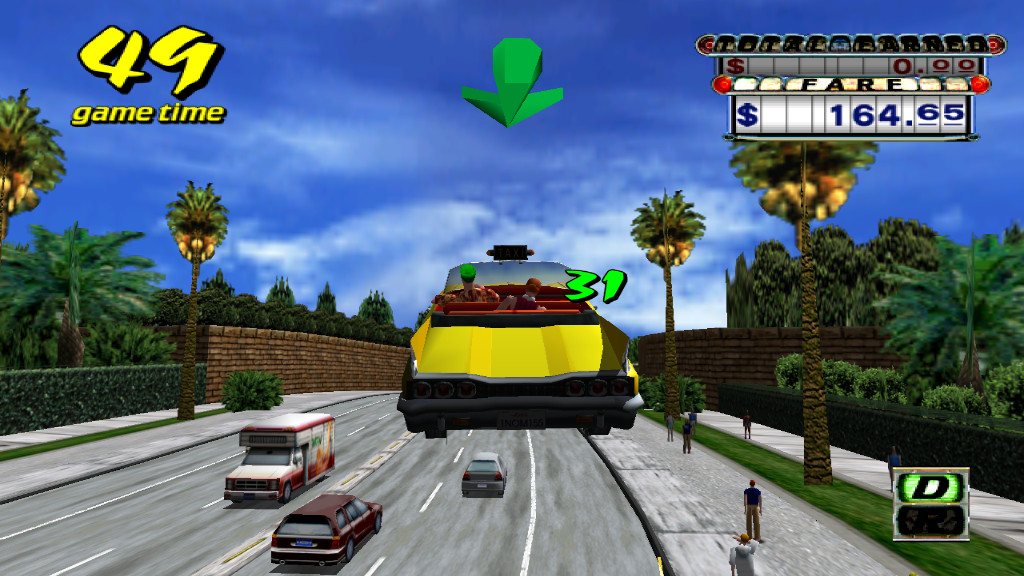
It grew from earlier experiments, not from Chankast being renamed. In the 2020 interview, skmp and ZNullptr described joining their work after separate attempts, with the former concentrating on a recompiler and the latter on graphics. Crazy Taxi was among their early targets. A game running and a game running comfortably were still different milestones.
For the people downloading nullDC, the reward was an old favorite on the monitor. For its developers, a working scene meant they could finally reach the next scene—and discover what broke there. The game did not pause to congratulate them. It wanted its next texture, its next sound and its next instruction, right on time.
2008: A hidden browser comes out of hiding
NesterDC SE’s carefully assembled library had a catch: games outside its master list could be awkward to reach. Hacks and translations made that limitation especially frustrating. Owners were not always trying to play the exact version the builder expected.
Christuserloeser’s unofficial 1.1 update arrived in December. It brought the hidden directory browser into normal use, building on code Scherzo had posted earlier that year. The NesterDC record explains the change, while the SE archive preserves the date.
Christuserloeser Helped maintain Dreamcast emulator usability and released an unofficial NesterDC SE update.
It was a small-sounding addition with an immediate reward: a player could find more of the games already on the disc. The handsome presentation could stay, and the menu no longer had to act as though an unfamiliar file did not belong.
DEmul’s sound test reaches the forum
The developers’ Emu-Russia thread shows the trade-offs reaching users. In July 2008, Wind described work aimed at more faithful sound and asked which players heard improvement. Accuracy could make new demands on a PC; somebody had to report whether the music was better or merely more prone to stuttering. The conversation was technical, but the complaint at its center was something anyone could hear.
2009: Someone is still there to answer
In November, a newcomer arrived at the DreamSNES forum with a familiar problem. A disc prepared with BootDreams would not boot. Trying another boot disc had not helped. The emulator’s best-known releases were years old, but discovering them still produced new questions.
Stryfe replied by asking about the image and burning process, then pointed the owner toward ROM-list tools and a way to test the disc image before spending another CD-R. The dated exchange survives. It reads less like a grand preservation project than someone helping a stranger rescue an afternoon.
Stryfe Helped Dreamcast owners prepare discs and preserve NesterDC SE’s supporting files.
That was part of how the scene stayed useful. A download could remain online for years and still be baffling to somebody encountering it for the first time. An answer from an experienced owner could make the old software feel accessible again.
The developer with a sharper tongue
Deunan’s Makaron pursued Dreamcast and NAOMI emulation too. Its preserved notes could be wonderfully blunt. The July 2009 release notice, quoting the developer, reminded readers to keep their controller and VMU configuration files instead of overwriting them and then complaining. The irritation is understandable even if the reader with a broken pad might not have enjoyed it.
Deunan Developed Makaron and later the GDEMU optical-drive replacement.
There was room for Makaron because no single download had solved everybody’s evening. One emulator might get a favorite game right while another stumbled over it. Keeping several installed was hardly elegant, but it was easier than giving up on the game you had wanted to play in the first place.
2010: Save the things around the emulator
NesterDC SE’s artwork, manuals and music had made its presentation distinctive. They had also created a dependency: a builder expecting to fetch those files needed somewhere reliable to find them.
In January, Stryfe reported a mirrored master library assembled with help from |darc|. The forum thread records the effort to keep that supporting material available. Saving the emulator executable was only part of keeping the experience alive.
|darc| Helped preserve the files supporting NesterDC SE’s presentation.
Old projects can fail in this strangely ordinary way. The console still works. The disc format has not changed. A server disappears, and a program waiting for a picture or a manual cannot complete the task it was built to do. Somebody has to remember those less glamorous files too.
Makaron works through another layer
By 2010, Makaron’s republished developer notes described Windows CE recompiler changes and selectable rendering modes. Extra resolution could make a game clearer; other changes concerned whether it behaved correctly at all. The notes expose the judgment behind an option that could otherwise look like a harmless tick box.
2010–2017: The Dreamcast leaves the desk
The PC had already become a second home for Dreamcast games. Now the people behind nullDC were looking at machines you could carry. skmp’s project records preserve experiments aimed at the PSP, Wii and an ARM-based platform. Some ran slowly; some lacked sound or useful 3D output. They were branches of the work, with very different results, rather than a promise that every handheld could suddenly replace Sega’s console.
Anyone who had packed a Dreamcast, a controller and its tangle of leads could see the attraction. Imagine taking the games and leaving the bag of hardware behind. The programmers still had to squeeze the work onto smaller machines, and code comfortable on a Windows PC could prove very uncomfortable elsewhere.
Reicast carried the nullDC line toward a wider set of platforms, including Android. A telephone running a Dreamcast game was a remarkable reversal of the early scene’s problem. In 2000, people had worked out how to put their own software into Sega’s machine. Now they were working out how to put Sega’s machine into something small enough to hold in one hand. The project’s preserved repository connects that work with the later forks that would carry it forward.
A touch screen was not a Dreamcast pad, however convincing the game looked behind it. An on-screen stick covered part of the picture; a thumb could miss a button without feeling it. A game built around a quick change of direction or a quarter-circle motion reminded players that reproducing a console involved its controls as well as its graphics. Portable access was a new convenience, and sometimes a new compromise.
For Dreamcast games themselves, the appeal was easy to see. In Sonic Adventure, the player could run through a seaside resort and fling the camera toward scenery that once seemed inseparable from Sega’s final console. On a modern screen those spaces could look sharper. Their camera behavior, abrupt changes of pace and very particular sense of movement still belonged to a game from the late 1990s. Better resolution did not erase its personality.
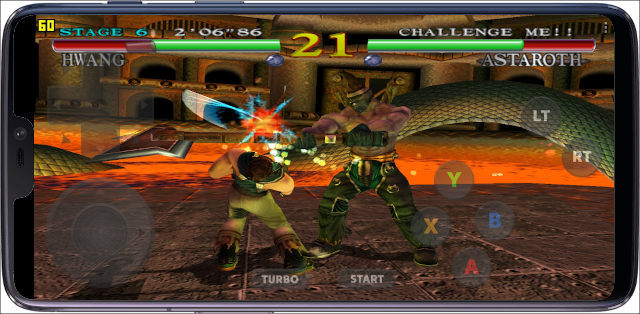
redream makes room for the player
Anthony Pesch, known as inolen, approached the problem through redream. Its earlier public repository preserves a work-in-progress emulator for desktop computers. The later product put an unusually direct pitch in front of players: add games, choose one, and play.

Anthony Pesch (inolen) Created redream, emphasizing an approachable way to play Dreamcast games.
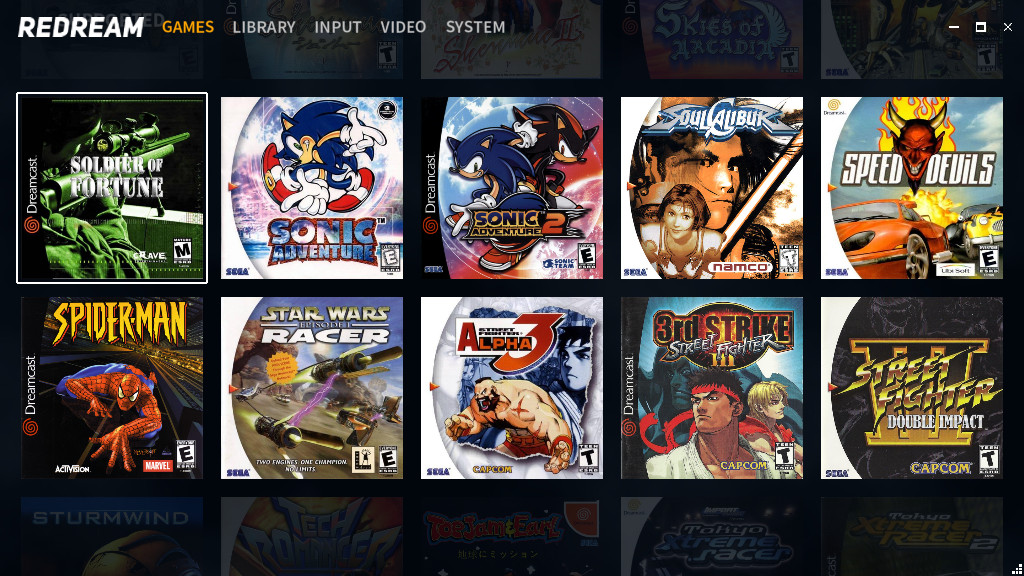
The official site presents a cover-art library, save states, widescreen codes and high-resolution rendering, together with a built-in replacement for the BIOS files that other setups ask users to supply. The front end turned a folder of disc images into a shelf. For somebody returning to a handful of favorites, that could be the difference between an evening spent configuring an emulator and an evening spent inside a game.

That polish came with a different development model. The historical source repository and the later closed-source redream are distinct stages of the project. In a Libretro discussion running from 2017 into January 2018, users first traded loading problems, then reacted to the move away from open source. The thread preserves the disappointment of users who had hoped development would stay open. Players who valued the accessible interface and developers who valued shared source could reach different judgments about the same emulator.
There was a familiar frustration on both sides. A player wanted the emulator to be simple and dependable. Someone following the code wanted to see it, learn from it and help improve it. The people doing the work also had to find time to keep doing it. redream put those competing wishes in front of a wider audience, including players who had never needed to think about how an emulator got made.
2018–2019: A fork gets its own name
While redream concentrated on a ready-to-play library, the Reicast-derived Libretro core was opening another door into Sega’s arcade hardware. A June 2018 development report announced NAOMI support and credited flyinghead with graphics fixes. The same post discussed faster disc loading and repaired sound. These were changes a player could see, hear and wait less time for.
flyinghead Develops Flycast, building on the nullDC and Reicast lineage.

An arcade game could greet you with a convincing attract screen and still refuse to become a useful game. Its controls or extra hardware might not be there yet. NAOMI was related to the Dreamcast, but each cabinet brought more things to account for. The team was getting players through another door, then finding the problems waiting on the other side.
By 2019, the fork also needed a name that belonged to it. In a June forum reply, a contributor explained that the core had been renamed at upstream’s request; Beetle DC had been an interim name, and Flycast was the lasting one. A newcomer arriving a few days later could see three names and reasonably wonder whether three different emulators were required.
Behind that confusion was a public dispute. In a September 2025 retrospective, skmp described losing his temper with Libretro leadership in May 2019 and pressing for the fork to change its name. He apologized to flyinghead for the hurtful spillover and credited him with building successfully on Reicast’s legacy. That is skmp’s later account, with hindsight and a personal apology, rather than a neutral transcript of every exchange.

You did not have to care about the argument to get caught in its aftermath. Your setup said Reicast. The download list said Flycast. Yesterday’s working game now seemed to need an explanation. A June 2019 support thread catches exactly that confusion around a NAOMI setup. flyinghead explained that the new name had not changed the content requirements, then helped investigate the files. While the larger dispute rumbled on, somebody still needed help getting a game to start.
Flycast grew into an emulator with a wider identity of its own. Its current project covers Dreamcast, NAOMI, NAOMI 2 and Atomiswave across multiple platforms. The inherited code matters, and so does the continuing work: keeping builds available, fixing individual games and giving players somewhere to report the next fault. A fork can carry an old achievement forward without its history becoming a seamless succession of project names.
2020–Present: Bring another player
The computer can beat you, but it cannot be your friend who has finally worked out how to punish your favorite move. Arcade fighters were built around other people: another pair of hands, another bad habit to spot, another chance to settle the last round. Keeping the program alive was only part of keeping that pleasure alive.
blueminder’s Flycast Dojo pursued that missing company. The Flycast fork emphasizes online matches, training, replay and tournament use, and it can work with Fightcade. A replay lets a player return to the moment where a round slipped away; practice tools let them try the answer before the next opponent arrives. It is a different ambition from simply making a game boot, and a natural one for software carrying so many arcade fighters.
blueminder Develops Flycast Dojo for online matches, practice and replays.
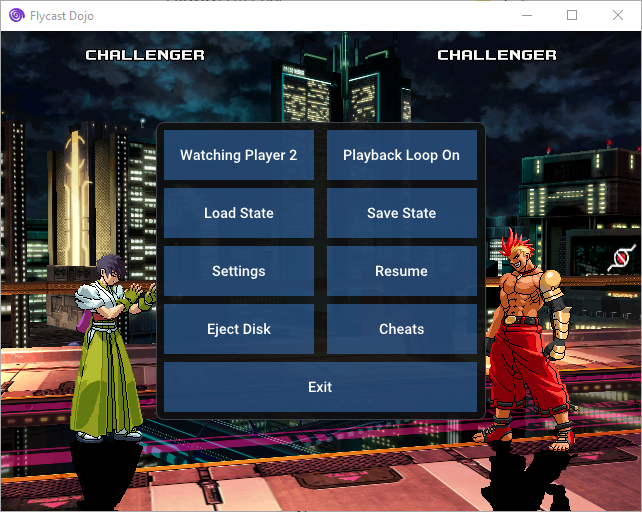
The gathering places had changed too. DCEmulation’s old threads still held the questions about burning discs and choosing files. GitHub gave developers somewhere to post builds, trace changes and tackle reported faults. Wikis helped the next newcomer get started. Fightcade and Dojo gave players somewhere to find one another. The addresses changed; the need for somebody on the other end never really did.

Reicast’s original project eventually stopped. Its archived repository now tells visitors that development has ended and points them toward an active derivative such as Flycast. The archive records September 2025 as its move to read-only status; skmp dates the project’s end to December 2021 in his retrospective. The code had already traveled further than one maintainer’s ability to keep running the original project.

Flycast’s later releases show how broad the job became. Version 2.5 added the DCNet service for supported online games and support for adapters connecting original Dreamcast peripherals. Subsequent notes include battle-cable connections, improved modem behavior and multi-screen NAOMI games. The question was moving from “can the game run?” toward “which parts of the original experience can people share again?” A saved VMU, a steering wheel and a distant opponent were all parts of that experience.
The real console still gets new games
Meanwhile, the Dreamcast under the television had not vanished. In a 2019 interview, Senile Team programmer Roel van Mastbergen recalled trying his originally PC-focused Intrepid Izzy on the console and being surprised by how well the first attempt worked. Free tools and documentation had made the experiment approachable. Finishing it was another matter.

The team’s 2020 development diary describes the trouble behind a costume change. Izzy’s new outfit brought thousands of animation frames into a machine with 16 MB of main memory. Some areas could not hold everything at once. The programmers placed one discovery in a smaller level and changed how animations loaded elsewhere, reducing peak memory use. A player would see a new costume and carry on exploring. The team had to make enough room for that moment to happen.
Intrepid Izzy reached Dreamcast on August 20, 2021. It combined exploration, fighting and abilities tied to costumes, arriving on a machine whose official hardware production had ended twenty years earlier. The scene’s development tools had become a way to ship a new game, not merely a way to demonstrate that an old console still worked.
There were new ways to feed the real hardware too. Deunan’s GDEMU replaces the optical drive’s role inside a Dreamcast; it does not emulate the entire console the way Makaron did. Senile Team’s March 2023 announcement offered a digital Dreamcast edition of Intrepid Izzy for compatible optical-drive replacements, including GDEMU and MODE. A homemade CD was no longer the only path into the machine.
The tools underneath also kept developing. KallistiOS still supplies an independent development environment, hardware drivers and examples for programmers. Lawrence Sebald, known as BlueCrab, is among the people who sustained that infrastructure: the project’s author record credits his contributions from 2005 onward. Its modern documentation makes room for accessories and hobbyist modifications alongside the original controller and VMU. The old red square and green paddles had led to a foundation other makers could keep using.
Lawrence Sebald (BlueCrab) Helped sustain KallistiOS and the tools around Dreamcast development.
A Dreamcast game, wherever you meet it
For a reader returning to the library today, Retro Replay’s Flycast profile is a useful starting point for the console and related arcade systems; redream’s profile covers the approachable desktop and mobile alternative. On actual hardware, the Dreamcast community wiki and individual project records preserve the different homebrew routes and their requirements. The maintained ScummVM Dreamcast documentation offers a route into supported adventures. Compatibility still belongs to a particular game, build and setup.
A homemade disc once put an NES menu on a Dreamcast television. Years later, the Dreamcast’s own games could travel in your pocket, and an old arcade fighter could find you another opponent. Back on the real console, a programmer was still figuring out how to fit one more costume into memory. Sega had stopped making the machine. People had kept making plans for it.
Sources and further reading
The dated releases, original interviews and forum exchanges linked throughout the article are collected here.
- dreamcast.wiki: MIL-CD
- dreamcast.wiki: MIL-CD compatibility
- mc.pp.se: dreamsnes
- dcemulation.org: index.php
- dcemulation.org: index.php
- dreamcast.wiki: Sintendo
- dreamcast.wiki: DreamSNES
- dev.dcemulation.org: project archive
- kos-docs.dreamcast.wiki: project archive
- dcemulation.org: project archive
- www.gamespot.com: 1100-2825748
- dcemulation.org: viewtopic.php
- dcemulation.org: viewtopic.php
- github.com: selfboot-inducer
- www.scummvm.org: 20020203
- www.dreamcast.wiki: Libronin
- dreamcast.wiki: NxDoom
- dcemulation.org: viewtopic.php
- github.com: README
- dreamcast.wiki: NesterDC
- dcemulation.org: viewtopic.php
- dreamcast.wiki: Super Famicast
- dcemulation.org: viewtopic.php
- dcemulation.org: viewtopic.php
- dcemulation.org: index.php
- dcemulation.org: viewtopic.php
- dcemulation.org: viewtopic.php
- dcemulation.org: viewtopic.php
- dreamcast.wiki: NeoDC
- dreamcast.wiki: Genesis Plus DC
- dreamcast.wiki: GenesisPlusDC BlackAura list
- dreamcast.wiki: NEO4All
- dcemulation.org: viewtopic.php
- dcemulation.org: viewtopic.php
- dcemulation.org: viewtopic.php
- dreamcast.wiki: project archive
- docs.scummvm.org: sega dreamcast.html
Back to the year menu ↑ · Meet the people behind the emulators