 Retro Replay Retro Gaming History, Reviews & Emulation

Martin Nielsen built NES WORLD because Nintendo fascinated him. Before the site became a recognizable stop for collectors and emulation fans, it grew from a small, personal newsletter-style project. Nielsen cared about games, but also about odd hardware, regional differences, pirate consoles, magazine scans, and the stories a cartridge or advertisement could carry. When emulation reached his browser in 1996, it joined that larger curiosity. For a period he hosted emulator information and even game files. The response brought excitement, pressure, and more requests than he wanted to handle. His story shows what happens when a personal fan site suddenly becomes a public destination.
Known for: Founder and long-time editor of NES WORLD
Before the website: NES Journal, a Nintendo-focused fan publication
Website launch: Late summer 1995, according to Nielsen’s own history
1996 emulation role: Listed NES, SNES, and Game Boy emulators and related utilities for readers
1996 turning point: Joined Damaged Cybernetics around October, then left over site-design control
Historical caution: The surviving About page is a 2003 retrospective. Some developments it describes do not have a precise 1996 date.
Before NES WORLD Had a URL
Nielsen’s first-person site history begins with the family computer and his desire to learn what it could do. His brother’s PC made computing tangible at home, and Nielsen chose additional business study partly because it included computer work. The details sound ordinary now, but they explain why he was comfortable turning a Nintendo obsession into files, layouts, and eventually web pages. He was neither a console manufacturer nor a professional game journalist. He was a fan with enough technical curiosity to publish.
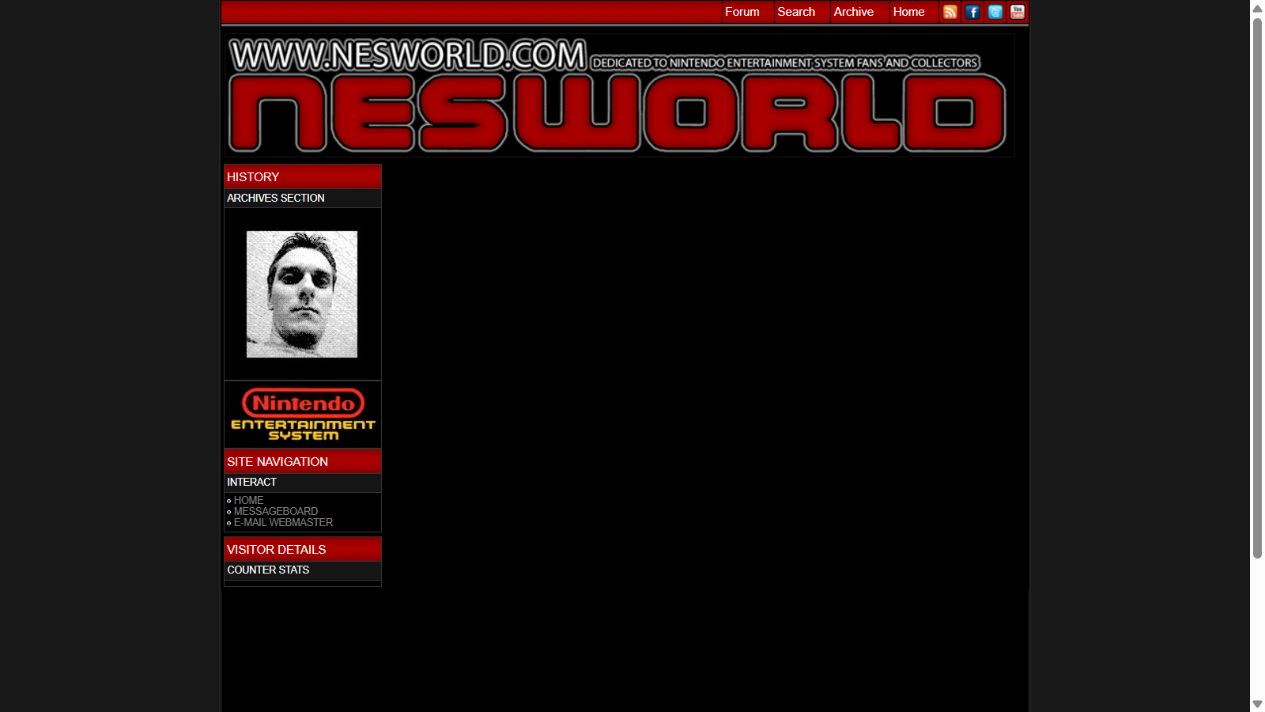
The early project was NES Journal. Nielsen later described it as the foundation for NES WORLD, and surviving recollections show a fan trying to collect information about a machine he loved. A newsletter lets an editor decide what deserves attention; a website lets that decision travel farther and change more often. NES WORLD appeared online in late summer 1995. Its early pages were small and personal, which is part of their value as evidence. They reveal an enthusiast making choices rather than a polished corporate catalog arriving fully formed.
At first, the site’s subject was wider than emulation. Nielsen gathered game information, hardware curiosities, and images from magazines. He remembers a pirate NES with a huge built-in game count drawing emails from readers who wanted to buy one. That mismatch between his purpose and the audience’s demand would recur when he began discussing emulator files. A visitor could find a fascinating object and treat the fan-site owner as a shop, a help desk, or a supplier. Nielsen had to keep explaining what the site actually was.
The First Brush With Copyright Anxiety
Nielsen says a Nintendo intellectual-property message startled him early in the site’s life, and he temporarily changed how NES WORLD presented itself. The timing belongs primarily to 1995, before the 1996 emulation chapter. It is still useful background for his biography. He had already learned that putting Nintendo material online could draw attention from the company whose history he wanted to document. That experience made later choices about emulator pages and game files more than a technical question.
The surviving record does not support turning that early message into a full legal case. Nielsen’s account conveys the reaction of a young site owner who did not want a corporate confrontation. He removed or changed visible elements and then gradually returned to publishing. His continuing work suggests affection for Nintendo never disappeared. The tension was that fan preservation and a company’s control over its trademarks or copyrighted works could meet on the same page.
When Emulators Arrived on NES WORLD
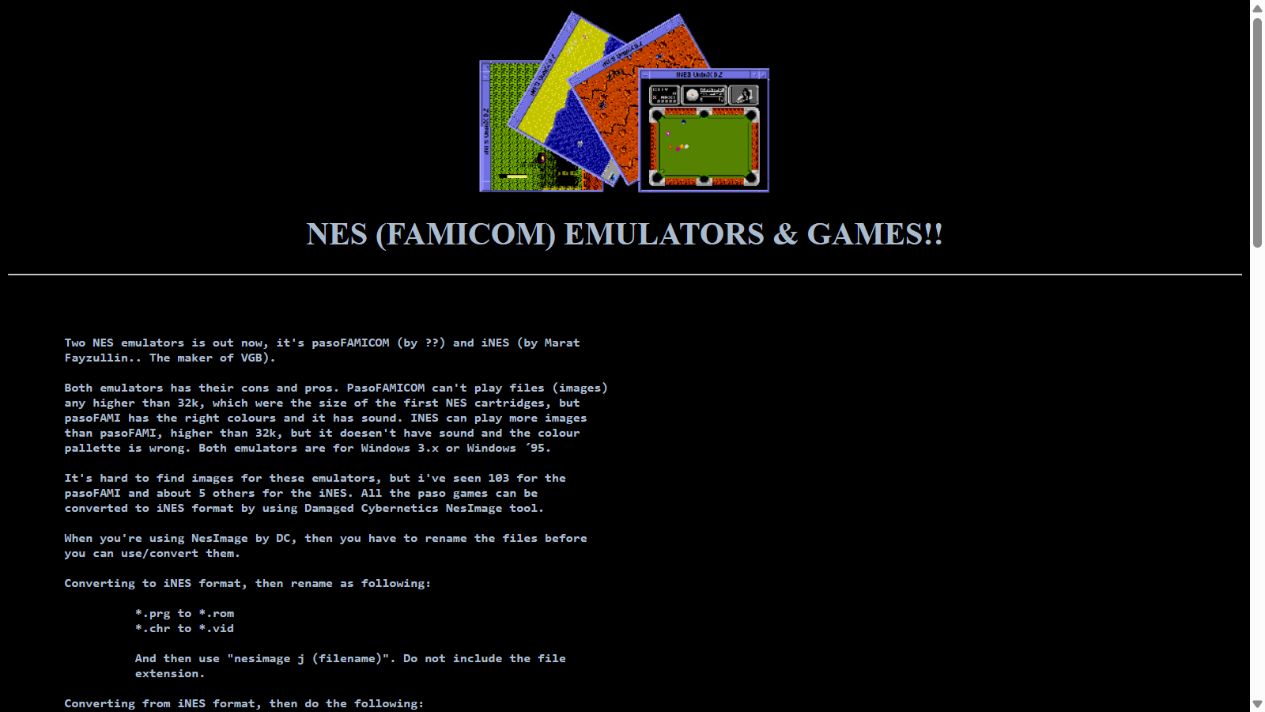
In 1996 Nielsen began trying Nintendo emulators and sharing what he learned. His memory of downloading a Japanese program called PasoWing conveys how startling the experience felt: a familiar Famicom game appeared on a PC by way of software made far from the original console. His archived emulator pages are more precise about what he put before readers. A preserved May 1996 list names SNES programs such as Super Pasofami and VSMC, NES or Famicom emulators, Virtual GameBoy builds, and utilities for handling the image formats those programs expected.
The format of that page tells us as much as the list. It is handwritten web publishing: headings, version numbers, direct links, short judgments, and small practical notes. The same page includes game listings, a reminder that ZIP files were password protected, and a command for unpacking them. Modern readers can see how close an emulator guide could sit to game-file distribution. They can also see why the site owner’s inbox filled with requests. A page that helped one person configure an emulator could look, to another visitor, like an invitation to ask for every game ever released.
Nielsen later recalled sharing NES WORLD packs on IRC and receiving a flood of ROM requests. He eventually removed the ROMs and, for a time, tried to distance the site from emulation entirely. His retrospective does not date each step of that retreat precisely enough to place all of it in 1996. The safe conclusion is the larger one: NES WORLD’s emulation experiment changed how readers approached the site, and Nielsen had to decide whether he wanted to keep playing the role they assigned him.

The Damaged Cybernetics Experiment
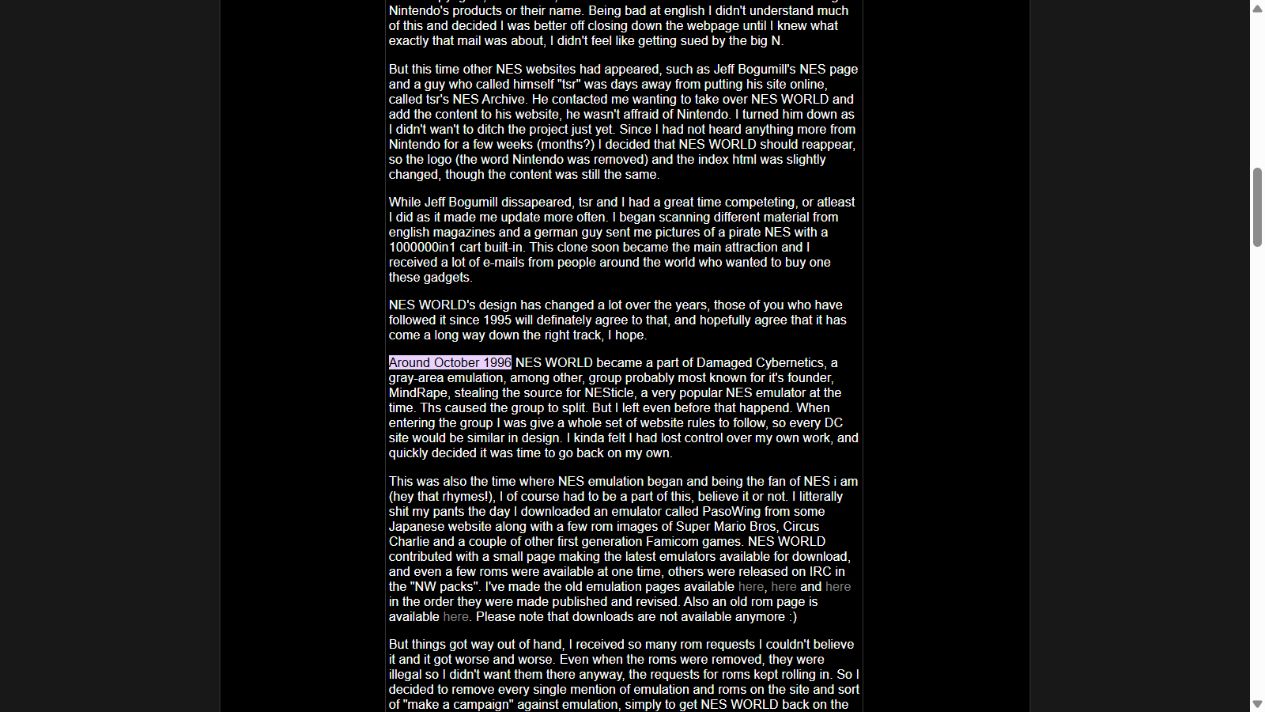
Around October 1996, NES WORLD became part of Damaged Cybernetics, a network of related sites in the developing emulation scene. Nielsen’s own explanation for joining is brief, but the attraction is easy to understand from the period’s web structure: shared traffic, links, and a recognizable layout could help a small site become visible. The problem appeared when the network gave him rules about how member pages should look. He felt that following them would cost him control over work he had built himself.
Nielsen says he left quickly and returned to publishing on his own terms. The reason matters because Damaged Cybernetics later became connected to louder controversies. His retrospective mentions those later events but says he left before the split. We should not rewrite an October 1996 design disagreement as a reaction to a later source-code incident. His decision was about authorship: the freedom to decide the appearance and direction of a personal site.
That makes him an instructive counterpart to Chris Hickman. The Damaged Cybernetics style helped Archaic Ruins return after a shutdown. For Nielsen, common rules made NES WORLD feel less personal. The same network could be a shelter for one project and a constraint for another. There is no need to flatten those experiences into a simple pro- or anti-network position. They show that site owners were negotiating what collective emulation culture should look like, one page at a time.
Keeping NES WORLD About Nintendo
Nielsen’s later account spends considerable time on moves, hosting arrangements, domain names, art credits, and the frustrations of maintaining a popular site. Those details do not all belong to 1996, but they reveal the work behind the long life of NES WORLD. A fan resource has to survive more than one technology shift. It has to keep its address reachable, preserve old information, replace images that no longer load, and resolve disputes over who owns what. Nielsen’s voice is often amused or exasperated; the site was a labor he cared about rather than an abstract archive.
He also kept writing about hardware and games well beyond the first emulation pages. NES WORLD’s later sections document unusual cartridges, Famicom clones, regional releases, and unreleased material. That broader coverage helps explain why he resisted being defined solely as a ROM source. Emulation was one way to explore Nintendo history. It was not the whole reason the site existed. When requests threatened to drown out the collecting and research he enjoyed, stepping back was a way to reclaim its purpose.
The preserved early pages make that tension visible without requiring us to endorse every choice on them. They show software lists and game-file links as they existed in the young scene. Nielsen’s retrospective shows his later judgment about those choices. A useful biography can hold both. It can recognize the site’s role in distributing emulation information while also respecting that its founder wanted NES WORLD to be an information source, not a permanent download counter.
Why Martin Nielsen Matters
Martin Nielsen matters because NES WORLD connects emulation to a much wider fan culture. He was interested in the original machines, their strange variants, the magazines that covered them, and the people who remembered them. Emulators entered that world as discoveries to share. The ensuing flood of attention exposed the difference between what an editor publishes and what an audience decides to demand. Nielsen’s temporary membership in Damaged Cybernetics exposed another tension: a growing scene could give personal sites reach while asking them to surrender some individuality.
His lasting contribution was maintaining a recognizable Nintendo reference point through those changes. The early emulator list is one chapter in a much longer site history, but it is an especially revealing one. It lets us see a fan embrace new technology, feel the thrill of a classic game running on a PC, and then confront the responsibilities that came with putting the links online.
Martin Nielsen in the History of Video Game Emulation
1996 Part II: The Websites That Held Emulation Together follows NES WORLD’s emulator coverage and Nielsen’s brief Damaged Cybernetics membership. The 1995 chapter provides the earlier setting for the site.
Related People
Chris Hickman — Archaic Ruins founder and another site owner linked to Damaged Cybernetics.
Brad Levicoff — Founder of Zophar’s Domain, whose early archive served many of the same emulator users.
Marat Fayzullin — Creator of Virtual GameBoy, one of the programs appearing in NES WORLD’s early emulation pages.