 Retro Replay Retro Replay gaming reviews, news, emulation, geek stuff and more!


Retro Replay Review
Gameplay
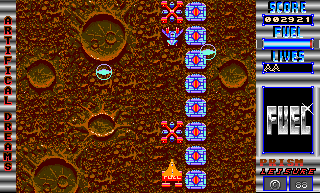
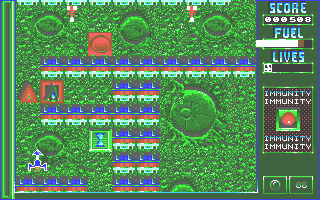
Artificial Dreams delivers a methodical shoot ’em up experience where every move feels deliberate. You pilot a small craft viewed from a top-down perspective, steadily advancing upward through levels laid out in a grid of square tiles. Rather than overwhelming you with frantic waves of enemies, the game encourages you to chart a path through barriers, traps, and purposefully placed aliens that advance only when they’re aligned vertically with your ship.
(HEY YOU!! We hope you enjoy! We try not to run ads. So basically, this is a very expensive hobby running this site. Please consider joining us for updates, forums, and more. Network w/ us to make some cash or friends while retro gaming, and you can win some free retro games for posting. Okay, carry on 👍)
The core mechanic is a strategic dance of forward momentum and cautious retreats. Your vessel can reverse direction, but it requires traversing several tiles to return to the bottom of the screen, making precision timing essential in mazelike sections. Each barrier you navigate and each corridor you carve out feels like part of a larger puzzle, rewarding players who learn level layouts and enemy patterns.
Power-up squares dot the landscape, offering an array of tactical advantages. Upgraded weaponry sharpens your offensive edge, extra lives provide a safety net for risky maneuvers, and level warps let you skip ahead when you’ve truly mastered a stage. The “scroll lock” power-up is a standout, freezing the screen’s auto-scroll to let you pick off enemies in relative safety – a godsend in the denser, more labyrinthine sections.
Be wary, however, of the speed-up power-up: it accelerates your adversaries’ approach, turning a cautious skirmish into a frantic chase if you’re not careful. Learning to distinguish helpful bonuses from hidden pitfalls is at the heart of Artificial Dreams’ gameplay loop, making each run both a test of reflexes and strategic planning.
Graphics
Visually, Artificial Dreams embraces a clean, geometric aesthetic. Levels are defined by crisp square tiles and simple but distinct barrier shapes, creating an almost architectural shimmer to the battlefield. Alien sprites remain in line with the minimalistic approach, their designs conveying menace without needless complexity.
The color palette is restrained yet effective. Muted metallic grays and blues form the backdrop, while power-up squares glow in vibrant greens, yellows, and reds to draw your eye. This clarity is essential in a game where split-second decisions hinge on recognizing the right icon amid a scrolling field of obstacles.
Animation is deliberately restrained to match the game’s paced nature; ships and enemies glide smoothly along set paths rather than performing elaborate maneuvers. Though lacking flashy special effects, the consistent frame rate and clear visual hierarchy ensure you never lose track of your ship, the hazards, or the precious power-ups that can turn the tide.
Story
Artificial Dreams opts for minimal narrative framing, letting the gameplay itself suggest a larger conflict. The title hints at a simulation or digital frontier where you pilot an experimental craft, but the lore is kept intentionally sparse. Brief mission intros and occasional text prompts evoke a sense of being an agent inside a sophisticated virtual arena.
This pared-back approach allows players to project their own narrative onto the action. Are you a lone pilot fighting rogue AIs in a dream simulation? Or perhaps a test subject navigating a training program for deeper cosmic threats? The ambiguity serves the game well, keeping the focus on your tactical decisions rather than an elaborate exposition.
Fans of story-driven shooters may find the lack of character development or plot twists disappointing, but those who appreciate open-ended worldbuilding will enjoy filling in the blanks. The atmosphere of quiet tension, broken only by the hum of your engines and distant enemy chatter, becomes its own form of storytelling.
Overall Experience
Artificial Dreams stands out in the shoot ’em up genre by trading lightning-fast action for thoughtful, puzzle-like encounters. It’s a refreshing change of pace for players fatigued by unrelenting bullet hells. Each level feels like a carefully designed gauntlet, rewarding patience, map memorization, and judicious use of power-ups.
The learning curve is gradual but meaningful. Early stages introduce core mechanics and power-ups in controlled doses, while later levels compel you to combine weapon upgrades, extra lives, and the scroll-lock device to navigate increasingly intricate layouts. This sense of progression remains compelling across multiple play sessions.
However, the game’s deliberate pacing means it won’t suit those seeking fast reflex challenges or cinematic flair. If you relish strategic planning, enjoy minimalist visuals, and appreciate the satisfaction of mastering a level through trial and error, Artificial Dreams is a hidden gem. Its blend of methodical shooting and tile-based puzzles offers a unique niche experience that’s both challenging and rewarding.
In sum, Artificial Dreams is an exercise in controlled intensity—a shooter that asks you to think three steps ahead rather than react on impulse. For players craving a thoughtful, slow-burning take on a top-down shoot ’em up, this is a dream come true.


Reviews
There are no reviews yet.