 Retro Replay Retro Gaming History, Reviews & Emulation
About Retro Replay
My name is David Becker. I’m a retired correctional officer, a father of three wonderful sons, and a lifelong retro gaming enthusiast. Video games have always been more than entertainment to me. They’re part of my personal history and a connection to the imagination and excitement of my childhood.
I’ve been involved in the emulation scene for decades, and Retro-Replay.com is where I share that passion. From reviews, interviews, tutorials, and longplays to gaming history, music, and nostalgia, this site celebrates everything that makes classic gaming special. I also run a YouTube channel and social media pages where I connect with fellow enthusiasts. I’m always looking to make new friends and reconnect with old ones who share this amazing hobby.
How It All Began
Although Retro-Replay.com officially launched in December 2008, my journey into emulation began much earlier. In the summer of 2000, I saved enough money to purchase my first computer, a Compaq Presario running Windows ME. The operating system was notoriously terrible, but that machine changed my life.
Growing up, my family couldn’t afford a computer. When I turned eighteen and started working, I finally bought one from Sears. It wasn’t particularly powerful, but it introduced me to MAME, arcade classics like Pac-Man, and emulators such as RockNES.
Before long, I discovered communities like DCEmulation, EmuUnlim, Zophar’s Domain, Retrogames, VG-Network, and Arcade@Home. These websites were incredible resources. I wasn’t a programmer, but I absorbed everything I could and gradually found ways to contribute.
Discovering the Dreamcast
The Sega Dreamcast was the first console that truly opened my eyes to emulation and homebrew. Through DCEmulation, I discovered how a console could run custom software and games it was never originally designed to support.
Playing Super Nintendo games on a Dreamcast around 2000 was mind-blowing. I spent countless hours experimenting, learning, and interacting with people in the community. It turned me into something of an emulation addict!
I met countless helpful people through DCEmulation, many of whom inspired me to keep exploring. Around 2000 or 2001, I even contributed a small graphical interface image for an early Dreamcast emulator. It wasn’t much, but it was my first opportunity to give something back to a community that had already given me so much.
The Shift to the Xbox Scene
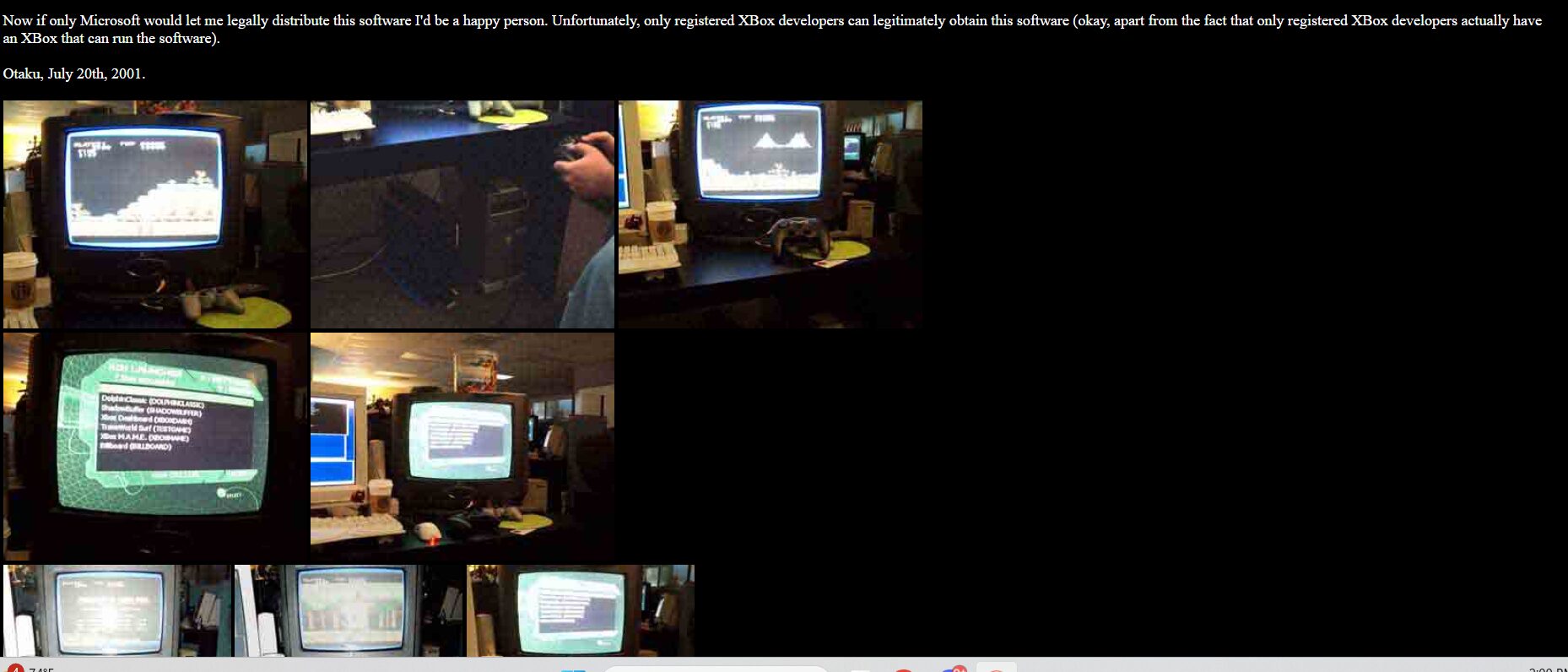
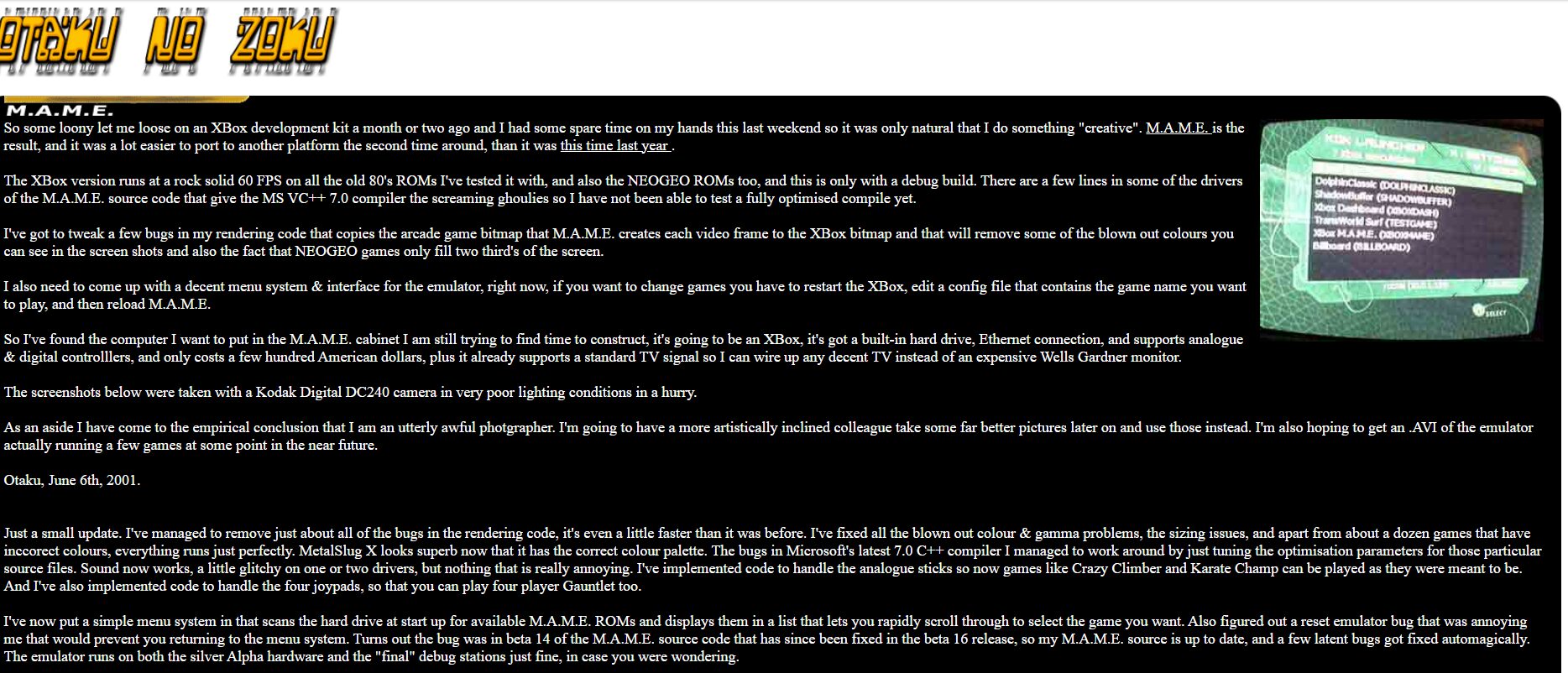
As the original Xbox approached launch, I discovered the work of Otaku no Zoku, a developer who had obtained an Xbox development kit and ported MAME to Microsoft’s console before it was even publicly available. I was fascinated by what he’d accomplished.
-

- archive of otaku no zoku
-

- archive of otaku no zoku
That discovery convinced me to move from the Dreamcast scene to the Xbox. I even gave my Dreamcast to my younger cousin because I was certain the Xbox was the future of homebrew. And it didn’t disappoint. It offered everything I loved about the Dreamcast, with even more power and possibilities.
The Creation of XB-Power
My enthusiasm eventually led me to launch XB-Power.com, a website dedicated to Xbox emulation, hacking, and homebrew development. What started as a place to share news quickly grew into something much bigger.
Early on, Atilla from Retrogames.com generously provided hosting. Unfortunately, I made a youthful mistake by giving away burned PlayStation discs in a contest, which cost me that hosting arrangement. It was a lesson learned!
Thankfully, Dave (Conjuror) from VG-Network stepped in and offered hosting. Through him, I made connections on EFnet and learned even more about PC and Xbox emulation. Later, Tim Eckel from Arcade@Home also generously hosted my domain for free.
Growing Popularity and Recognition
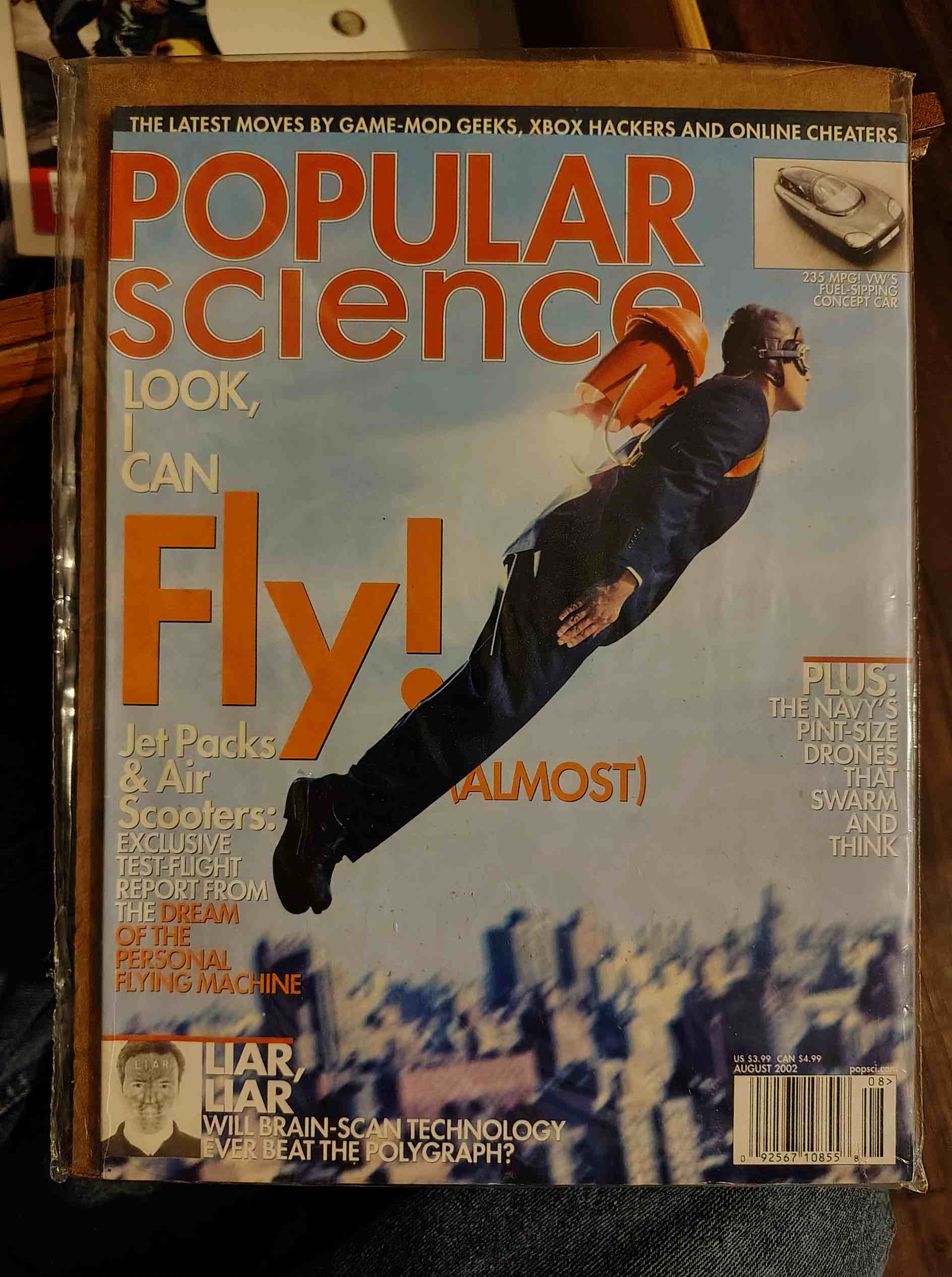
XB-Power quickly gained momentum. I interviewed Otaku no Zoku, created message boards supporting his work, and built a following before the Xbox had even launched. Eventually, the site was featured in Popular Science magazine, and game publishers began offering prerelease review copies of upcoming titles.
For someone who had only recently purchased his first computer, it was an unbelievable experience. I was having a blast!
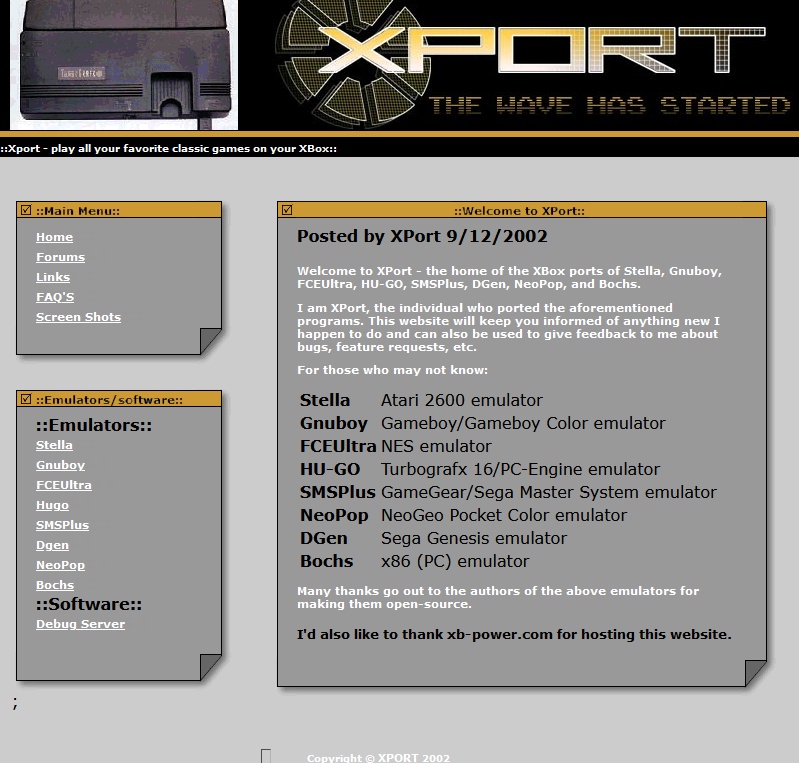
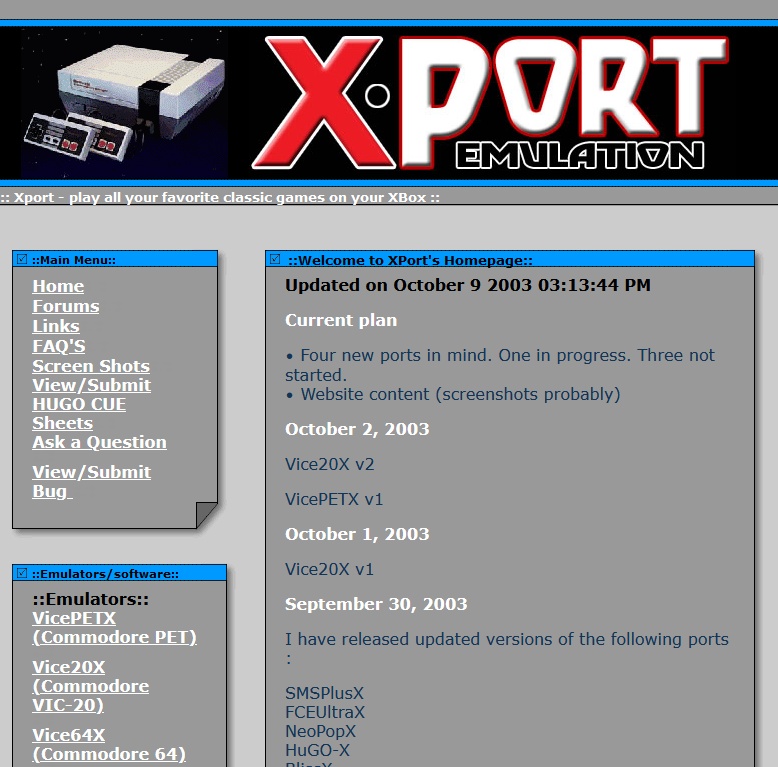
Even more memorable were the relationships I built with talented developers in the Xbox scene. I worked with XPort, who ported an incredible number of emulators to the console, building websites and hosting his projects to help share them with the community.
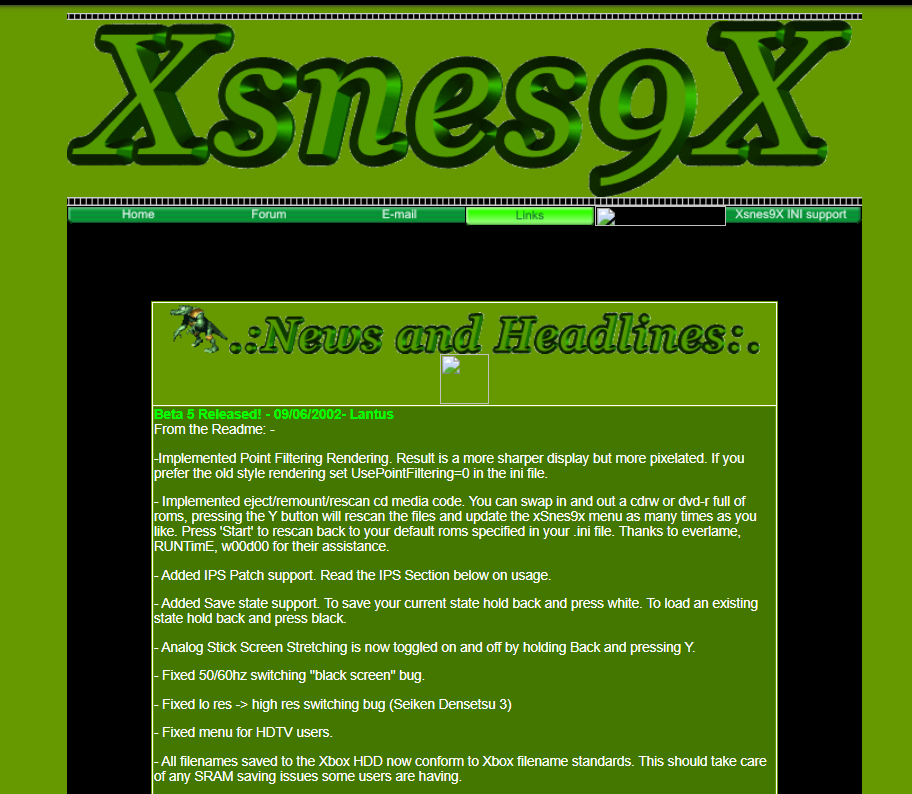
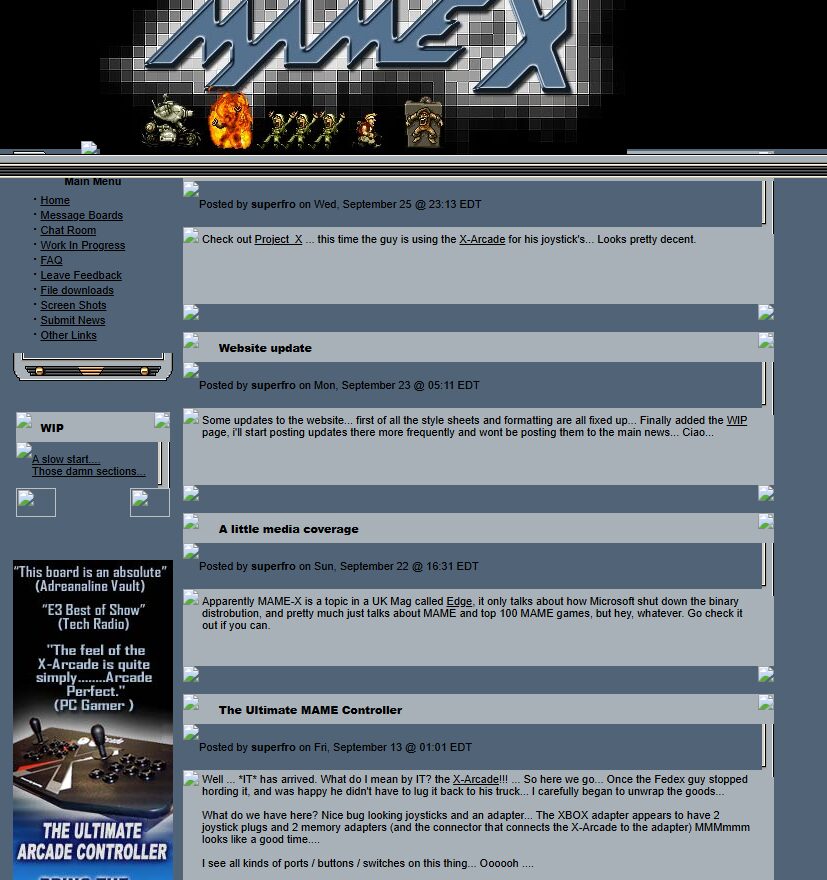
I also helped promote SuperFro, who worked on MAME, and Lantus, who developed an Xbox port of SNES9x and is now widely known as Modern Vintage Gamer on YouTube. I created and hosted websites for their projects as well.
I wasn’t writing the emulators myself, but helping these developers share their work was my way of contributing. Looking back, those collaborations remain among my proudest experiences in the emulation community.
The Birth of Retro Replay
After several years in the Xbox scene, I wanted to create something broader, a website that celebrated all of classic gaming rather than focusing on one console. In December 2008, Retro-Replay.com was born.
Retro Replay has always been a labor of love. It’s a place for retro game reviews, emulation, longplays, interviews, historical features, and nostalgic reflections on the games and systems that shaped our childhoods.
Over the years, I’ve occasionally stepped away to work on other websites and projects, sometimes for longer than I intended. But I’ve always returned. My passion for gaming history and the emulation scene has never gone away.
What Retro Replay Is Today
Retro Replay isn’t a corporate publication. It’s an independently run website built around my lifelong love of gaming and my appreciation for the people who helped make this hobby what it is.
Today, the site continues to grow through game reviews, developer interviews, historical deep dives, tutorials, longplays, and coverage of classic games and hardware. I’m especially interested in documenting the history of emulation and recognizing the developers and communities whose contributions deserve to be remembered.
Through the website, YouTube, and social media, I hope to connect with gamers, collectors, developers, historians, and anyone who still remembers the excitement of discovering a new game or console for the first time.
Ultimately, I want Retro Replay to become a lasting archive of gaming history, a place where people can learn something new, revisit old favorites, and discover forgotten gems.
Whether you’re here for the nostalgia, the history, or the games themselves, I’m glad you found us.
Retro Replay has been online since 2008, and I intend to keep it going for as long as I can. Some games, stories, and memories are simply too good to be forgotten.