Retro Replay Retro Gaming History, Reviews & Emulation

It’s been thirty-five years since two colorful cavemen started beating up dinosaurs in arcades. Apparently, Joe and Mac still haven’t learned their lesson.
Now more than three decades later, Red Art Games has released the Joe & Mac Retro Collection for PC, PlayStation 5, Xbox Series X|S, Nintendo Switch, and Switch 2.
The Retro Collection brings three classic Data East platformers to modern hardware, complete with save states, rewind, display options, and a handful of historical extras.
But don’t mistake this for a remake. The original 16-bit games remain largely intact, including their graphics, gameplay, and occasional early-’90s frustrations.
And after spending some time with all three, I’d say that’s part of their charm.
A Little Prehistoric History
The original Joe & Mac: Caveman Ninja debuted in arcades in 1991, introducing two cavemen on a mission to rescue their village’s kidnapped women.
 Developed by Data East, the colorful action-platformer combined cooperative gameplay, projectile weapons, and enormous prehistoric bosses. It eventually reached several home systems, including the Super Nintendo, where the experience was expanded with redesigned stages and an overworld map.
The franchise continued with Congo’s Caper in 1992, a Japanese series spin-off starring a monkey transformed into a caveman. Released in North America in 1993, it offered a more traditional single-player platforming adventure.
Then came Joe & Mac 2: Lost in the Tropics in 1994, introducing village exploration, character interactions, and light RPG elements, including the opportunity to get married and start a family.
All three Super Nintendo games are included in the new collection, along with their original Japanese versions.
What’s New in the Retro Collection?
The biggest improvements are features designed to make these older games more convenient to play.
Save states and rewind allow players to recover from mistakes without restarting entire sections. Anyone who remembers the unforgiving difficulty of classic platformers will immediately appreciate having those options.
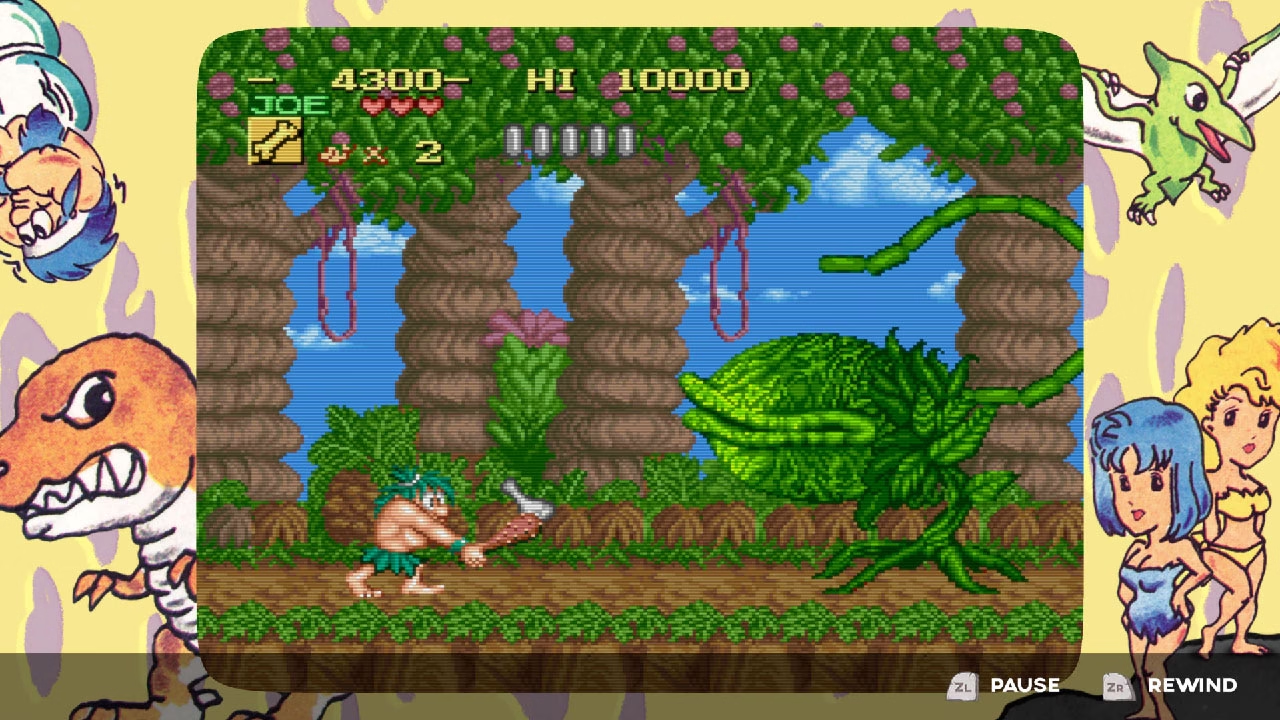
A new Boss Rush mode offers an additional challenge, while CRT filters, adjustable aspect ratios, and customizable screen frames let players choose how they want to experience the original presentation.
The collection also includes a virtual unboxing feature, where players can examine recreations of original packaging, cartridges, and manuals, along with a soundtrack player.
Local two-player co-op remains available in Joe & Mac: Caveman Ninja and Lost in the Tropics, while Congo’s Caper is still a single-player adventure.
And for anyone interested in gaming history, having both the Western and Japanese releases offers an opportunity to explore the regional differences between the games.
Back to the Stone Age — My Hands-On Experience
Thanks to a Switch review code from the developers, I’ve been able to spend some time playing all three games, and I enjoyed myself!
The collection is a genuine throwback to the Super Nintendo era, complete with colorful environments, goofy enemies, oversized bosses, and some wonderfully old-fashioned platforming.

What I particularly enjoyed was playing the games in succession and seeing how the series evolved.
There’s a noticeable progression in the graphics and animation, the controls, and the additional gameplay features. The original Joe & Mac is relatively straightforward, but the later games show how Data East experimented with the formula and gradually expanded what players could do.
It’s an entertaining little look at how game development evolved during the early 1990s, all within a single franchise.
Of course, not everything has aged gracefully.
The first game in particular can feel a little clunky by modern standards. Movement and combat take some getting used to, especially if you’re accustomed to the precision and responsiveness of newer platformers.
But if you’re willing to accept those limitations, there’s still plenty of fun to be had.
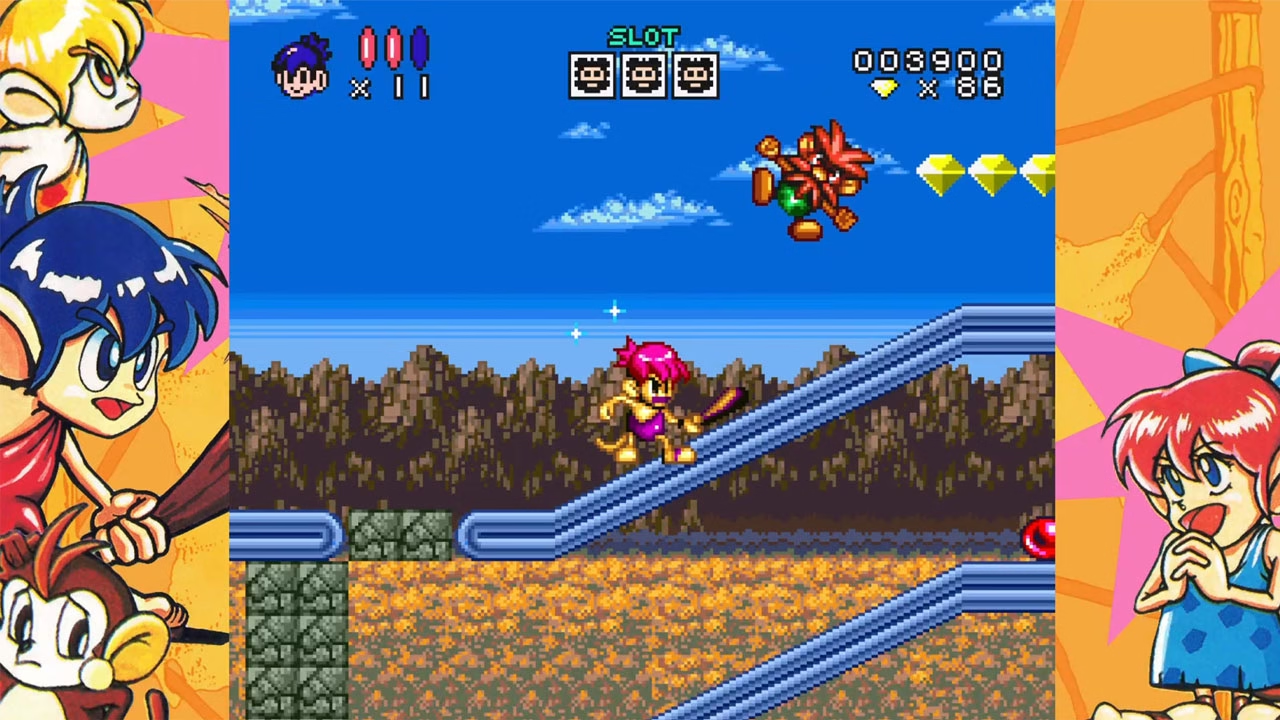
And here’s where the collection’s modern features really earn their keep.
Save states and rewind are probably the biggest reasons I’ve gotten as far as I have.
I’m no stranger to old-school platforming, but that doesn’t mean I particularly enjoy repeating the same difficult sections over and over again.
Being able to rewind a mistake or save my progress makes the games considerably more approachable without changing their underlying mechanics.
It’s a welcome compromise between preserving the original experience and respecting the player’s time.
What’s Missing?
Despite its name, Joe & Mac Retro Collection isn’t a complete history of the franchise.
The original 1991 arcade version of Caveman Ninja is absent, as is Joe & Mac Returns, the 1994 arcade follow-up featuring single-screen platforming.
It’s also worth distinguishing Retro Collection from New Joe & Mac: Caveman Ninja, the separate 2022 remake that rebuilt the original adventure with updated graphics and gameplay.
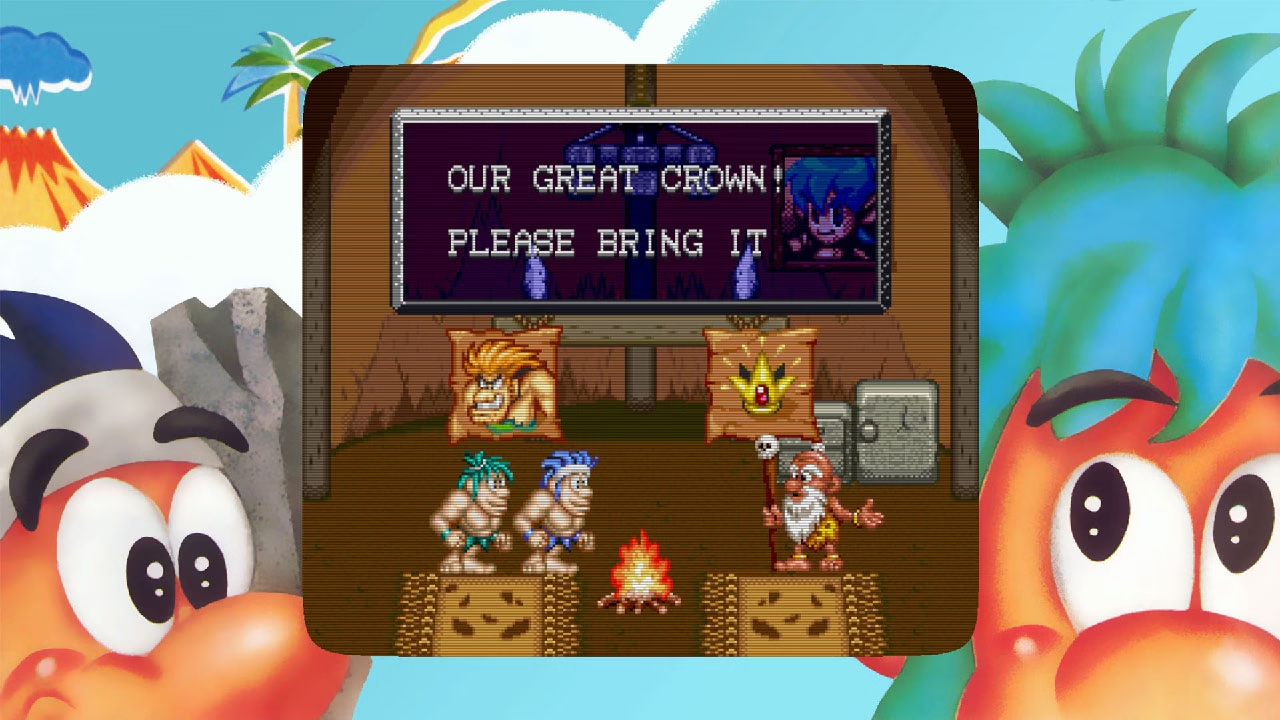
The 2026 release instead focuses on preserving the Super Nintendo trilogy, with modern conveniences rather than a complete overhaul.
The Verdict
If you grew up with Joe & Mac, I’d recommend making the trip back. I enjoyed all three games, and seeing how the series evolved was an unexpected bonus.
They still have their rough edges, but that’s part of revisiting games from another era. And this time around, I’m happy to have a rewind button.
Did you play Joe & Mac back in the day? And do you welcome modern conveniences in retro games, or prefer the original challenge?
#GamesWithGalt #JoeAndMac #JoeAndMacRetroCollection #DataEast #RetroGaming #SNES #PlatformGames #VideoGames