 Retro Replay Retro Replay gaming reviews, news, emulation, geek stuff and more!
Retro Replay Review
Gameplay
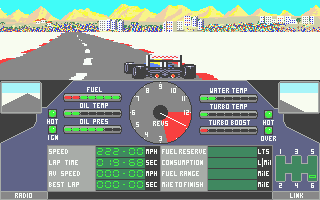
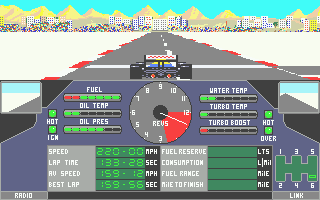
Nigel Mansell’s Grand Prix is a deep simulation that places you firmly in the driver’s seat of a 1990s Formula 1 car. The behind-the-car perspective, combined with a dedicated cockpit view below, encourages players to focus on precise steering inputs, throttle management, and strategic use of the turbo boost. Rather than an arcade racer, this title demands attention to detail—with aerodynamic slipstreaming, engine temperature, and tire wear all playing a relevant role. You’ll spend as much time monitoring gauges and shift lights as you do navigating hairpin turns and chicanes.
(HEY YOU!! We hope you enjoy! We try not to run ads. So basically, this is a very expensive hobby running this site. Please consider joining us for updates, forums, and more. Network w/ us to make some cash or friends while retro gaming, and you can win some free retro games for posting. Okay, carry on 👍)
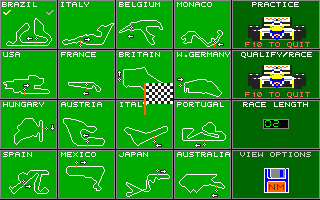
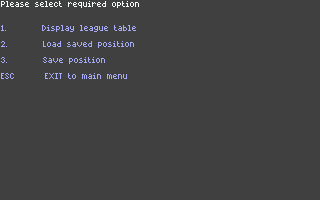
The qualifying system is notably strict: three timed laps determine whether you even make the grid. Fall short, and you miss out on race day entirely. Once you’re through, you choose between sprint distances of 5 to 20 laps or endure a full Grand Prix marathon. The inclusion of mid-season save support—whether to cassette or floppy disk—allows you to tackle a full championship over multiple sessions, giving the sense of a multi-week campaign that mirrors real F1 seasons. Missing qualification in one event doesn’t end your campaign, but it does force you to work harder in the next round.
Fuel management and turbo usage bring another layer of complexity. The turbo boost provides a thrilling burst of acceleration for overtaking or setting quicker lap times, but careless application can overheat and even damage your engine. You’ll also need to balance your fuel load: pit stops are only for tire changes, reflecting the era’s regulations where refueling was banned. This accurate recreation of period rules turns each race into a chess match of strategy, pitting outright speed against mechanical sympathy.
Graphics
Given its early-’90s release, the visuals of Nigel Mansell’s Grand Prix are rudimentary by today’s standards but were impressive for their time. Tracks are rendered with flat-shaded polygons and simple textures, yet each of the 16 official circuits is recognizably distinct. From the fast sweeps of Monza to the tight hairpins of Monte Carlo, the layouts feel faithful to the real-world venues. Roadside details—crowd stands, pit garages, and trackside banners—offer just enough ambiance to make each track feel alive without distracting from the driving line.
The cockpit display below the main viewport provides real-time instrument feedback, including speedometer, tachometer, and turbo pressure gauge. While these elements are pixelated, they’re clear enough to read even during high-speed sections. The transition between the external and internal views is seamless, ensuring you never lose sight of the action. Trackside objects pop in and out with minimal flicker, and while there’s no dynamic weather or shadows, the consistent frame rate keeps the experience smooth.
Car models themselves are basic wireframe constructs overlaid with flat color. You won’t see damage deformation or realistic tire smoke, but subtle visual cues—such as slight flickers in the engine gauge or minor speed drops when tires are worn—reinforce the simulation focus. Overall, the graphics deliver an authentic period feel, immersing you in an era when Formula 1 technology was raw and mechanical rather than the glitzy spectacle it is today.
Story
As a licensed Nigel Mansell title, the game carries the weight of its namesake’s reputation without offering a narrative campaign or cutscenes. There’s no evolving storyline of season rivalries or team politics; instead, the “story” unfolds through lap times, qualifying results, and championship standings. Your progress is tracked on a simple leaderboard that mirrors the real-world points system, turning each race weekend into an episodic chapter of your pursuit of F1 glory.
The sense of progression comes from the statistical climb: breaking into the top ten in qualifying, clawing through mid-field battles, and finally challenging for podiums. Each improvement feels earned, since the game demands consistent performance across all 16 circuits. In lieu of a scripted narrative, your personal triumphs and failures create the drama. A blown engine at Imola or a perfect pole lap at Spa becomes your own story beats, shaping the invisible arc of your season.
While some players might miss character-driven elements or in-race commentary, the absence of a cut-and-dried plot underscores the game’s dedication to authenticity. You aren’t watching a story unfold—you are the story, forging your legacy through strategy, skill, and a bit of turbo-fueled bravery. The “narrative” here is purely mechanical, driven by results rather than dialogue or spectacle.
Overall Experience
Nigel Mansell’s Grand Prix is a simulation purist’s dream. Every lap is a test of concentration; every pit stop and turbo boost decision carries weight. If you’re seeking fast-paced arcade thrills, this title may feel unforgiving and slow to reward. However, for players who relish attention to mechanical detail, tire strategy, and genuine track layouts, it remains a rewarding challenge. The ability to save mid-season ensures that your commitment is honored, letting you build momentum over multiple sittings.
Sound design is functional, with engine roars, turbo spools, and simple PPM beeps alerting you to shifts and warnings. There’s no voiceover or crowd chant layers, keeping ambient noise minimal so that you stay focused on the data. For many, this stripped-down audio reinforces the immersion, as if you’re alone in the cockpit with only the hum of the power unit and your own heartbeat for company.
Ultimately, Nigel Mansell’s Grand Prix stands as an important milestone in racing simulation history. Its exacting standards and faithful recreation of early-’90s Formula 1 regulations set a precedent for future titles. While modern racers have far surpassed it in presentation and accessibility, this game’s core mechanics still resonate with veteran sim racers and retro gaming enthusiasts. It may not hold your hand, but if you’re ready to embrace the challenge, it offers a pure, unadulterated taste of F1 competition straight from one of the sport’s great champions.

Reviews
There are no reviews yet.