 Retro Replay Retro Replay gaming reviews, news, emulation, geek stuff and more!
Retro Replay Review
Gameplay
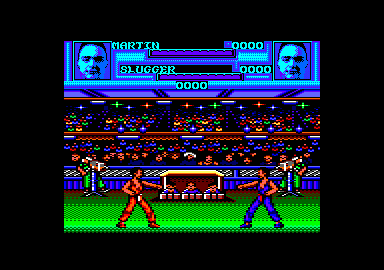
Oriental Games delivers a straightforward yet addictive fighting experience by pitting you in a series of one-on-one duels across multiple martial disciplines. Each contest unfolds from a side-view perspective, evoking the classic arcade spirit. Whether you’re trading high-speed kicks in Kung Fu, parrying strikes with your shinai in Kendo, or unleashing brutal head-butts and flying attacks in Kyo-Kus-Hin-Kai, the controls remain responsive and easy to pick up.
(HEY YOU!! We hope you enjoy! We try not to run ads. So basically, this is a very expensive hobby running this site. Please consider joining us for updates, forums, and more. Network w/ us to make some cash or friends while retro gaming, and you can win some free retro games for posting. Okay, carry on 👍)
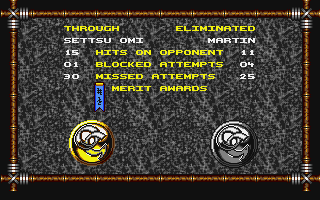
The energy bar system adds a tactical layer to the matches, splitting your stamina into five colored blocks that diminish when you take hits and gradually regenerate when you avoid damage. This mechanic encourages a balanced offensive and defensive approach; aggressive players will relish the high-octane combos, while cautious tacticians can capitalize on the slow rebuild of their energy gauge. Merit Awards for impressive moves further incentivize skilled play, rewarding you with bonus points and a satisfying sense of progression.
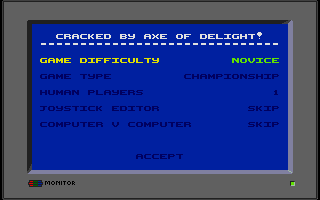
Platform variations introduce subtle shifts in gameplay depth. The 16-bit versions feature three distinct skill levels—Novice, Professional, and Master—allowing newcomers to ease in while veterans can seek a genuine challenge. A built-in joystick-move editor also empowers players to customize controls for specific combos, making advanced techniques feel more natural. Meanwhile, the 8-bit editions forego these niceties but compensate with an additional discipline: Sumo. In that version, you must tackle all four events—Kung Fu, Kendo, Kyo-Kus-Hin-Kai, and Sumo—in a set sequence, adding a marathon quality to the overall experience.
Graphics
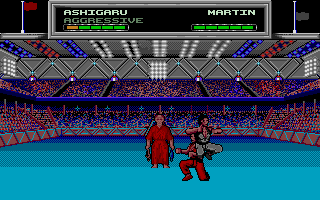
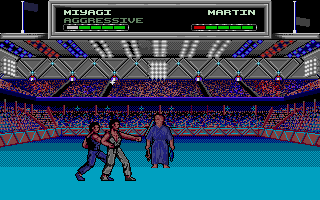
On the 16-bit platforms, Oriental Games showcases colorful, well-animated sprites that bring each martial art to life. Characters are detailed enough to distinguish each style’s unique attire and stance, and the fluidity of motion—especially during kicks, thrusts, and aerial attacks—stands out among its contemporaries. Backgrounds are kept minimal to maintain focus on the fighters, but subtle touches like flickering torches or wooden dojo walls add atmosphere without overwhelming the eye.
The 8-bit versions, while understandably more constrained, still manage to convey the action with clear outlines and a limited but coherent color palette. Animation frames are fewer, resulting in a slightly choppier presentation, yet each move remains readable on screen. The introduction of Sumo match arenas in the 8-bit release adds variety to the visuals, presenting open dohyo rings with traditional boundary lines that set them apart from the dojo settings of the other disciplines.
Across all versions, the UI is clean and functional. The segmented energy bar, displayed prominently at the top of the screen, changes hue as your stamina ebbs and flows, providing instant feedback on both your status and that of your opponent. Merit Awards and score tallies appear unobtrusively, ensuring you never miss a beat of the action. While the game doesn’t aim for realism, its stylized approach effectively captures the excitement and tension of martial arts showdowns.
Story
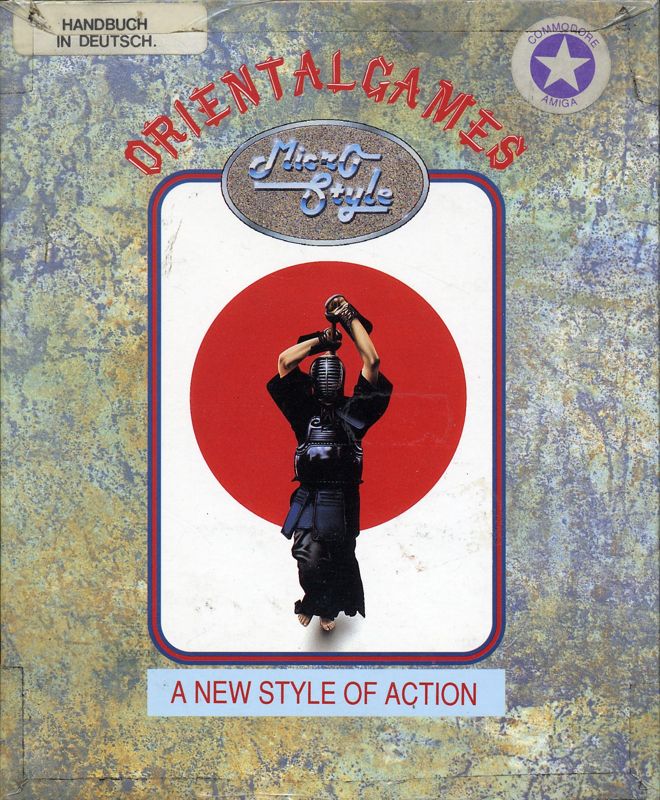
Oriental Games embraces the timeless tournament trope: skilled martial artists travel from far and wide to prove themselves in front of an eager audience. The packaging touts the need for “courage, skill and flare,” setting the stage for a high-stakes competition where only the best emerge victorious. While there is no deep narrative or character backstories, the progression through increasingly tough opponents in each discipline creates a natural sense of journey and accomplishment.
Each discipline—Kung Fu, Kendo, Kyo-Kus-Hin-Kai, and, on 8-bit machines, Sumo—carries its own thematic flavor. Kung Fu bouts take place in serene temple courtyards, implying a spiritual tradition behind each punch and block. Kendo matches evoke the samurai code with wooden dojo hallways and disciplined guards. The ferocity of Kyo-Kus-Hin-Kai’s head-butts and aerial maneuvers hints at more unorthodox fighting schools, adding a raw edge to the competition. Sumo’s inclusion on older hardware injects a cultural showcase, rounding out the tournament’s global appeal.
Though minimal in plot, the game’s structure—best two-out-of-three rounds per disciplinary final—offers a clear narrative arc: you rise through the ranks, earn Merit Awards for signature moves, and ultimately stake your claim as the tournament champion. This bare-bones storytelling places the emphasis squarely on gameplay excellence, making each victory feel hard-earned and each loss a prompt to refine your technique further.
Overall Experience
Oriental Games succeeds as a concise yet compelling martial arts compilation, blending accessibility with enough depth to satisfy both casual players and seasoned fighters. The variety of disciplines ensures you’re constantly adapting your strategy, while the energy bar and Merit Award systems reward precision and creativity. Matches feel tense and rewarding, especially on higher skill settings where split-second decisions can turn the tide of battle.
The visual and audio presentation varies by platform, but neither version detracts from the core appeal. The 16-bit editions shine with smoother animations, digitized sound effects, and customizable controls, making them the definitive way to play. Conversely, the 8-bit releases deliver an admirable experience complete with an extra Sumo discipline, offering nostalgic charm and a structured progression through all four events.
Ultimately, Oriental Games stands out for its straightforward implementation of multiple martial arts disciplines in one package. Its pick-up-and-play nature, coupled with deeper skill levels and merit-based incentives, creates an engaging tournament atmosphere that keeps you coming back for “just one more match.” Whether you’re a retro enthusiast or a newcomer to classic side-view fighters, this title provides an enjoyable test of technique, timing, and competitive spirit.


Reviews
There are no reviews yet.