 Retro Replay Retro Replay gaming reviews, news, emulation, geek stuff and more!


Retro Replay Review
Gameplay
Phobia’s core gameplay loop revolves around fast-paced, one-dimensional blasting, but it cleverly spices things up with varied flight and underground sections. Players begin each level by piloting their ship through open space toward the planet’s atmosphere. This transition phase sets a brisk tempo and gives you a moment to brace for what’s ahead. Once you reach the planet, the combat shifts to a side-scrolling shoot ’em up, where you blast through waves of fear-themed enemies.
(HEY YOU!! We hope you enjoy! We try not to run ads. So basically, this is a very expensive hobby running this site. Please consider joining us for updates, forums, and more. Network w/ us to make some cash or friends while retro gaming, and you can win some free retro games for posting. Okay, carry on 👍)
After clearing the surface, Phobia introduces an underground cavern challenge, forcing you to navigate tight corridors while avoiding hazards and dispatching lurking monsters. This three-part structure—approach, surface combat, and subterranean maze—ensures that the action never feels completely repetitive. Although at its heart it’s a straightforward shooter, the level design keeps you on your toes by mixing up enemy placements, environmental traps, and occasional mini-boss encounters.
One of the standout features is the simultaneous two-player mode, which transforms the lone space trek into a cooperative adventure. While some players might prefer the solitude of solo play, teaming up with a friend adds a layer of strategy: you can cover each other’s blind spots, share power-ups, and coordinate attacks on larger foes. This co-op twist not only lightens the tension—especially on spider- or snake-infested levels—but also ups the replay value as you experiment with different playstyles.
Graphics
Visually, Phobia embraces a vibrant, cartoonish aesthetic that complements its fear-based themes rather than descending into gratuitous gore. Each planet’s color palette evokes its specific terror: murky browns and sickly greens for the cave of snakes, jet-black webs shimmering with red for the spider world, and sterile whites and grays for the dentist level. These distinct looks help players immediately grasp the level’s mood and threat.
Character and enemy designs are bold and exaggerated, walking the line between creepy and comical. Giant fanged spiders skitter with unnerving speed, oversized dental drills whirr menacingly, and skeletal snake coils slither across the screen in sinuous patterns. The crisp sprite work and smooth animations ensure that each confrontation feels dynamic, though seasoned gamers may notice occasional frame drops when the screen floods with projectiles.
Background details add depth without overwhelming the action. Subtle animations like dripping stalactites in underground caverns or flickering lights inside a decaying dental office enrich the atmosphere. While it’s not pushing cutting-edge graphical boundaries, Phobia’s art direction is cohesive and lively, giving every world its own personality and making each new environment a mini showcase of thematic design.
Story
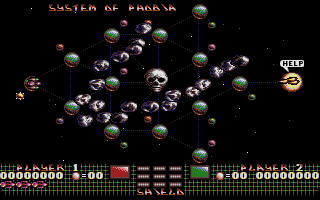
At first glance, Phobia’s narrative is refreshingly simple: the evil Phobos has entangled fifteen fear-themed planets in his malevolent grip, and it’s up to you—and an optional second pilot—to rescue the Galactic Emperor. This classic “save the ruler” trope may feel familiar, but Phobia leans into its premise by making the levels themselves the real stars of the show.
Each planet represents a facet of human fear—spiders, snakes, dentists, heights, darkness, and more—creating a cohesive throughline that justifies the game’s wild environmental shifts. While the story doesn’t delve into extensive character development or plot twists, it sets the stage for a varied, adrenaline-fueled mission. Occasional text interludes between worlds provide light context and inject a touch of humor, ensuring players stay invested without wading through lengthy dialogue.
The minimalist storytelling works in Phobia’s favor: it keeps the focus on action and exploration, preventing the narrative from bogging down the high-octane pacing. By the time you’ve blasted through half a dozen phobia-laden planets, you’ll find yourself more absorbed in surviving the next gauntlet than pondering deeper lore—yet the overarching goal remains clear and compelling.
Overall Experience
Phobia strikes a satisfying balance between retro shooter thrills and thematic variety. The tripartite level structure—space flight, surface shootout, and underground maze—ensures that each stage feels like a mini-adventure rather than a rote copy of the last. Though the core mechanics are straightforward, the creative enemy designs and shifting environments maintain excitement across all fifteen planets.
The addition of two-player co-op elevates the experience, transforming tense solo runs into collaborative escapades. Whether you’re covering a friend’s flank against spider swarms or navigating tight cave corridors in tandem, the cooperative option breathes fresh life into repeated playthroughs. Even on solo mode, however, Phobia’s tight controls and consistent pacing rarely let the action drag.
Ultimately, Phobia is an engaging pick for fans of side-scrolling shooters and arcade-style action. Its fear-themed levels add a clever twist to familiar mechanics, and its accessible difficulty curve makes it approachable for newcomers while still offering a challenge for veterans. If you’re looking for a visually distinct, fast-paced romp through human anxieties, Phobia delivers a memorable interstellar thrill ride.



Reviews
There are no reviews yet.