 Retro Replay Retro Replay gaming reviews, news, emulation, geek stuff and more!

Retro Replay Review
Gameplay
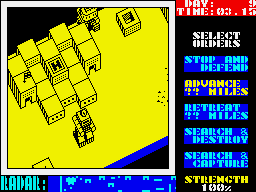
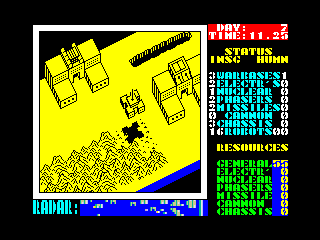
Nether Earth thrusts you into the cockpit of a small flying reconnaissance robot rather than handing you a simple cursor. This living proxy roams factory floors, scouting terrain and interacting directly with assembly lines. It’s an immediate departure from conventional RTS controls, giving you tactile agency as you design and deploy mechanized forces in real time.
(HEY YOU!! We hope you enjoy! We try not to run ads. So basically, this is a very expensive hobby running this site. Please consider joining us for updates, forums, and more. Network w/ us to make some cash or friends while retro gaming, and you can win some free retro games for posting. Okay, carry on 👍)
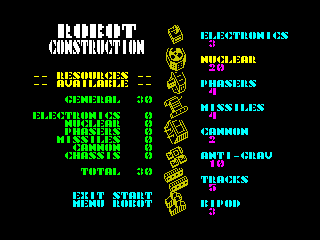
At the heart of each mission lie four pivotal bases—Kerberus, Tarras, Faretra, and Diolkos—each housing a factory that churns out robot components. Entering these facilities, you choose from parts like antigrav units, radar arrays, wheels, laser cannons, or even nuclear warheads. The deeper your understanding of each component’s strengths and weaknesses, the more lethal your custom mechs become on the battlefield.
Once your battle robots roll out, the game’s AI handles routine orders—maintaining formation, targeting enemy weaker points, and capitalizing on momentum. However, when the heat intensifies or precision is paramount, you can transfer control directly to any of your units. This dual-layer control system lets you switch seamlessly between broad strategic oversight and hands-on piloting, ensuring maximum flexibility in adapting tactics.
Capturing a base shifts the balance of power instantly. Perhaps you’ll adopt guerrilla tactics around Tarras’ crystal spires or mount a full-frontal assault on Faretra’s heavily fortified turrets. Each conquest forces you to reevaluate resource flow, adjust assault vectors, and anticipate Insignian counterstrikes. The result is a dynamic, high-stakes chess match that rewards foresight as much as reflexes.
Graphics
Though conceived in an era when 3D acceleration was nascent, Nether Earth’s isometric vistas hold up through smart design choices. Terrain tiles—ranging from scorched metal plating to alien crystal fields—are distinct and easy to read, ensuring you can manage dozens of units without losing sight of objectives. Lighting effects, though subtle, lend a credible sense of depth to each factory interior and barren plain.
Mechs and alien constructs sport clear, color-coded silhouettes that immediately communicate role and threat level. Explosions, laser blasts, and nuclear detonations burst with bright flashes and satisfying sound cues, amplifying the tension of each engagement. Even minor details—like the flicker of factory conveyor belts or the rumble of antigrav launch pads—add to the atmosphere without clogging the interface.
The decision to represent your command cursor as a hovering robot pays dividends in immersion. Its gentle rotor whirs and scanning beam animations give every click a purpose, making you feel like an active participant rather than a distant overseer. In-game cutaways when entering factories further reinforce the sense that you’re part of a living, breathing war effort.
Story
At its core, Nether Earth’s narrative is a straightforward tale of survival: humanity versus the ancient Insignian empire. The plot unfurls through brief mission briefings, intercepted alien transmissions, and scattered audio logs. These fragments sketch a bleak portrait of two civilizations locked in an existential struggle across a far-flung planet.
Each base—Kerberus, Tarras, Faretra, and Diolkos—carries its own atmospheric lore. Kerberus, the battered human stronghold, echoes with distress calls from frontline defenders. Tarras’ crystalline caverns suggest Insignian efforts to harness exotic energy sources. Together, these storytelling touches provide context for every strategic push and daring raid.
While character development and dialogues are minimal, the game’s strength lies in letting players pen their own sagas of technological triumph or catastrophic failure. Every custom-built mech and every capture or loss weaves into a broader tapestry of interstellar warfare, making each campaign feel personally meaningful.
Overall Experience
Nether Earth remains a compelling RTS classic that marries inventive controls with deep customization. The small flying robot interface and on-the-fly mech design elevate the genre, transforming base building and unit management into a tactile, intimate process. Few games capture the thrill of realtime strategy with such mechanical flair.
Newcomers will find the initial learning curve approachable thanks to solid AI assistance, while veterans can embrace full manual control for nail-biting precision. Although occasional pathfinding hiccups and a lean story in the traditional sense may deter some, these issues rarely overshadow the core excitement of capturing factories and unleashing towering war machines.
For players seeking a futurist RTS that emphasizes both strategic oversight and direct unit control, Nether Earth delivers an engrossing, replayable experience. Its blend of customization, real-time tactics, and atmospheric presentation makes it a title worthy of rediscovery by anyone craving mech-based warfare on a grand scale.


Reviews
There are no reviews yet.