 Retro Replay Retro Replay gaming reviews, news, emulation, geek stuff and more!
Retro Replay Review
Gameplay
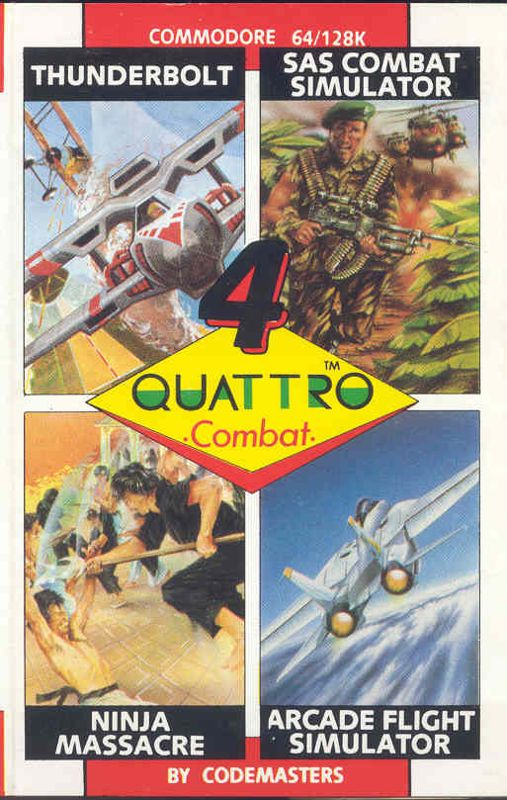
Quattro Combat’s primary appeal lies in its eclectic mix of four distinct gameplay experiences. Arcade Flight Simulator opens the compilation with straightforward aerial combat, tasking players with dogfights and bombing runs that demand quick reflexes and a steady hand. The simple control scheme is accessible, yet mastering maneuvers like barrel rolls or split-S dives becomes increasingly rewarding as you progress through the mission roster.
(HEY YOU!! We hope you enjoy! We try not to run ads. So basically, this is a very expensive hobby running this site. Please consider joining us for updates, forums, and more. Network w/ us to make some cash or friends while retro gaming, and you can win some free retro games for posting. Okay, carry on 👍)
Transitioning to SAS Combat Simulator, the pace slows considerably, giving way to methodical planning and precision shooting. You’ll plot insertion points, breach enemy compounds, and clear rooms in this early tactical shooter. While modern fans may find the AI predictable by today’s standards, the sense of accomplishment from executing a flawless raid remains gratifying.
Ninja Massacre injects adrenaline with its side-scrolling hack-and-slash action. You sprint across pagoda rooftops, dispatch waves of samurai and mythical creatures with shuriken throws and katana slashes, and confront multi-stage bosses. The level design is straightforward but peppered with secret alcoves, encouraging exploration and replayability.
Finally, Thunderbolt (or Death Stalker, depending on your system) wraps up the package with a classic shoot ’em up or fantasy action-RPG, respectively. In Thunderbolt, swarms of enemy ships and mid-level bosses keep your thumbs busy in a vertical-scrolling frenzy, while Death Stalker’s maze-like dungeons and magic spells offer variety for Spectrum and Amstrad owners. Together, these quartet entries ensure that Quattro Combat never feels stale.
Graphics
By modern standards, Quattro Combat’s visuals are undeniably retro, but they carry a nostalgic charm. Arcade Flight Simulator features rudimentary wireframe landscapes and color overlays for enemy aircraft, providing just enough visual feedback to keep you immersed in the clouds. On more powerful hardware, simple sprite scaling lends a basic sense of depth as targets approach.
SAS Combat Simulator shifts to a top-down perspective, with blocky soldier sprites and monochrome backgrounds on early PCs. Close-ups during door breaches are minimalistic—think pixelated outlines of a doorway splitting open. Despite the simplicity, the game cleverly uses contrast and sound cues to heighten tension in tight corridors.
The 8-bit flair of Ninja Massacre shines on Commodore 64 and ZX Spectrum alike. Vibrant reds and oranges dominate dojo interiors, while scrolling parallax backgrounds convey the illusion of distance. Character animations are snappy, especially during combo attacks, giving each ninja flip and slash a sense of impact.
Thunderbolt’s neon-infused ships and explosive pixel effects hold up as a testament to the age of arcade ports. In contrast, Death Stalker’s dungeons rely on muted palettes and static screens punctuated by colorful monsters. Though neither title pushes the hardware hard, they each capture the aesthetic strengths of their respective platforms.
Story
Quattro Combat is not a narrative-focused compilation, yet each title attempts to frame its action with a minimal storyline. Arcade Flight Simulator casts you as a hotshot pilot battling an unspecified enemy force. Brief mission briefings hint at strategic objectives, but the emphasis remains firmly on aerial engagements rather than plot twists.
SAS Combat Simulator provides a slightly more detailed setup: you command a special forces unit tasked with freeing hostages from a terrorist hideout. Text-based mission debriefings bookend each operation, adding context and stakes to each firefight. Though there’s no voice acting, the succinct prose effectively conveys urgency and camaraderie among your squad.
Ninja Massacre’s tale borrows from classic feudal Japan folklore—an evil warlord kidnaps the shogun’s daughter, and you, as the lone shadow warrior, must rescue her. Story beats are relayed via title cards between levels, offering little more than motivation. However, the minimalist narrative allows you to dive straight into the action without unnecessary exposition.
In Thunderbolt/Death Stalker, storyline depth varies. Thunderbolt gives a generic “save the planet” premise, while Death Stalker weaves a basic fantasy yarn of a hero hunting a dark sorcerer in the labyrinthine Citadel of Chaos. Both rely on climactic boss duels to provide narrative closure, ensuring that your final victory feels earned despite the sparse backstories.
Overall Experience
Quattro Combat stands as a testament to early ’80s and ’90s game design, offering diverse gameplay styles in one package. Its greatest strength is variety: you can switch from piloting fighter jets to urban tactical raids, then to ninja platforming and frenetic shmup action—all without changing cartridges. This makes it an excellent value proposition for retro enthusiasts or newcomers curious about gaming history.
While none of the four games will challenge modern blockbusters in terms of depth or audiovisual polish, they each excel at delivering straightforward, snack-sized entertainment. The learning curve is gentle, and missions are typically short, making Quattro Combat ideal for casual pick-up-and-play sessions. Hardcore players might find the repetition wears thin over extended play, but the nostalgic flip side is that these titles remain forgiving and approachable.
Technical compatibility is generally solid across supported platforms, though minor issues like sprite flicker or loading delays can surface on original hardware. Emulation options often provide enhanced stability and save states, allowing you to revisit the collection without hunting for floppy disks or cassette tapes.
Ultimately, Quattro Combat captures the spirit of its era. It’s a retro compilation that won’t reinvent genres, but it doesn’t aim to. Instead, it invites players to sample four distinct slices of gaming heritage, each with its own quirks and charms. For collectors, history buffs, or anyone seeking quick bursts of classic action, Quattro Combat remains a compelling purchase.


Reviews
There are no reviews yet.