 Retro Replay Retro Replay gaming reviews, news, emulation, geek stuff and more!
Retro Replay Review
Gameplay
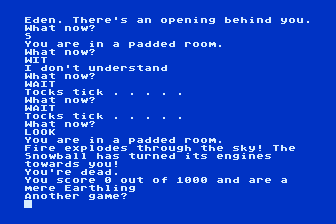
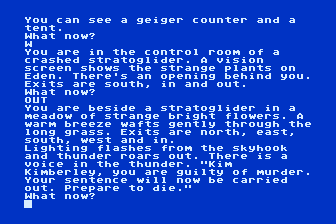
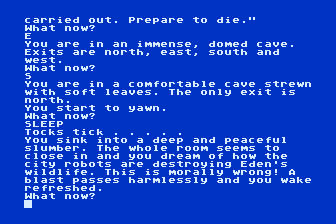
Return to Eden places you directly in the boots of Commander Kim Kimberley, combining classic text-driven commands with a modern interface that keeps the action flowing. From the moment you set foot into the crumbling walled city, you’ll be typing directional commands, inspecting objects, and solving environmental puzzles to navigate a world where logic and surrealism collide. The addition of the new IT command – which automatically applies to the last-mentioned object – streamlines interactions, letting you focus on the evolving narrative rather than wrestling with parser limitations.
(HEY YOU!! We hope you enjoy! We try not to run ads. So basically, this is a very expensive hobby running this site. Please consider joining us for updates, forums, and more. Network w/ us to make some cash or friends while retro gaming, and you can win some free retro games for posting. Okay, carry on 👍)
The puzzle design is engaging and often unpredictable. One moment you’re negotiating with rusted robot guards in the Corridors of Power, the next you’re planting a brick and discovering unexpected results. This blend of linear objectives (escape the justice droids) and lateral thinking challenges keeps the experience fresh. You’ll find yourself backtracking between locations such as the bank, the theme park, and the mysterious Starbike installation, each area rewarding exploration with quirky surprises and vital clues.
Difficulty is well-paced. Early obstacles remind you to experiment – drop items, combine odd objects, or simply try “WEAR” on armor without picking it up first. Later sequences demand timing and careful resource management, especially as malfunctioning bots close in on your trail. While veteran interactive fiction fans may breeze through some puzzles, newcomers will appreciate the gradual ramp-up and the forgiving save system that encourages trial and error.
Graphics
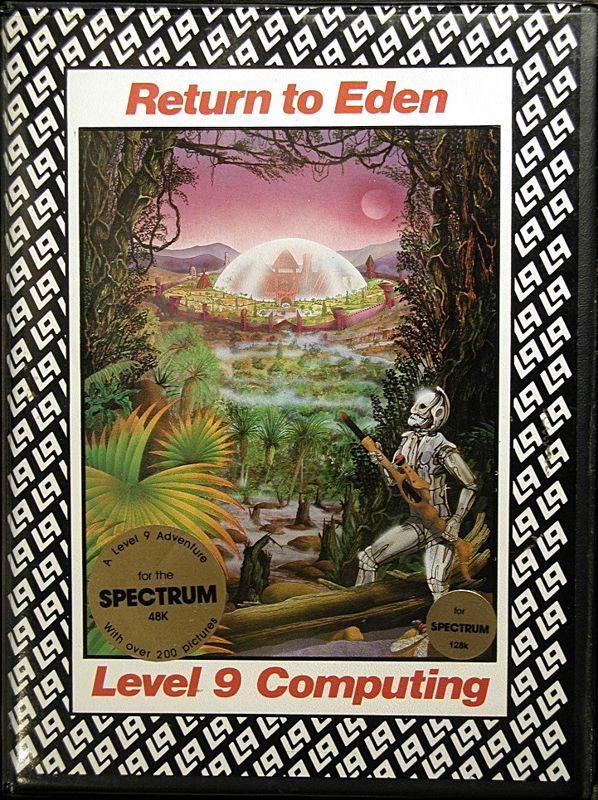
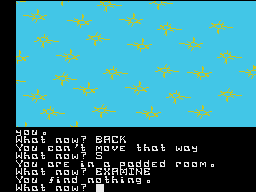
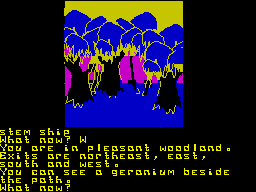
Unlike its predecessor, Return to Eden boasts over 200 illustrative pictures woven throughout the story. Each image paints a vivid snapshot of the planet’s overgrown landscapes, the decaying robot structures, and the tense standoffs with patrol droids. The art style strikes a balance between charming pixel work and moody, atmospheric shading, reinforcing both the beauty and the danger of Eden.
The illustrations serve more than decorative purposes – they often contain subtle hints or visual cues for puzzle solutions. Spotting a loose panel on a wall drawing or noticing a pattern on a guard’s helmet can be just as critical as deciphering text descriptions. The seamless integration of text and graphics elevates the immersion, making you feel present in every crumbling alleyway and lush jungle glade.
Performance is smooth even on modest hardware. The team’s optimization ensures that screen updates occur fluidly, and you can continue typing commands while visuals load in the background. This design choice minimizes downtime and keeps the narrative momentum intact. Overall, the upgraded graphical presentation marks a significant leap forward for Snowball’s interactive fiction offerings.
Story
The narrative thrust of Return to Eden centers on a dramatic twist: upon landing, Commander Kim Kimberley is caught on film committing a murder. Cut off from command and branded a criminal, you must outwit the very machines you once led. This setup injects an immediate sense of urgency and moral ambiguity – were you framed, or is there a deeper conspiracy within Snowball’s ranks?
The backdrop of Eden’s native resistance adds rich context. While Snowball’s command robots initially saw idyllic terrain ripe for colonization, the planet’s flora and fauna have evolved novel defenses, forcing robotic battalions into desperate skirmishes. As you traverse crumbling city walls and venture into overgrown wilds, encounters with mutated creatures and rogue machinery underscore the theme of nature asserting itself against technological overreach.
Side narratives and optional dialogue paths deepen the story world. You might overhear drifting transmissions about a secret expedition or stumble upon forgotten research logs detailing early experiments in robotic AI. These enriching details transform Return to Eden from a simple escape tale into a layered saga about trust, identity, and the unforeseen consequences of human expansion.
Overall Experience
Return to Eden successfully marries the nostalgia of text adventures with modern conveniences and striking visuals. Its inventive puzzles, atmospheric illustrations, and compelling storyline create an immersive package that keeps you engaged for hours. Whether you’re a veteran of interactive fiction or new to the genre, the adaptive parser and intuitive commands ensure accessibility without sacrificing depth.
While occasional puzzles demand a leap of faith and the world’s surreal moments can leave you scratching your head, the game rewards perseverance with satisfying “aha!” breakthroughs. The balance of exploration and narrative progression means you rarely feel stuck for long, and abundant save points encourage creativity. If you enjoy unraveling mysteries in richly detailed settings, Return to Eden offers a memorable adventure.
In terms of replay value, branching interactions and hidden easter eggs invite multiple playthroughs. You may want to revisit familiar locations with new strategies or experiment with different item combinations to uncover all the game’s secrets. For anyone seeking an interactive fiction experience that pushes boundaries and delivers on immersion, Return to Eden is well worth exploring.


Reviews
There are no reviews yet.