 Retro Replay Retro Replay gaming reviews, news, emulation, geek stuff and more!
Retro Replay Review
Gameplay
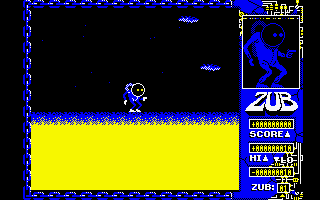
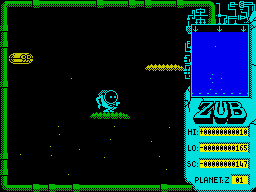
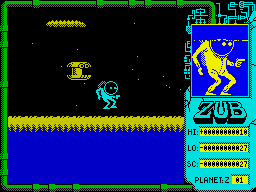
Zub offers a distinctive twist on the classic platforming formula by centering its challenges around intergalactic elevators and strategic platform placement. Rather than running through densely populated levels, players must position floating platforms next to each other, then leap and alternate between them to climb ever higher. This vertical progression is a fresh change of pace compared to conventional side-scroll adventures, demanding timing, precision, and an understanding of momentum to avoid plummeting back to the start.
(HEY YOU!! We hope you enjoy! We try not to run ads. So basically, this is a very expensive hobby running this site. Please consider joining us for updates, forums, and more. Network w/ us to make some cash or friends while retro gaming, and you can win some free retro games for posting. Okay, carry on 👍)
The simplicity of movement—walking, jumping, and firing the laser gun—belies the depth of the experience. As hostile Zubs drift and bob through each stage, you must keep one eye on your footing and another on your health meter. Laser shots are limited by a brief recharge, so managing offensive bursts while keeping your distance becomes an engaging juggling act. Dodging enemy contact feels tense because even a single touch drains precious energy.
The level design encourages experimentation. Platforms appear in predetermined locations, but you decide when and which platforms to activate. This freedom creates small moments of creative problem solving, especially when enemy patterns force you to adapt your ascent. While the core objective remains consistent—reach the top of the level and move on to the next planet—the interplay of movement, shooting, and platform placement yields a surprisingly varied set of challenges across the game’s stages.
Graphics
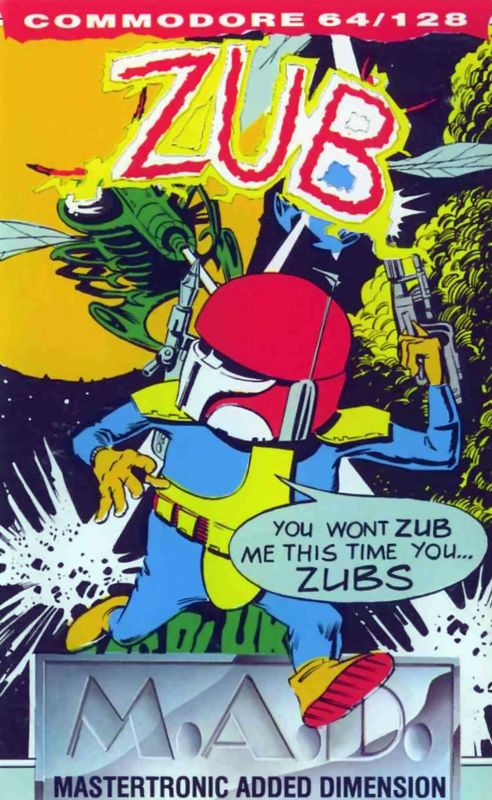
Zub’s visual style is unabashedly cartoonish, showcasing bold lines and vibrant color schemes that evoke the playful sci-fi comics of the ’80s. Characters, including the protagonist and his adversaries, are rendered with just enough detail to convey personality without cluttering the screen. The result is an aesthetic that feels both nostalgic and timeless, a hallmark of the Pickford brothers’ early work.
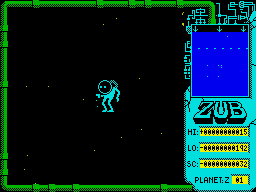
The game world itself is minimalistic by design. Backgrounds are often simple gradients or starfields, placing the focus squarely on platform clusters and enemy movements. This sparse environment helps maintain clarity as you navigate vertical playfields, ensuring that every edge, floating block, and approaching Zub is instantly recognizable.
Animation is smooth, with Zub’s hops and laser blasts delivering satisfying feedback. Enemies drift with a slow, eerie bob, reinforcing the alien atmosphere. Occasionally, you’ll spot subtle touches—like a brief flicker when a platform activates or a recoil frame when your laser pistol fires—that demonstrate the care taken to breathe life into each frame. For a debut team effort, the visuals are a strong testament to the Pickford brothers’ budding talent.
Story
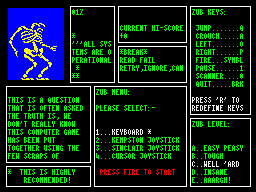
At its core, Zub unfolds a delightfully absurd premise: every being in the cosmos shares the same name, “Zub.” You step into the boots of Zub, an alien warrior tasked by his Emperor Zub to recover the Green Eye of Zub, a legendary artifact said to grant unparalleled power. This tongue-in-cheek setup sets the tone for a lighthearted adventure with a sci-fi flair.
There isn’t a sprawling narrative or lengthy cutscenes—Zub keeps its storytelling succinct. However, brief mission prompts, planet names, and a handful of in-game messages sprinkle enough context to keep you invested. Each new world hints at the vastness of the Zub empire, suggesting countless other “Zubs” yet to be discovered, even if the gameplay remains laser-focused on vertical platforming.
The humor largely emerges from the repetitive naming and the contrast between epic goals and bare-bones execution. You traverse empty skies and barren landscapes, yet the grandiose mission blares through. This comedic dissonance is part of the charm—by poking fun at genre conventions, Zub embraces its identity as a quirky, no-frills platformer that doesn’t take itself too seriously.
Overall Experience
Zub stands as a compelling relic of early platform design, blending straightforward controls with inventive level mechanics. Its strength lies in the vertical elevator concept, which keeps you focused on a singular objective: climb, survive, and repeat. Each success feels earned, and each misstep reminds you how precarious your ascent can be.
Despite its minimalist approach, the game sustains engagement through tight controls and a whimsical presentation. The difficulty curve is modest but firm—newcomers may find the first few planets forgiving, but later areas demand sharper reflexes and smarter platform coordination. Replay value emerges naturally as you aim for cleaner runs and faster ascents.
While modern gamers might crave more variety or narrative depth, Zub’s straightforward design is precisely its appeal. It shines in short bursts, perfect for quick gaming sessions or nostalgic dives into the roots of cartoon platformers. For aficionados of retro challenges and fans of the Pickford brothers’ later masterpieces, Zub is a worthwhile expedition into a galactic empire where everyone—and everything—is named Zub.


Reviews
There are no reviews yet.