 Retro Replay Retro Replay gaming reviews, news, emulation, geek stuff and more!


Retro Replay Review
Gameplay
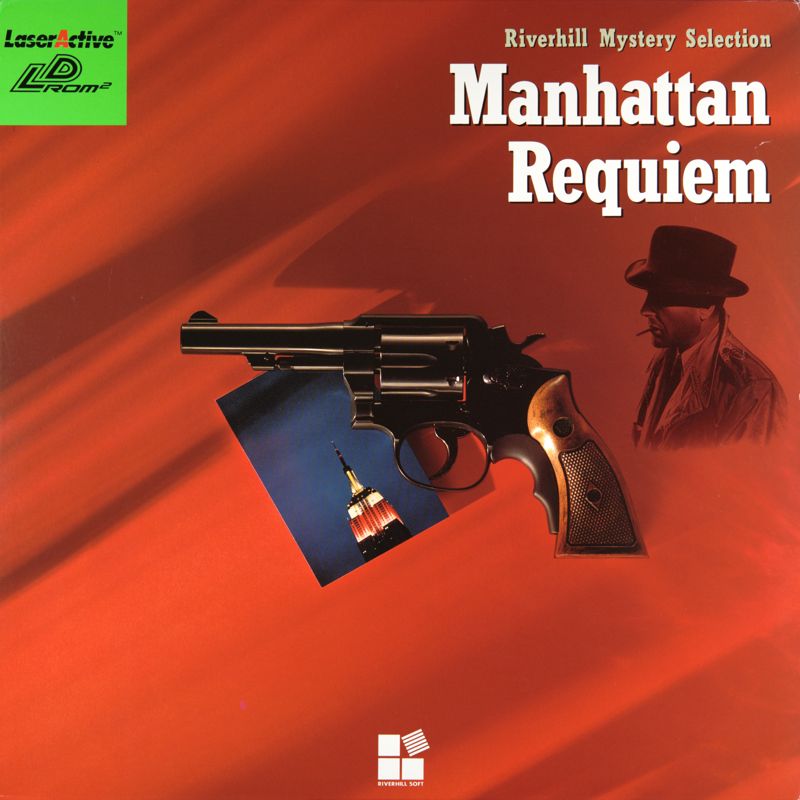
Manhattan Requiem offers a slow-burning investigative experience that places you squarely in the shoes of J.B. Harold, a seasoned private detective. The game eschews traditional adventure tropes like complex inventory puzzles or arbitrary “trigger commands,” favoring instead a more organic flow of gathering clues, connecting evidence, and interrogating suspects. From the moment you step into the dimly lit flat where a young pianist’s life was brutally ended, you’ll be poring over details and revisiting crime scenes with a level of freedom seldom seen in narrative-driven adventures.
(HEY YOU!! We hope you enjoy! We try not to run ads. So basically, this is a very expensive hobby running this site. Please consider joining us for updates, forums, and more. Network w/ us to make some cash or friends while retro gaming, and you can win some free retro games for posting. Okay, carry on 👍)
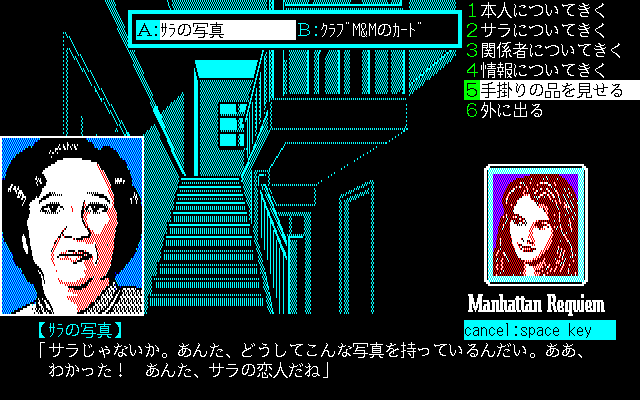
The dialogue system is particularly robust, allowing you to pursue multiple lines of questioning without the risk of prematurely cornering a suspect. Each conversation branch can yield subtle hints—an offhand remark here, a flicker of guilt in a witness’s eyes there—that may point you toward new locations or fresh pieces of evidence. The lack of an overburdened inventory ensures you stay focused on the case rather than juggling irrelevant items, which helps maintain tension and immersion throughout the investigation.
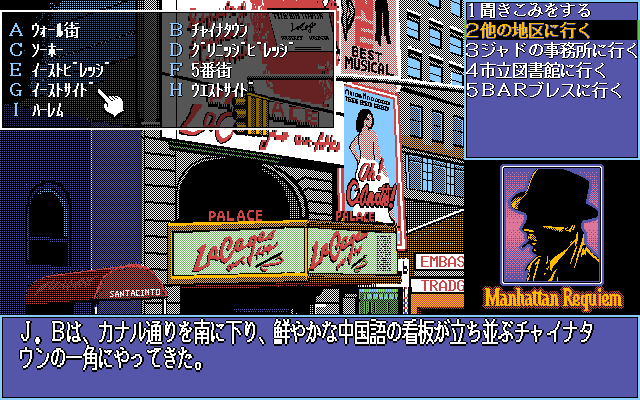
Navigation through Manhattan’s various neighborhoods feels surprisingly open for a story-driven title. You aren’t railroaded from scene to scene; instead, you choose where to go next based on the leads you’ve uncovered. Whether that means heading to a shadowy nightclub to question an enigmatic informant or sifting through police reports in the precinct, every decision you make can open up new branches of the mystery. If you ever feel stuck, you can review your case files at an in-game bar, where every clue, suspect portrait, and overheard snippet is catalogued for your convenience.
Graphics
Despite its Japanese development origins, Manhattan Requiem boasts a realistic, Western-style art direction that forgoes any manga or anime influences. The city streets, crime scenes, and cramped apartments are rendered with meticulous attention to detail, down to rain-slicked sidewalks and flickering neon signs. This commitment to authenticity enhances the gritty mood of the investigation and reinforces the sense that you’re prowling through an actual urban landscape filled with secrets.
Character models are lifelike and appropriately aged, with each suspect bearing subtle facial expressions that can betray fear, anger, or remorse. Lighting and shadow play a critical role in building suspense; you might find yourself peering into darkened doorways or tracing muddy footprints in an alley, all illuminated by carefully calibrated ambient light. Cutscenes and in-engine sequences blend seamlessly, ensuring that transitions between exploration and narrative moments never feel jarring.
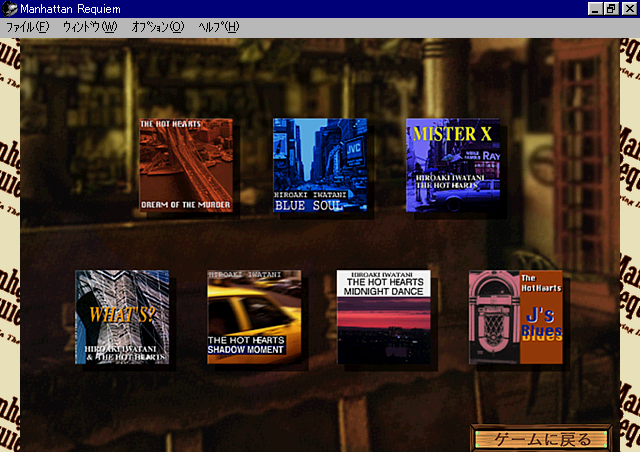
Environmental storytelling is another strong point. You’ll discover personal items—sheet music scattered on a piano bench, a bloodstained glove tucked under a bed—that speak volumes about the victim’s final hours. Background audio, from distant sirens to faint piano melodies, further grounds you in the city’s atmosphere without overwhelming the investigation. Together, these graphical elements create an immersive canvas on which J.B. Harold’s detective work truly shines.
Story
The narrative of Manhattan Requiem centers on the brutal murder of a 24-year-old pianist, found with her skull crushed in her Manhattan flat. With scant evidence and a baffled NYPD, the case falls into your hands, setting off a meticulous sleuthing process that unfolds chapter by chapter. From the outset, the premise grips you with its stark brutality and the haunting mystery of why such a promising young musician would meet such a violent end.
As you question suspects—from fellow musicians and jealous rivals to shady club owners and secretive neighbors—the plot twists and turns with surprising emotional depth. The game excels at balancing procedural rigor with personal drama: every lead you follow often reveals more about the victim’s relationships, ambitions, and hidden fears. By the time you piece together the final clues, the story has grown into a multilayered tapestry of betrayal, ambition, and fleeting human connections.
Dialogue is handled deftly, conveying character motivations without resorting to clichés. The investigators, witnesses, and police officers you encounter are all given distinct voices and backgrounds, making it difficult to know whom to trust. Moments of tension—such as a suspect’s sudden outburst or a late-night stakeout gone awry—are crafted with cinematic flair, ensuring the narrative remains engrossing from the first crime-scene visit to the final courtroom-style revelation.
Overall Experience
Manhattan Requiem delivers an adventure that feels both familiar and refreshingly original. Its blend of Japanese design philosophy—focused on narrative purity and streamlined mechanics—with Western-style exploration creates an investigative experience that never overstays its welcome. You’re never chasing red herrings in endless mazes, yet the game never hands you the solution on a silver platter.
The pacing is measured, allowing you to savor each breakthrough while maintaining a steady build of suspense. The ability to revisit locations and consult your evidence file in the bar adds a layer of flexibility rarely seen in mystery games. This not only helps players who like to take their time analyzing every clue but also reinforces a sense of agency over the investigation’s direction.
Ultimately, Manhattan Requiem stands as a testament to thoughtful game design and engrossing storytelling. It may not dazzle with flashy action sequences, but its carefully constructed narrative, immersive environments, and intuitive gameplay mechanics offer a deeply rewarding detective experience. For anyone craving a poignant, methodical mystery set against the backdrop of 20th-century Manhattan, this title is not to be missed.


Reviews
There are no reviews yet.