 Retro Replay Retro Replay gaming reviews, news, emulation, geek stuff and more!
Retro Replay Review
Gameplay
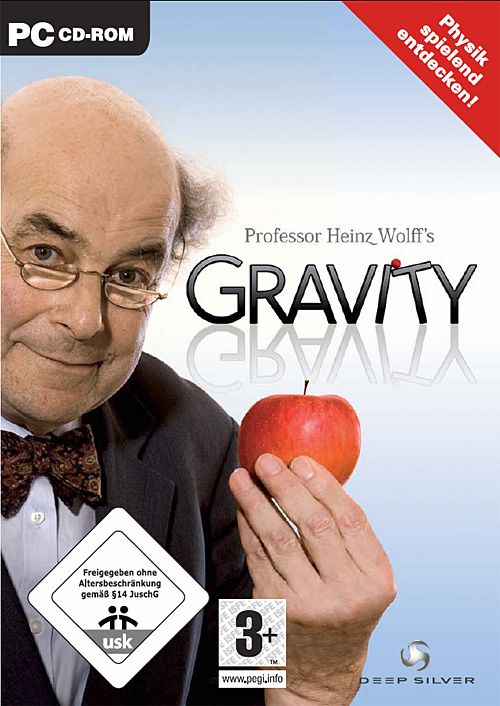
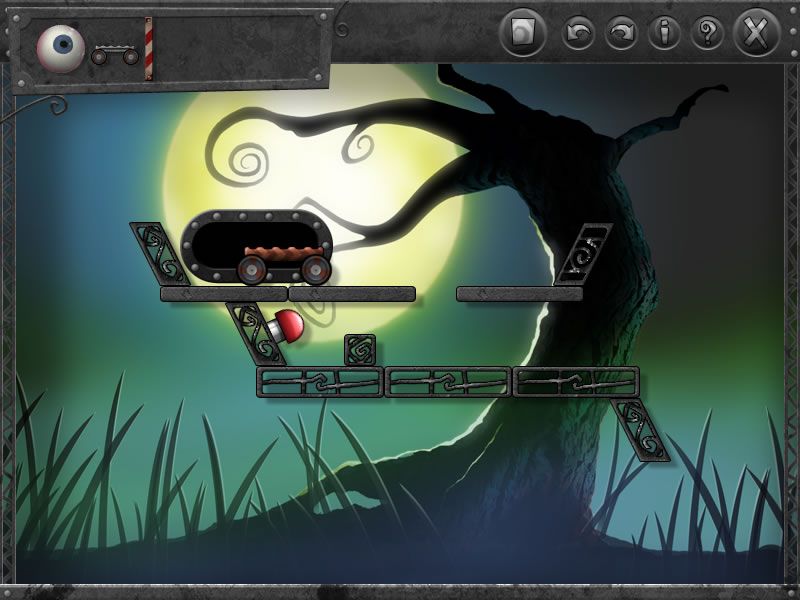
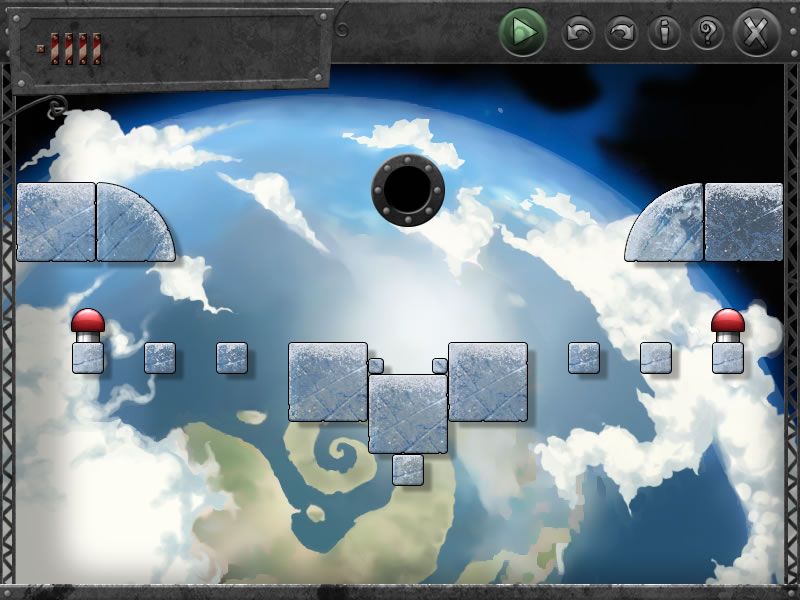
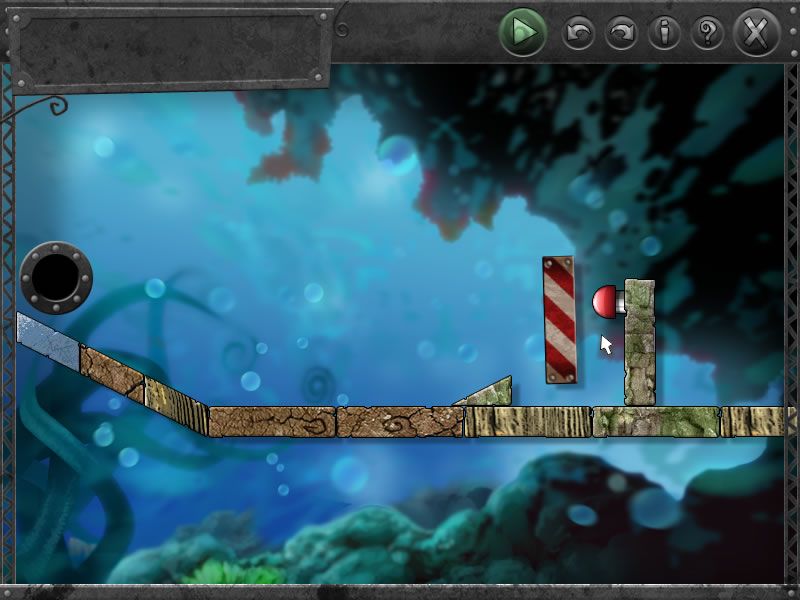
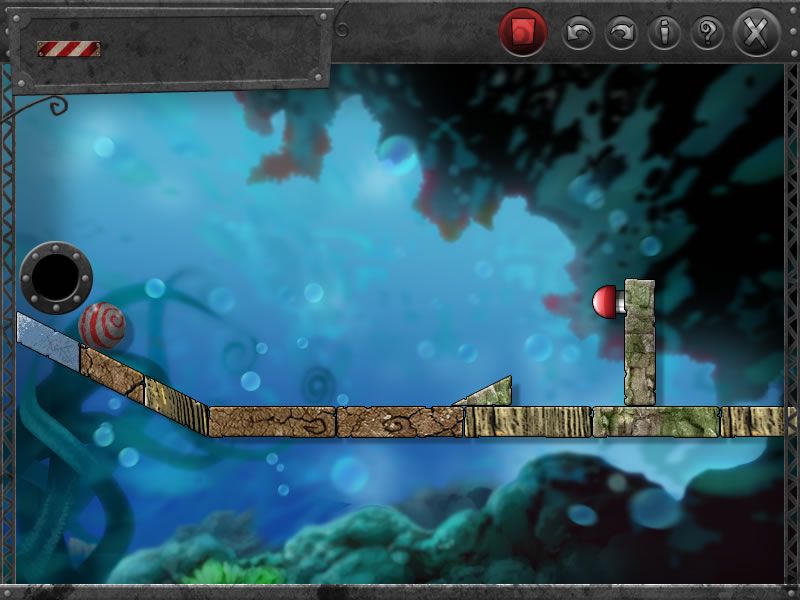
Professor Heinz Wolff’s Gravity delivers a brain-teasing puzzle experience that will appeal to fans of Rube Goldberg–style contraptions. Across 100 increasingly challenging levels, your objective is simple: press a button. However, achieving that goal requires placing a variety of basic items—boards, balls, ramps and occasional vehicles—in just the right configuration to set off a chain reaction. The ability to test-run your construction at any time, even mid-build, adds a thrilling layer of risk and reward; one misplaced plank can send your entire contraption tumbling before you’ve even hit “start.”
(HEY YOU!! We hope you enjoy! We try not to run ads. So basically, this is a very expensive hobby running this site. Please consider joining us for updates, forums, and more. Network w/ us to make some cash or friends while retro gaming, and you can win some free retro games for posting. Okay, carry on 👍)
What truly sets Gravity apart from its peers is its always-on physics simulation during the building phase. Unlike many puzzle games that “snap” pieces into place or freeze physics until you hit play, Gravity keeps gravity, friction, and momentum active at all times. This means you must think two steps ahead: placing a new item could inadvertently damage or destabilize your existing setup. It’s a feature that ramps up the tension and encourages deliberate, thoughtful experimentation.
As you conquer levels, you’ll unlock sandbox stages where creativity truly shines. With no fixed objectives, these free-form zones become playgrounds for wild experiments—build a pendulum to smash through walls, stack precarious towers, or launch balls into elaborate catapults. Mini-games further expand the experience, pitting you against friends in challenges like earthquake-resistant tower building or precision target hits, adding a competitive twist to the core puzzle mechanics.
Graphics
Visually, Professor Heinz Wolff’s Gravity embraces a clean, functional aesthetic that prioritizes clarity over flash. The game’s colorful, cartoonish art style ensures that every board, gear, and ball stands out distinctly against the neutral background, making it easy to plan and track complex reactions. Animations are smooth and fluid, with realistic physics-driven movements that help players anticipate how their structures will behave when set in motion.
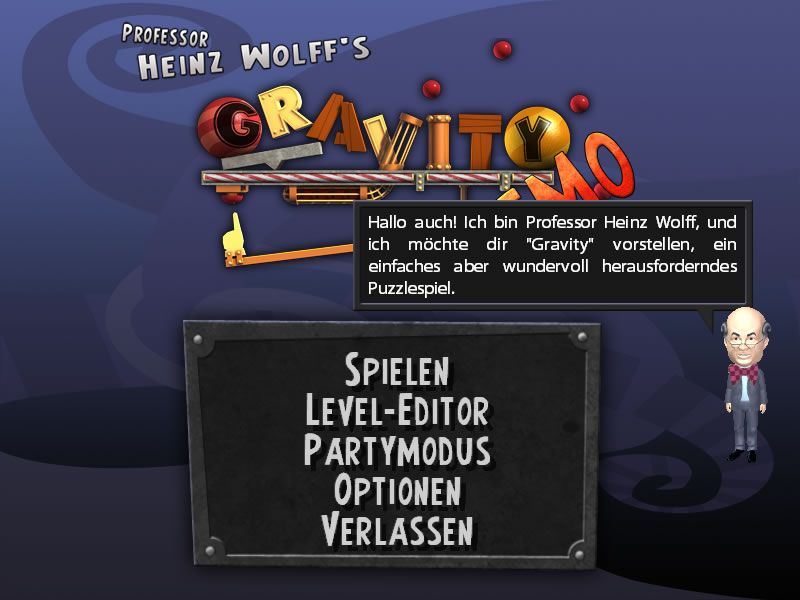
On both PC and DS platforms, the user interface remains intuitive and unobtrusive. A minimalist toolbar along the screen’s edge provides quick access to every available item, while contextual tooltips guide you through unfamiliar components. Although the DS version sacrifices a few sandbox levels and mini-games, it compensates with touchscreen controls that feel surprisingly natural when dragging and rotating parts—a welcome touch for on-the-go puzzlers.
While Gravity doesn’t strive for photorealism, its graphical choices serve the gameplay beautifully. The simple environments keep visual clutter to a minimum, ensuring your focus remains on the engineering puzzle at hand. Subtle visual cues—like shadows that shift as structures move—enhance depth perception, helping you evaluate angles and trajectories with confidence.
Story
Unlike narrative-driven titles, Professor Heinz Wolff’s Gravity uses its titular scientist as a charismatic framing device rather than a plot focal point. Between levels, you’ll receive whimsical commentary and encouragement from the eccentric professor himself, whose British-accented quips lend personality to otherwise mechanical challenges. These interludes add charm and context without bogging down the puzzle flow.
The game’s “story” is best described as an ongoing series of scientific experiments overseen by Professor Wolff. Each new stage is presented as a fresh test in the professor’s gravity lab, complete with briefing text that explains the level’s goal and available tools. Though there’s no overarching narrative arc, the progression from simple contraptions to ingeniously complex machines instills a satisfying sense of advancement and discovery.
For players seeking dramatic twists or character-driven drama, Gravity’s story may feel minimal. However, the real narrative unfolds through your own creativity and problem-solving milestones. Every triumphant button press becomes a personal victory, transforming a modest puzzle game into a story of ingenuity, persistence, and the occasional hilarious failure.
Overall Experience
Professor Heinz Wolff’s Gravity stands out as a cerebral playground for puzzle enthusiasts. Its robust physics engine, always-active simulation, and tiered level structure offer hours of engaging gameplay that rewards both trial-and-error experimentation and careful planning. The balance of guided levels, sandbox freedom, and multiplayer mini-games ensures a varied experience that never feels stale.
The game’s modest graphics and light narrative keep the spotlight firmly on the puzzles themselves, a design choice that pays dividends for anyone more interested in problem-solving than plot twists. Controls are precise and responsive across platforms, whether you’re crafting intricate machines with a mouse or tweaking setups on a touchscreen. The inclusion of a built-in hint system also helps prevent frustration, allowing players to seek gentle guidance when a level’s solution proves elusive.
For potential buyers seeking a thoughtful, creative challenge—either solo or against friends—Professor Heinz Wolff’s Gravity delivers solid value. With 100 levels, versatile sandbox modes, and competitive mini-games, it offers a wealth of content that can entertain puzzle fans for weeks or even months. If you’ve ever dreamed of engineering whimsical contraptions and watching them come to life (or spectacularly backfire), this game is a must-play addition to your collection.


Reviews
There are no reviews yet.