 Retro Replay Retro Replay gaming reviews, news, emulation, geek stuff and more!

Retro Replay Review
Gameplay
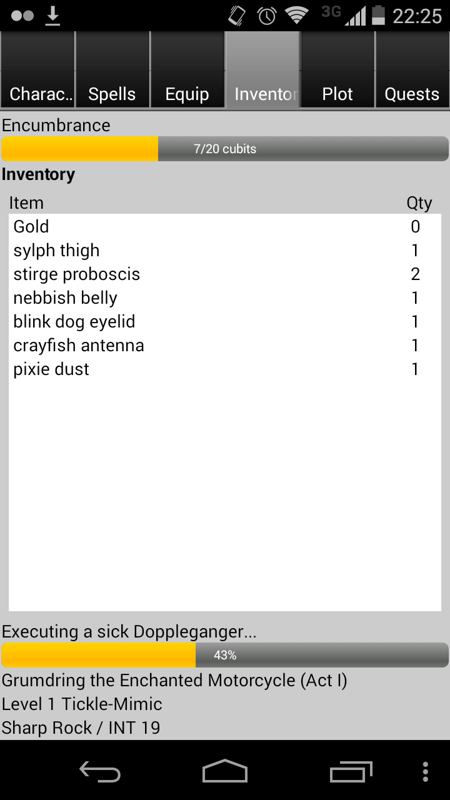
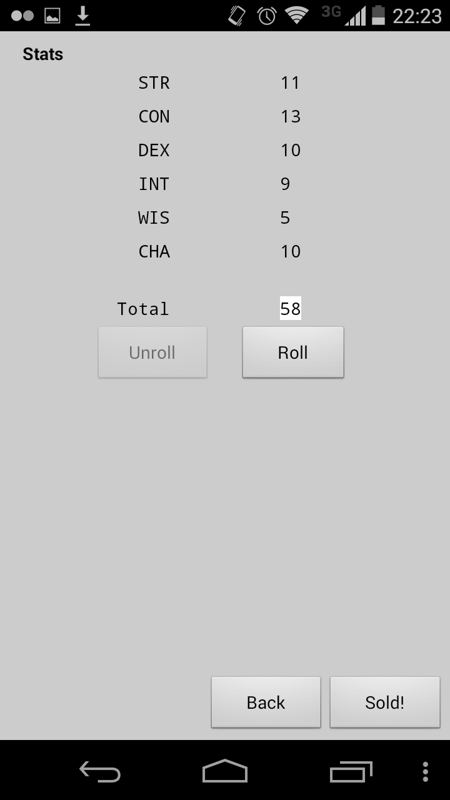
Progress Quest reimagines the traditional statbuilding RPG as a completely automated experience, letting the game “play itself” while you attend to other tasks. Instead of manually clicking your character through forests and dungeons, you simply launch the client and watch as progress bars slowly fill, checkmarks appear next to quest objectives, and your character’s wealth and power grow over time. The core loop—slaying monsters, selling loot, upgrading equipment—is distilled down to its purest form, free of any active input beyond the initial start button.
(HEY YOU!! We hope you enjoy! We try not to run ads. So basically, this is a very expensive hobby running this site. Please consider joining us for updates, forums, and more. Network w/ us to make some cash or friends while retro gaming, and you can win some free retro games for posting. Okay, carry on 👍)
Underneath this minimalist veneer lies a surprisingly deep system of randomized quests and items. Missions are sorted into familiar archetypes such as Deliver, Seek, Exterminate, and Placate, each generating a steady stream of tasks tailored to your character’s level. Meanwhile, the treasure pool features an eclectic mix of spells, weapons, and gear—complete with tongue-in-cheek names—that keeps each loot drop interesting even if you only check in sporadically.
While some may decry the lack of real-time decision-making, Progress Quest excels at being a “set-and-forget” RPG that rewards patience over reflexes. If you’re the type of player who loves watching numbers climb and bars fill, and you don’t mind relinquishing control to a glorified screen saver, then Progress Quest offers a uniquely satisfying gameplay loop that can run unattended for hours, days, or even weeks.
Graphics
True to its concept, Progress Quest forgoes any traditional graphical presentation in favor of simple progress bars and text updates. There are no 3D environments, no hand-drawn sprites, and no flashy particle effects—just a utilitarian UI that tracks your character’s quests, inventory, and statistics. The absence of visual flair is an intentional design choice, emphasizing automated progression over eye candy.
Despite the bare-bones interface, Progress Quest manages to feel cohesive and purposeful. The clean layout groups tasks into color-coded sections, making it easy to see at a glance which quests are active, which items you’ve looted, and when your next level-up is imminent. It’s about as close as an RPG can get to a live status console, and for fans of data dashboards, this austere approach is oddly compelling.
Ultimately, if you’re looking for lush landscapes or detailed character models, Progress Quest will disappoint. But if you appreciate a no-nonsense, distraction-free reading of your avatar’s advancement, its minimalist graphical style is perfectly suited to the game’s “install and forget” ethos.
Story
Progress Quest doesn’t deliver a traditional narrative or branching plotlines; instead, the “story” unfolds through the relentless accumulation of experience points, gold pieces, and ever-more powerful items. Your character is a blank slate—no backstory, no dialogue—yet the abstract quests you undertake create an emergent saga of endless monster-slaying and treasure-hunting.
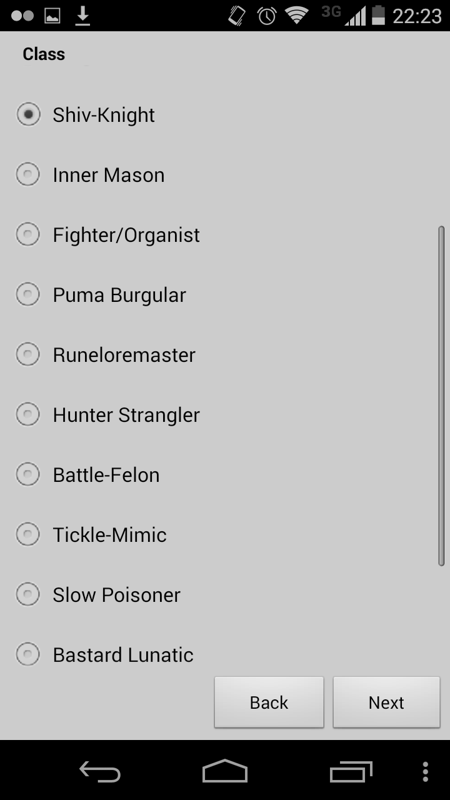
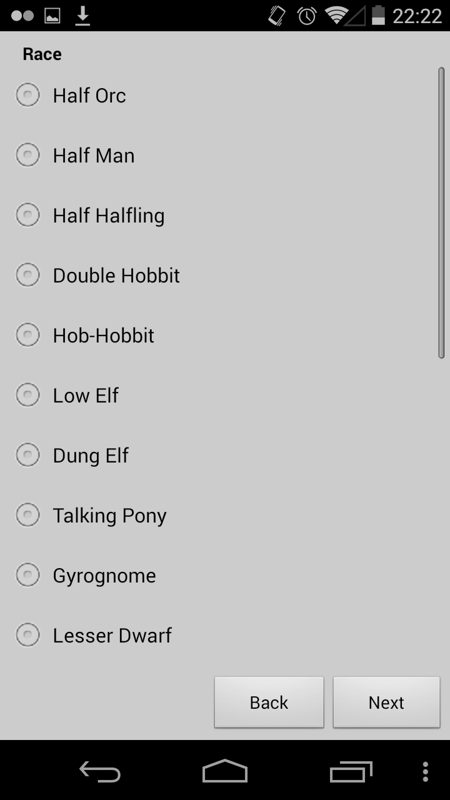
The game injects a healthy dose of humor into its worldbuilding by offering whimsical races like Panda Man and Land Squid, and classes such as Puma Burglar and Tickle-Mimic. These tongue-in-cheek choices lend personality to what would otherwise be a purely mechanical process, allowing your avatar to accrue fantastical titles and gear names that spark the imagination without ever demanding active storytelling.
In the absence of cutscenes or NPC conversations, Progress Quest relies on the steady rhythm of checkmarks appearing next to completed quests to provide a sense of forward momentum. It’s a meta-commentary on RPG conventions, stripping away exposition and letting you appreciate the skeleton of what makes these games tick—one progress bar at a time.
Overall Experience
As an exercise in extreme minimalism, Progress Quest is both its own punchline and a surprisingly engaging idle experience. It appeals to players who find satisfaction in watching numbers creep upward and who are intrigued by the idea of a game that never truly demands your attention. Whether you leave it running in the background or periodically peek at its progress, there’s an oddly relaxing cadence to your character’s automated journey.
This title shines as a novelty or secondary pastime rather than a primary gaming experience. It pairs perfectly with other activities—studying, working, even napping—transforming your PC into a perpetual quest machine. Its low system requirements and hands-off design make it a great choice for anyone curious about idle RPG mechanics without the need for continuous input.
Ultimately, Progress Quest will resonate most with niche audiences: stat-building aficionados, fans of tongue-in-cheek RPG satire, and anyone who enjoys a background progression simulator. If you’re open to a game that you don’t actually “play” in the traditional sense, but rather observe and enjoy as it quietly levels up for you, Progress Quest stands as a unique experiment—and a delightful one at that.


Reviews
There are no reviews yet.