 Retro Replay Retro Replay gaming reviews, news, emulation, geek stuff and more!
Retro Replay Review
Gameplay
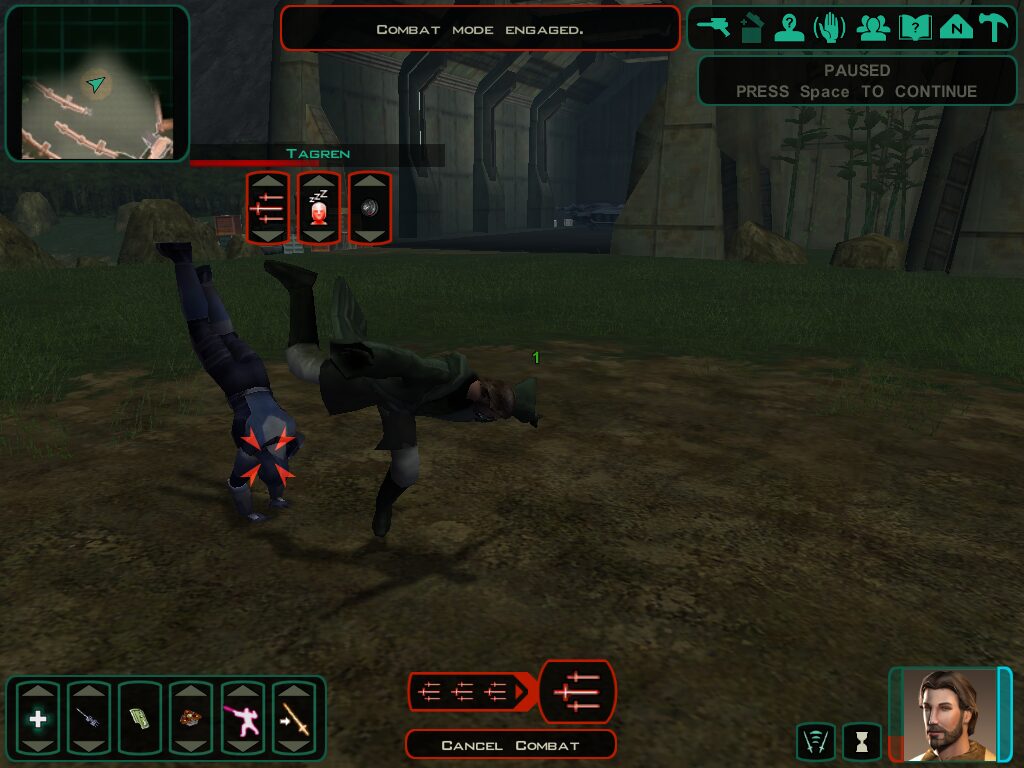
Star Wars: Knights of the Old Republic II – The Sith Lords retains the familiar d20–based combat engine and party mechanics of its predecessor while introducing deeper customization and narrative influence. Combat remains turn-based yet fluid, letting you pause at any moment to issue commands to your party of three. This system rewards tactical planning, from positioning characters in chokepoints to timing Force powers for maximum effect. Encounters range from skirmishes with Sith marauders to ambushes by Remnant troopers, each demanding a different combination of lightsaber forms and Force abilities.
(HEY YOU!! We hope you enjoy! We try not to run ads. So basically, this is a very expensive hobby running this site. Please consider joining us for updates, forums, and more. Network w/ us to make some cash or friends while retro gaming, and you can win some free retro games for posting. Okay, carry on 👍)
The expanded lightsaber crafting and weapon‐augmentation systems breathe fresh life into gear progression. At any workbench—whether on a desert outpost or the Ebon Hawk—you can slot components into multiple chambers: overlays and underlays for armor, targeting modules and power packs for blasters, and up to six hilts and crystals for lightsabers. Scavenged or purchased upgrades can be mixed and matched, rewarding players with a sense of ownership over their equipment. Skilled repair checks also let you build rare items from scratch, adding another layer of depth for completionists.
Character development flows naturally through Force powers and moral choices. New abilities such as Force Rage and Bio-Conversion open up varied playstyles, from berserker warriors to clandestine infiltrators. Meanwhile, Light and Dark side alignments are tracked more granarily than before: your decisions can sway companions, unlock unique dialogue, and even alter pivotal story beats. A simple act of compassion or cruelty can ripple through TSL’s narrative, making each playthrough feel uniquely personal.
In addition to the main campaign, The Sith Lords offers memorable side diversions: a tense first‐person turret shooting gallery, high-stakes swoop racing on Dxun’s moonlit tracks, and the addictive card game Pazaak. These mini-games serve not just as diversions but as opportunities for credit farming and morale-building within your crew. By weaving them into the world organically, Obsidian ensures that moments of downtime remain as engaging as the galaxy-spanning adventure itself.
Graphics
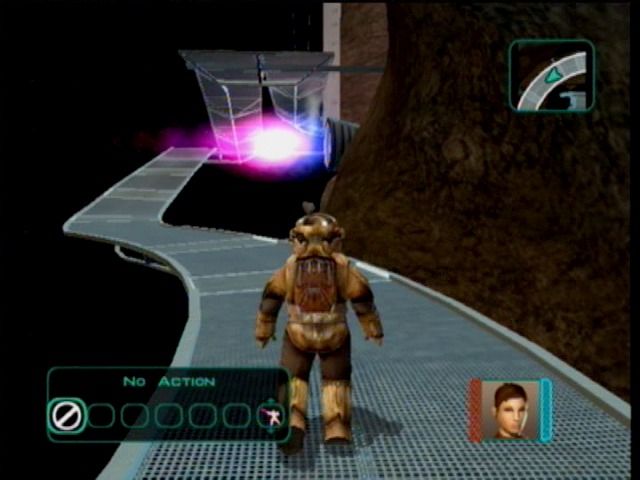
Although released in the mid-2000s, The Sith Lords still impresses with its art direction and planet variety. From the neon skies of Nar Shaddaa to the shadowy ruins of Malachor V, each world exudes a distinct mood. Textured walls, ambient particle effects, and dynamic lighting help reinforce the Star Wars atmosphere, even if the polygon counts and texture resolutions show their age on modern hardware.
Character models and facial animations are serviceable but somewhat rigid by today’s standards. Obsidian leans on expressive voice acting to communicate emotion, compensating for static lip-sync and limited gestures. Companions like Mira and Visas Marr come to life through well-delivered lines and cinematic camera angles rather than cutting-edge facial rigs, and this trade-off generally works in the game’s favor.
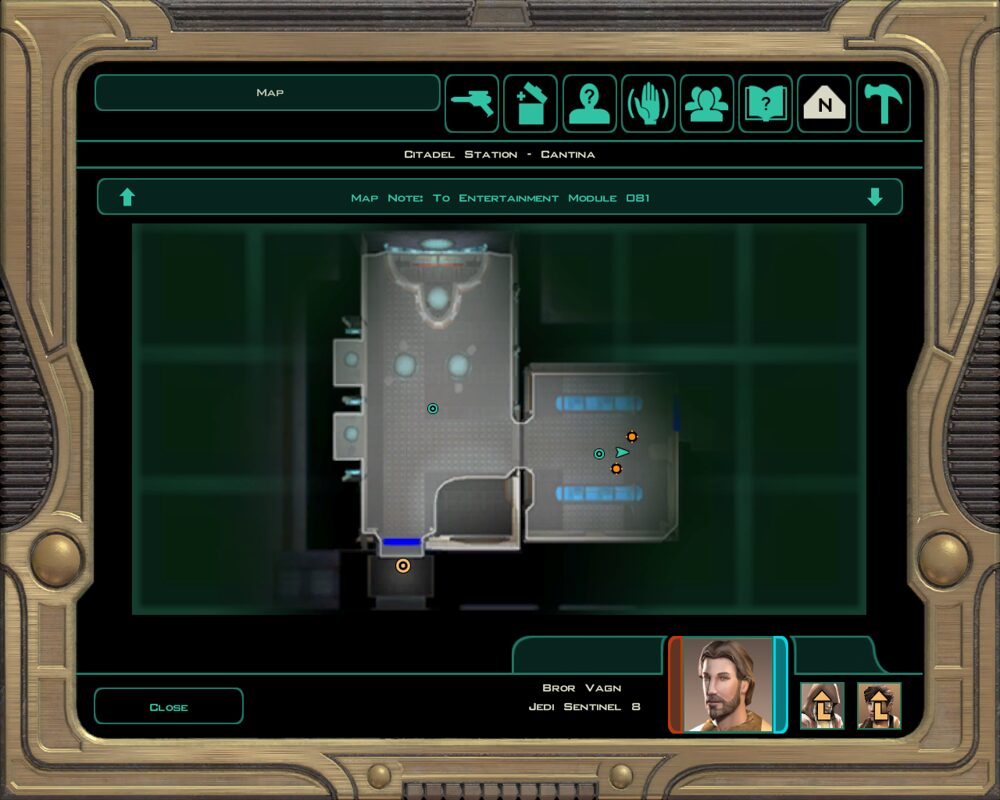
Interior environments—Imperial starships, Jedi shrines, and cantina bunkers—benefit from rich set dressing and modular assets. Shadows cast by overhead lights and flickering holoprojectors add depth to otherwise linear corridors. On higher-end PCs, you can crank up shadow detail and draw distance to minimize visible pop-in on distant objects, making exploration all the more immersive.
Performance-wise, TSL can be finicky without community patches. Frame rates may dip in crowded areas, and certain resolutions require manual tweaks. Thankfully, a robust modding scene offers updated widescreen support, shader fixes, and texture packs that bring the visuals closer to modern expectations. With these enhancements applied, the game’s environments hold up remarkably well.
Story
Set five years after the events of Knights of the Old Republic, The Sith Lords thrusts you into a galaxy on the brink of collapse. The Sith have resurged under enigmatic new masters, and what remains of the Jedi Order is scattered and demoralized. You play a mysterious ex-Jedi, once a companion of Revan during the Mandalorian Wars, now exiled for reasons left deliberately vague. As your past catches up, you must decide which side of the Force will claim your loyalty.
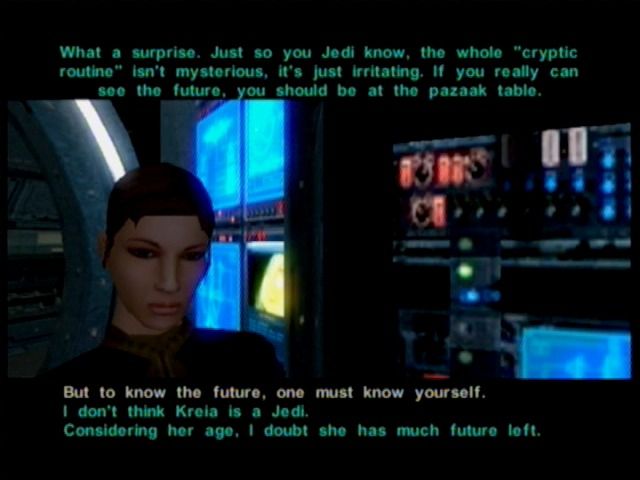
The narrative unfolds in nonlinear fashion, weaving core missions with character-driven side quests that explore loss, redemption, and fanaticism. Companions such as Atton Rand, the wise-cracking former soldier, and Kreia, the cryptic mentor with radical philosophies, each offer distinct viewpoints on the Force. Their personal arcs intertwine with the main plot, and your interactions determine whether they emerge as allies or adversaries in the final confrontation.
Dialogue choices carry real weight. Unlike more binary morality meters, alignment shifts occur gradually, marked by subtle adjustments in companion attitudes and new conversation options. A single act of mercy can foster trust and unlock hidden Force powers, while cruelty may lead to betrayals that ripple into the endgame. This approach paints characters in shades of gray, elevating the story beyond a simple Light vs. Dark dichotomy.
While the main plot occasionally relies on exposition-heavy cutscenes, it consistently delivers emotional payoffs. The game’s climax at the Ravager—a derelict ship haunted by echoes of Revan’s past—stands as a testament to Obsidian’s willingness to embrace ambiguity. Players may leave with more questions than answers, but the journey through moral uncertainty remains compelling from start to finish.
Overall Experience
Knights of the Old Republic II – The Sith Lords offers a deeply personal Star Wars adventure that balances tactical combat, rich customization, and moral complexity. Its slower pacing and philosophical undertones may not appeal to players seeking nonstop action, but those invested in narrative depth will find much to savor. Even with occasional technical hiccups, the game’s strengths in writing and design shine through.
Replayability is one of TSL’s greatest assets. Multiple endings, companion fates, and alignment branches encourage at least a second playthrough. Experimenting with different Force builds, crafting exotic lightsaber designs, or pursuing alternate romance paths adds substantial longevity. Community mods further extend the experience with restored content, improved visuals, and quality-of-life tweaks.
As a spiritual successor to the original Knights of the Old Republic, The Sith Lords embraces riskier storytelling and complex characters. It challenges players to question their understanding of good and evil while offering familiar mechanics refined through new features. For fans of narrative-driven RPGs, this game remains a standout journey through the darker reaches of the Star Wars mythos.
In sum, Knights of the Old Republic II – The Sith Lords may require some patience for setup and occasional bug fixes, but it rewards diligent players with one of the most thought-provoking entries in the Star Wars saga. Whether you’re a returning Jedi seeking closure or a newcomer craving a mature RPG experience, TSL’s blend of choice, consequence, and cinematic world-building makes it a must-play title.


Reviews
There are no reviews yet.