 Retro Replay Retro Replay gaming reviews, news, emulation, geek stuff and more!
Retro Replay Review
Gameplay
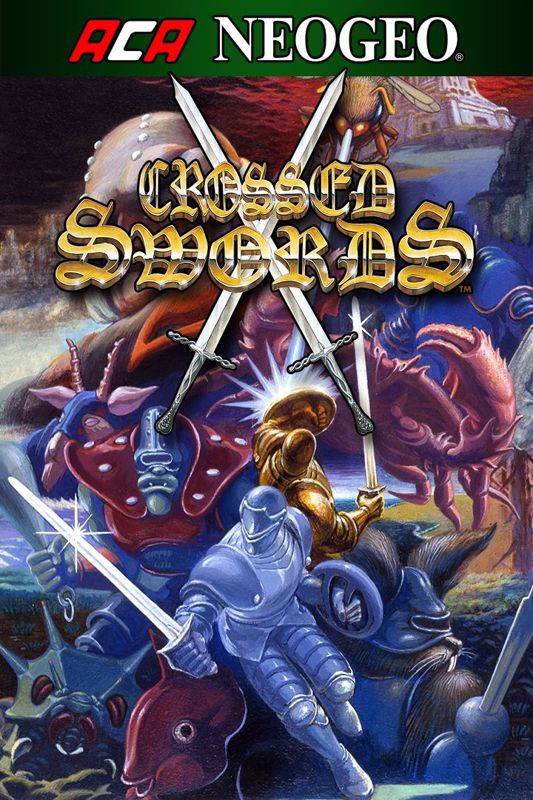
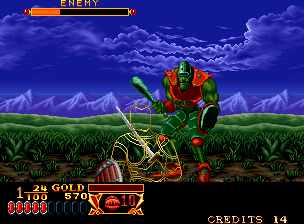
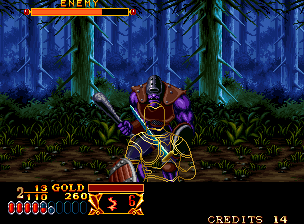
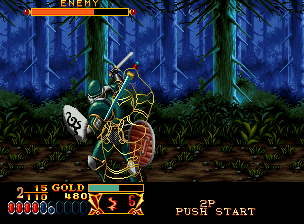
Crossed Swords places you directly in the armor of a wandering knight, challenging you to navigate winding paths filled with monsters, bandits, and hidden secrets. The core combat loop revolves around a pseudo first-person view, where your knight’s silhouette stands firm against oncoming foes. This framing offers a unique perspective for a beat-’em-up style game, letting you gauge your sword’s reach and shield’s coverage against each enemy’s attack patterns.
(HEY YOU!! We hope you enjoy! We try not to run ads. So basically, this is a very expensive hobby running this site. Please consider joining us for updates, forums, and more. Network w/ us to make some cash or friends while retro gaming, and you can win some free retro games for posting. Okay, carry on 👍)
As you defeat enemies, they drop both money and useful power-ups—ranging from temporary weapon boosts to health restoratives—which injects an element of strategic resource management into the action. Money you collect can be spent in various merchants’ shops (present at the start of nearly every chapter) to upgrade your sword, shield, or purchase special items that drastically alter how you approach upcoming battles. With seven chapters in total, the sense of progression and growth remains engaging throughout your quest.
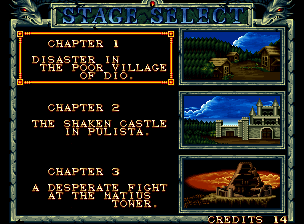
One of the standout features is the game’s branching paths system. After certain encounters you can choose different routes, leading to unique areas, secret merchants, or even mini-boss challenges. This structure not only enhances replayability but also rewards exploration. Additionally, the ability to begin your journey at Chapter 1, 2, or 3 from the outset lets both newcomers and seasoned players tailor their experience to their skill level or time constraints.
Graphics
Graphically, Crossed Swords blends 2D character sprites with layered backgrounds to create a sense of depth that still impresses, even by today’s standards. The pseudo first-person perspective is handled smoothly: your knight’s outlined torso and limbs remain clear against varied backdrops, from misty forests to torchlit dungeons. Enemies are distinct and well-animated, each exhibiting different attack telegraphs that feel responsive and readable.
Environmental details—torches flickering on stone walls, overgrown ruins by moonlight—add atmosphere without distracting from the action. Color palettes shift subtly from chapter to chapter, reflecting narrative tone changes and keeping each stage visually fresh. Occasional visual effects, like the flash of a magic projectile or the glint of a newly purchased sword, heighten the sense of impact during combat.
While the polygon counts and texture resolutions may not match modern AAA standards, the art direction in Crossed Swords is timeless in its clarity and stylistic consistency. Character designs—whether stalwart knights in full plate or grotesque goblin raiders—are memorable and fit well within the medieval-fantasy theme. Even after multiple playthroughs, the visuals remain crisp, making it easy for new players to understand enemy behaviors at a glance.
Story
The narrative premise of Crossed Swords is straightforward but effective: as a chivalrous knight, you’re on a quest to rid the countryside of tyranny and dark magic. Each chapter unfolds a small vignette of the overarching conflict, introducing local villains—bandit chieftains, corrupted warlords, and monstrous beasts—that tie back to a looming final adversary. This episodic structure allows the story to move at a brisk pace, with just enough lore peppered in to keep you curious about what lies ahead.
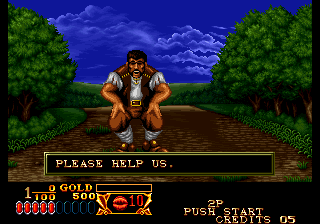
Inter-chapter shop visits also serve as narrative interludes, where merchants deliver tidbits of lore about the region you’re about to enter. These moments, while brief, contribute to world-building by hinting at local legends and the stakes behind each chapter’s conflict. Without overwhelming players with long cutscenes, Crossed Swords strikes a delicate balance between action and exposition.
The branching paths further enrich the storytelling by offering glimpses into side plots—perhaps the rescue of a besieged village or the hunt for a hidden artifact. Each detour provides context that makes subsequent bosses feel like genuine threats, rather than arbitrary hurdles. For players who delve into every route, the narrative tapestry feels more complete, rewarding thorough exploration with a deeper understanding of the game world.
Overall Experience
At its core, Crossed Swords is an approachable yet challenging action game that thrives on its unique combat presentation and engaging progression systems. The marriage of first-person styled duels with RPG-lite elements—upgrades, shops, and branching routes—creates a well-rounded experience that appeals to both arcade veterans and modern retro enthusiasts alike. Difficulty can spike, but the ability to invest in better gear or choose alternate paths provides meaningful agency over your adventure.
Replayability is a genuine strength here. Between selecting different starting chapters, uncovering secret routes, and experimenting with various weapon and shield combinations, there’s always a reason to revisit the game. Whether you’re aiming for a speed run, a full exploration of every branch, or simply mastering the timing of each boss encounter, Crossed Swords delivers consistent motivation to keep picking up your controller.
While some may crave a deeper narrative or more sophisticated graphics, the game’s charm lies in its focused design and straightforward hero’s journey. Its balance of action, strategy, and light role-playing elements makes Crossed Swords a standout title for anyone seeking a nostalgic yet robust medieval combat experience. In sum, it’s a solid pick for players who appreciate tight gameplay loops, dynamic level design, and the thrill of carving a path through hordes of enemies as a valiant knight.


Reviews
There are no reviews yet.