 Retro Replay Retro Replay gaming reviews, news, emulation, geek stuff and more!


Retro Replay Review
Gameplay
Dr. Livingstone, I Presume? places you in the shoes of an ailing Henry Morton Stanley, guiding an expedition deep into the African continent. Your primary objective is to locate the missing Dr. David Livingstone, but the journey unfolds as a multifaceted simulation of exploration, diplomacy, and resource management. You chart your course along winding rivers, cross vast swamps, and navigate towering mountain ranges. Each geographical feature presents unique obstacles that require careful planning and adaptive strategies.
(HEY YOU!! We hope you enjoy! We try not to run ads. So basically, this is a very expensive hobby running this site. Please consider joining us for updates, forums, and more. Network w/ us to make some cash or friends while retro gaming, and you can win some free retro games for posting. Okay, carry on 👍)
Central to gameplay is the interaction with native African tribes you encounter along the way. The game’s dialogue system introduces you to each tribe’s culture and trade preferences, encouraging you to barter wisely in order to secure vital supplies—food, medical kits, and navigation tools. Proper negotiation not only advances your mission but also grants you deeper insights into local customs and social structures. The richer your cultural understanding, the more cooperative these tribes become, offering additional support or safe passage through their territories.
Managing a team of porters adds another layer of strategic depth. These porters carry your equipment and supplies but have their own stamina and morale metrics. You must allocate rations, set travel paces, and rest appropriately to keep them healthy and motivated. Push them too hard and you risk illness or desertion; move too slowly and you may run out of provisions before finding Livingstone. The balance between speed, supply conservation, and team welfare keeps every decision tense and meaningful.
Graphics
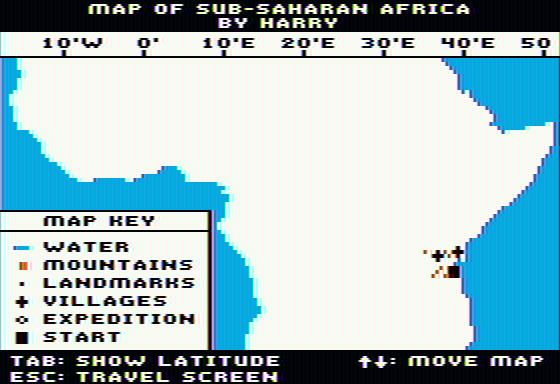
Although Dr. Livingstone, I Presume? hails from the early era of educational software, its visuals remain charming and purposeful. The overhead map view renders Africa’s major rivers, lakes, and mountain ranges in clear, pixel-art style. Colors are bright yet distinguishable, making terrain types—such as desert sands or lush riverbanks—instantly recognizable. This simplicity ensures that players stay focused on discovery rather than grappling with overly intricate graphics.
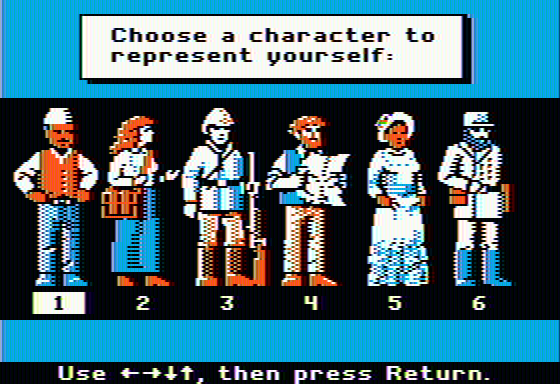
When engaging with tribes, the game switches to close-up portraits and dialog screens. While these character illustrations are modest by modern standards, they effectively convey cultural attire and facial expressions. This visual approach personalizes each encounter, reinforcing the educational emphasis on real-world diversity. Icons for trade goods, from ivory to woven textiles, are likewise straightforward but instantly understandable.
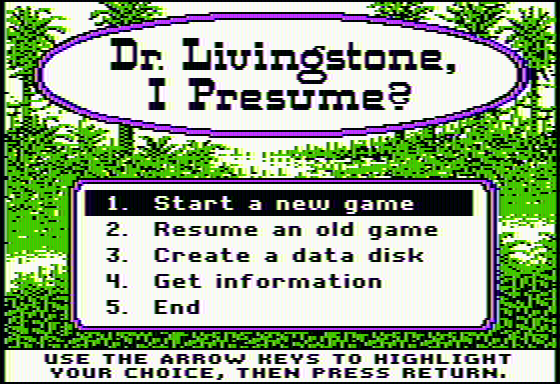
The user interface is neatly organized, with separate panels for your expedition journal, porter statistics, and the current map segment. Text windows display informative entries about geography and tribal customs. Although the UI design is functional rather than flashy, it places every necessary tool at your fingertips and minimizes guesswork. For an educational title, this clarity is a major advantage.
Story
The narrative drive in Dr. Livingstone, I Presume? revolves around the historic quest to find Dr. David Livingstone, who vanished while exploring Africa’s interior. You assume Stanley’s role, beginning at the coast before venturing inland. Every new river crossing or mountain pass evokes the real challenges nineteenth-century explorers faced, immersing you in the era’s spirit of adventure and discovery.
As you progress, the game introduces a variety of compelling side-stories tied to each tribe and region. Perhaps you’ll help negotiate a cattle exchange for local nomads or assist a riverine village in constructing a canoe. These vignettes enrich the overarching narrative by highlighting both cooperation and conflict across cultures. The result is a tapestry of interwoven stories that underscore the complexities of exploration and cross-cultural interaction.
Historical context is woven throughout the dialogue and journal entries. You’ll encounter references to Livingstone’s own expedition notes, excerpts from period maps, and commentary on the geopolitical forces at play. While the main storyline keeps you focused on the rescue mission, these details reward curious players with a deeper understanding of nineteenth-century Africa and the personalities who shaped its exploration.
Overall Experience
Dr. Livingstone, I Presume? strikes a thoughtful balance between entertainment and education. Its pacing encourages deliberate decision-making rather than frantic action, making each milestone feel earned. The satisfaction of securing crucial supplies through trade, discovering an uncharted river tributary, or successfully leading your porters to safety is tangible. Although the game moves at a gentler pace than most modern titles, this slow-burn approach is ideal for players interested in history and geography.
Replayability stems from the branching nature of tribal relations and supply management. Different negotiation tactics, route choices, or porter allocations can lead to fresh challenges on subsequent playthroughs. Whether you’re an educator seeking an engaging classroom tool or a solo player keen on experiencing the essence of historic exploration, the title offers enough variety to merit multiple visits.
Overall, Dr. Livingstone, I Presume? remains a noteworthy educational classic. Its harmonious blend of strategy, cultural immersion, and historical narrative delivers a memorable voyage across Africa’s diverse landscapes. For potential buyers seeking a thoughtful simulation that informs while it entertains, this game is a compelling addition to any collection.



Reviews
There are no reviews yet.