 Retro Replay Retro Replay gaming reviews, news, emulation, geek stuff and more!
Retro Replay Review
Gameplay
Lethal Labyrinth positions you as Joey, thrust into a perilous maze armed only with a backpack full of rocks. The core mechanic revolves around precise rock-throwing: each toss requires timing and aim to dispatch a variety of menacing creatures lurking around every corner. As you traverse the winding corridors, you’ll quickly learn that conserving ammunition is as crucial as mastering your aim, since each missed throw can mean the difference between life and death.
(HEY YOU!! We hope you enjoy! We try not to run ads. So basically, this is a very expensive hobby running this site. Please consider joining us for updates, forums, and more. Network w/ us to make some cash or friends while retro gaming, and you can win some free retro games for posting. Okay, carry on 👍)
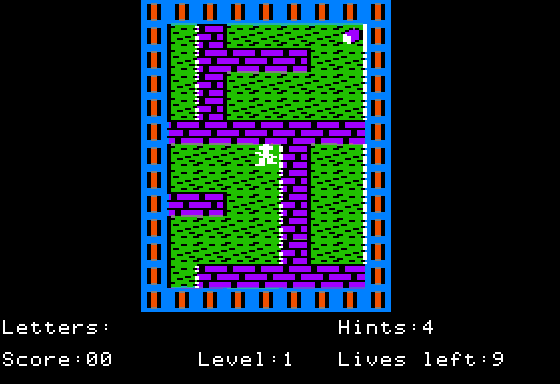
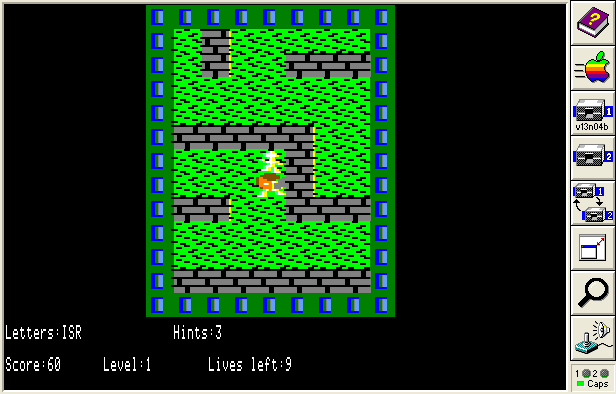
The maze itself is a twisting puzzle, with dead ends, hidden alcoves, and secret passages that challenge your spatial awareness. Enemies vary from slow-moving crawlers that swarm in groups to agile sentinels that dodge your projectiles and force you to think on your feet. Some corridors even feature pressure plates that activate traps or open new sections of the labyrinth—encouraging you to explore every nook and cranny to find the letters needed for the ultimate escape.
Collecting letters adds a compelling layer of strategy to the action. Scattered throughout the maze, these runic glyphs must be gathered in the correct combination to spell the magic word at the exit. Misplacing or overlooking a single letter can send you back into the maze, reinforcing the importance of methodical exploration and careful inventory management. This mechanic transforms what could be a straightforward shooter into a tense, puzzle-driven adventure.
Controls are intuitive and responsive, whether you’re aiming with a controller thumbstick or the mouse. Lethal Labyrinth also offers varying difficulty settings, each tweaking enemy behavior, rock availability, and labyrinth complexity. Casual players can focus on the thrill of discovery, while hardcore fans will appreciate the steeper challenges and tighter time limits. Overall, the gameplay loop balances action and puzzle-solving in a coherent, engaging way.
Graphics
The visual presentation of Lethal Labyrinth leans into a dark, atmospheric style that perfectly complements its high-stakes gameplay. Walls are adorned with ancient runes and mossy stone textures, creating a sense of age and foreboding. Subtle lighting effects cast long shadows in the corridors, often concealing enemies until they lunge at you—heightening the tension with each step.
Character and enemy models are detailed enough to convey personality without detracting from performance. Joey’s backpack of rocks sports realistic strapping and wear, while each enemy type features distinct animations—clattering skittering limbs, glowing eyes, and subtle sound cues that alert you to their presence. The varied enemy designs keep encounters fresh: one moment you’re fending off cavern-dwelling scuttlers, the next you face spectral guardians that phase in and out of view.
The labyrinth’s layout changes subtly between playthroughs, using a procedural generation algorithm that keeps the maze feeling new on each run. Corridor junctions, alcoves, and room shapes are randomized while maintaining handcrafted puzzle elements like pressure plates and hidden rooms. Textures remain crisp, and performance stays stable even in areas with multiple enemies and dynamic lighting, ensuring immersion isn’t broken by loading hitches or frame drops.
Color palettes shift to reflect the maze’s depth: upper levels feature cold, damp stone aesthetics, while deeper tiers adopt warmer, lava-lit hues that raise the emotional stakes. Occasional environmental touches—like dripping water, flickering torches, and distant rumblings—add to the sense of place without overwhelming the core gameplay. The result is a visually cohesive package that draws you into Joey’s desperate quest.
Story
At its heart, Lethal Labyrinth tells a minimalist yet impactful tale. You play as Joey, an everyman inadvertently caught in a supernatural maze. The lack of extensive cutscenes or heavy exposition strengthens the game’s immediacy: every step feels urgent, and every rock thrown carries real weight. The story unfolds through environmental clues—scrawled inscriptions on walls, broken statues hinting at past victims, and the recurring motif of the magic word scrawled in runic script.
Collecting letters serves not only as a gameplay mechanic but also as a narrative device. Each glyph you gather unlocks a fragment of narration or a memory snippet, revealing why Joey ended up in this treacherous place. Piecing together these story fragments feels like solving a meta-puzzle, deepening your emotional investment. Discovering the full magic word offers a satisfying narrative payoff, turning the exit sequence into an eagerly anticipated climax.
While the story remains intentionally sparse, it benefits from strong world-building. You sense an ancient power at play, manipulating the maze’s structure and the creatures within. The recurring question—who built the labyrinth, and why—lurks at the edge of every chamber. Though some players may wish for a more extensive lore compendium, the minimalist approach keeps the pace brisk and the focus squarely on gameplay.
The final reveal, once you spell out the magic word, ties together the environmental storytelling in a concise yet meaningful way. Joey’s escape feels triumphant without overstaying its welcome, and the open-ended conclusion leaves room for player interpretation. Fans who crave a deeper understanding can replay levels to uncover missed lore fragments, adding to the game’s longevity.
Overall Experience
Lethal Labyrinth offers a gripping blend of action, puzzle-solving, and atmospheric exploration. Its core mechanics—rock-throwing combat and letter-collecting puzzles—are introduced early and expanded upon in clever ways throughout the maze. Variety in enemy types, trap layouts, and procedural level design ensures that no two runs feel identical, maintaining a sense of discovery even after multiple playthroughs.
The game’s dark, immersive graphics and tight controls enhance every moment of tension, from the first uncertain steps in the upper corridors to the heart-pounding scramble for the final letters. While the story is lean, environmental storytelling and the letter-based narrative device add unexpected depth, rewarding players who pay close attention to their surroundings. The balance between adrenaline-fueled combat and thoughtful exploration makes for a satisfying gameplay loop.
Certain players might find the difficulty spikes challenging, especially on higher settings where rock supplies dwindle and enemy patterns become less forgiving. However, the availability of adjustable difficulty options and the procedural nature of the maze help mitigate potential frustration. Frequent checkpoints and a forgiving respawn system also encourage experimentation and risk-taking.
In summary, Lethal Labyrinth stands out as an engaging, well-crafted indie title that combines classic maze exploration with inventive puzzle mechanics. Its atmospheric presentation, responsive controls, and clever use of letter-collecting puzzles create a memorable experience. Whether you’re a fan of tense action or cerebral exploration, Joey’s journey through the deadly maze is one well worth undertaking.



Reviews
There are no reviews yet.