 Retro Replay Retro Replay gaming reviews, news, emulation, geek stuff and more!

Retro Replay Review
Gameplay
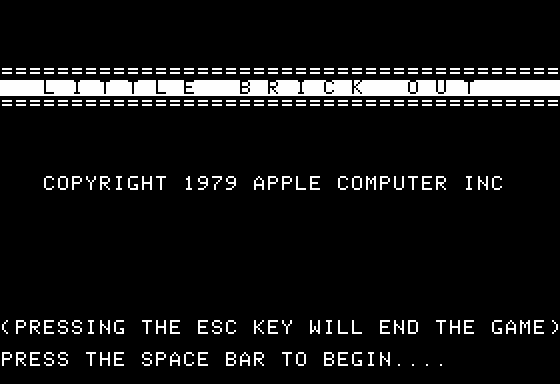
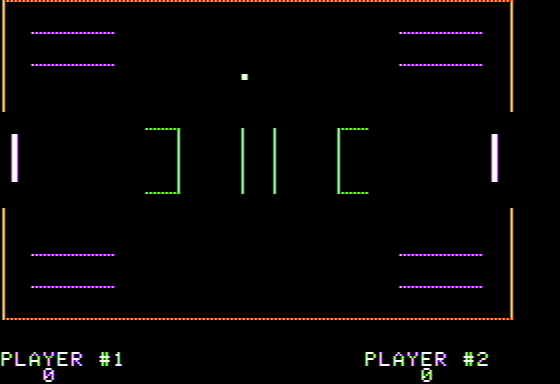
The Apple Tapes compilation centers its interactive charm on LITTLE BRICK OUT, a faithful AppleSoft BASIC rendition of Steve Wozniak’s Breakout. Unlike the vertical orientation common to arcade versions, this horizontal take presents a fresh spin that feels both nostalgic and novel. Players can tweak colour schemes, adjust paddle size, and even modify ball speed, giving the game a surprising degree of personalization for a late-1970s title.
(HEY YOU!! We hope you enjoy! We try not to run ads. So basically, this is a very expensive hobby running this site. Please consider joining us for updates, forums, and more. Network w/ us to make some cash or friends while retro gaming, and you can win some free retro games for posting. Okay, carry on 👍)
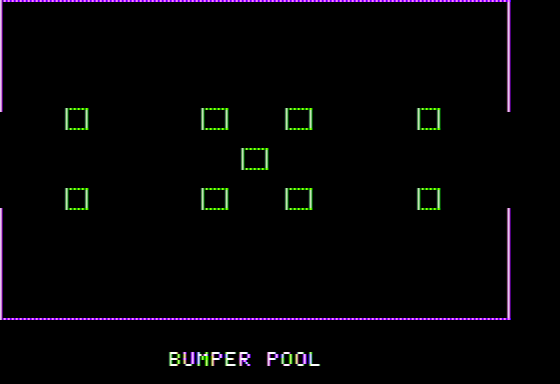
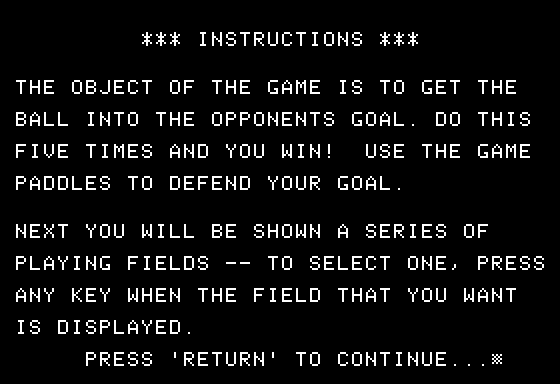
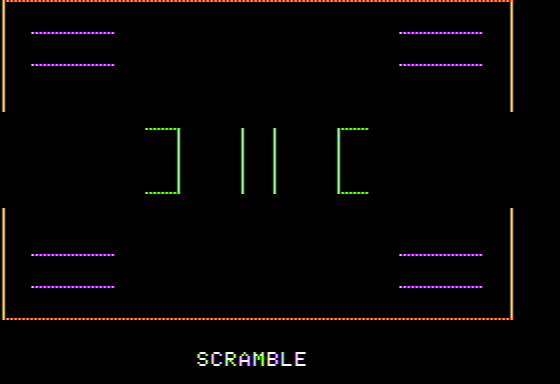
PENNY ARCADE brings an eclectic suite of Pong variants to the mix: Bumper Pool challenges you to deflect multiple balls in tight corridors, Hockey demands quick reflexes on an icy field, Scramble tests your adaptability with shifting obstacles, and Tennis delivers the classic volley experience. Each minigame retains the straightforward controls that made Pong a household name, yet subtle rule twists and varied playfields keep the experience lively across multiple sessions.
LEMONADE simulates the time-honoured business of running a citrus stand. With simple input prompts for pricing, inventory, and weather conditions, this early sales sim encourages strategic thinking and risk management. Though graphics are minimal, the real draw is the decision-making loop—balancing supply against unpredictable demand to maximize profits or learn from a rainy day’s losses.
Beyond entertainment, the compilation includes practical and demonstration applications. COLOR DEMOSOFT showcases the Apple II+’s eight-colour palette in scrolling adverts and block patterns. ALIGNMENT TEST TONE generates audio test signals to fine-tune cassette decks or early disk drives, doubling as a curious ambient soundtrack. Utility titles like PHONE LIST and RENUMBER/APPEND turn your machine into a basic office computer, revealing the Apple II’s versatility beyond pure gaming.
Graphics
By today’s standards, the Apple II+ graphics engine is rudimentary, yet these programs exemplify how pioneering developers maximized limited hardware. LITTLE BRICK OUT’s oversized paddle and brightly coloured bricks make each breakout session easy to read, while the horizontal layout offers a fresh perspective that feels intentional rather than constrained. Framerate hiccups are rare, and the simplistic animations reliably communicate ball trajectories.
The Pong-style games in PENNY ARCADE echo the crisp, blocky paddles of the original arcade cabinets, with each minigame’s arena drawn in bold, contrasting colours. The minimal use of sprites and collision detection is handled deftly, ensuring that paddle-ball interactions never feel sluggish. The clever use of background fills—especially in Bumper Pool’s border elements—demonstrates an early mastery of palette cycling.
LEMONADE and the various demo programs rely on text and basic chart visuals, but they leverage colour text modes to differentiate data fields or highlight critical values. COLOR DEMOSOFT pushes the Apple II+ firmware to display horizontal bars, colour gradients, and vector-style shapes. While you won’t mistake these visuals for modern pixel art, they provide a vibrant window into the era’s technical achievements.
Story
As a software compilation, The Apple Tapes offers no single narrative arc, but it tells a broader story about the birth of personal computing. LITTLE BRICK OUT’s lineage traces back to Wozniak’s ingenious adaptation of arcade hardware to a home-brew circuit board, a moment that cemented the Apple II’s place in history. Playing it today feels like stepping into that seminal moment when hobbyists proved that home computers could deliver arcade-worthy thrills.
PENNY ARCADE’s assortment of Pong variants highlights the playful experimentation of early developers. Without the constraints of modern production pipelines, programmers could remix familiar formats—pool tables, hockey rinks, scrambled obstacle courses—and test them on real users in the living room. This period of unbridled creativity laid the groundwork for today’s indie scene, where a single developer can explore dozens of gameplay twists.
LEMONADE and the utility programs underscore another narrative strand: the democratization of computing. They demonstrate how the Apple II+ was sold not just as a toy, but as an educational tool and a productivity machine. By including both games and applications on the same tape, Apple invited users to explore programming, entrepreneurship, and hardware calibration, fostering a generation of tinkerers and future software innovators.
Overall Experience
The Apple Tapes: Introductory Programs for the Apple II+ is a treasure trove for retro enthusiasts, educators, and curious newcomers alike. Each title loads swiftly from tape—provided your deck is properly aligned—immersing you in a hands-on lesson in computing history. LITTLE BRICK OUT and PENNY ARCADE offer immediate entertainment, while LEMONADE adds a cerebral twist that rewards patience and strategy.
Although the compilation’s graphics and sound are modest, they remain striking when viewed through the lens of 1970s hardware. The colour demonstrations and alignment tools hint at hidden depths in the Apple II+ architecture, encouraging users to dig deeper into BASIC programming or even machine code. For those with a penchant for vintage systems, this package doubles as both a playable archive and a technical primer.
On the downside, modern players accustomed to polished interfaces may find the command-line prompts and manual loading process archaic. Yet this very rawness is part of the charm: every beep, screen crackle, and tape hiss cements the authenticity of the experience. The Apple Tapes is less about instant gratification and more about appreciating the roots of personal computing, making it a must-own for collectors and history buffs.
In sum, The Apple Tapes compilation stands as a compelling snapshot of the Apple II+ era, blending gaming, simulation, and utility software in one package. Its blend of simplicity and innovation continues to resonate, reminding us how far technology has come—and how much creativity can flourish within tight technical limits.


Reviews
There are no reviews yet.