 Retro Replay Retro Replay gaming reviews, news, emulation, geek stuff and more!
Retro Replay Review
Gameplay
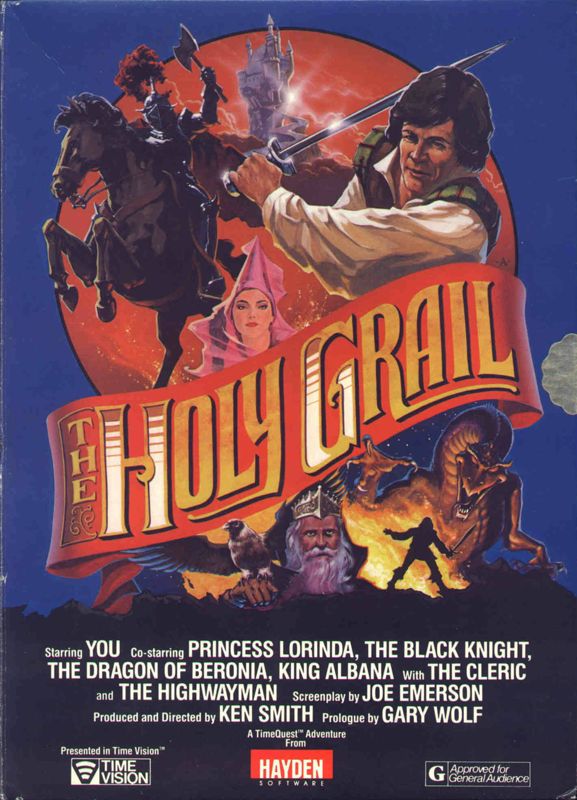
The Holy Grail places you in the role of a young prince tasked by the Emperor with an epic quest: retrieve the titular artifact and secure the throne. Interaction is handled through classic text-adventure commands, allowing you to examine every nook and cranny of medieval environments. You’ll type commands like “look at altar,” “open chest,” or “talk to guard” to unravel secrets and progress through each scene.
(HEY YOU!! We hope you enjoy! We try not to run ads. So basically, this is a very expensive hobby running this site. Please consider joining us for updates, forums, and more. Network w/ us to make some cash or friends while retro gaming, and you can win some free retro games for posting. Okay, carry on 👍)
Beyond simple exploration, The Holy Grail introduces tense battle sequences where quick thinking and swift command input are vital. When you’re ambushed by Balnard’s henchmen or confronted by mythical beasts, you must choose your actions and type them rapidly to defend yourself or launch a counterattack. These moments break up the steady pace of puzzle-solving and add a welcome surge of adrenaline.
Puzzles range from inventory-based riddles—combining items in the correct order—to environmental conundrums that require careful note-taking and map sketching. The game encourages experimentation; objects that seem irrelevant at first glance often turn out to be the key to solving a later challenge. While some puzzles can be fiendishly obscure, the satisfaction of conquering them is immense.
Overall, the gameplay marries the cerebral pleasure of traditional text adventures with the occasional high-stakes action scene. If you enjoy cryptic riddles, detailed world descriptions, and the tactile thrill of text-based combat, The Holy Grail delivers a robust experience that rewards patience and creativity.
Graphics
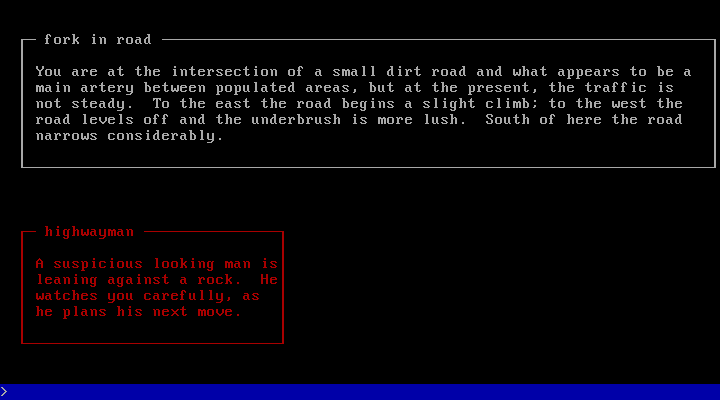
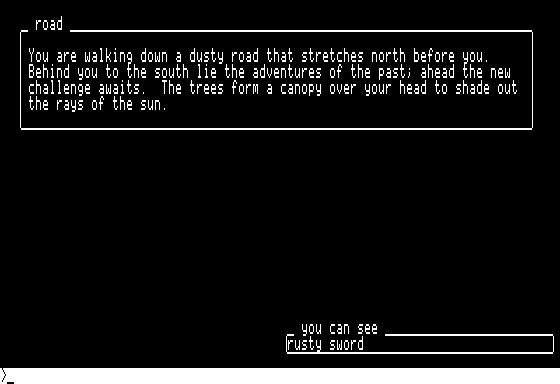
Being a text-based title, The Holy Grail relies on evocative prose rather than detailed visuals to paint its world. Descriptive passages convey the grandeur of the Emperor’s court, the damp mustiness of forgotten crypts, and the eerie glow of enchanted relics. Players with vivid imaginations will find themselves immersed in richly textured scenes despite the absence of traditional sprites or 3D models.
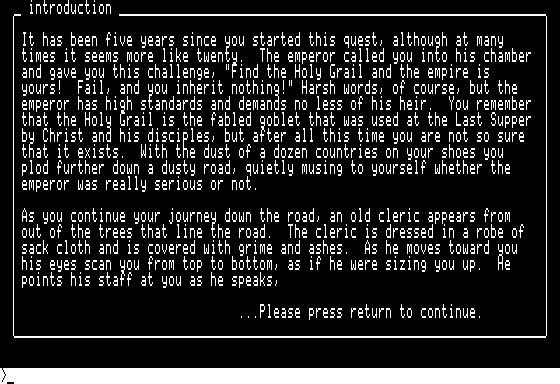
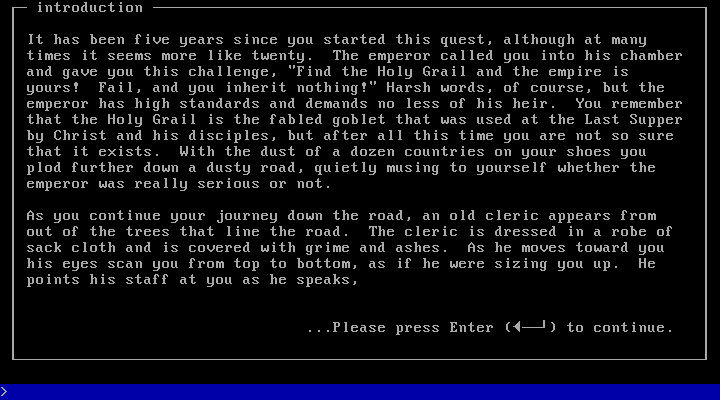
The interface itself is clean and intuitive: a scrollable text window presents narrative and responses, while a prompt line awaits your commands. Menus for saved games, settings, and help screens are neatly organized in ASCII-style boxes that evoke the charm of early-era home computer adventures. Font choices and color schemes remain readable, even during extended play sessions.
In lieu of graphical cutscenes, the game surprises you with occasional ASCII art vignettes—sketches of a menacing dragon curled around its hoard or the silhouette of a towering cathedral. These brief visual interludes heighten key story moments and break up walls of text just enough to keep your eyes fresh.
While modern AAA titles may dazzle with photorealistic visuals, The Holy Grail proves that compelling imagery can emerge from words alone. Its minimalist presentation ensures that system requirements are negligible, making it accessible on a wide range of devices without compromising on atmosphere.
Story
The narrative thrust of The Holy Grail centers on a dynastic power struggle. You play as the loyal younger son of the Emperor, while your half-brother Balnard lurks in the shadows, plotting to seize the artifact for his own nefarious ends. This family betrayal adds emotional weight to the standard fetch-quest trope, transforming it into a tale of honor, ambition, and moral choices.
As you traverse lush forests, crumbling fortresses, and sacred sanctuaries, the game unfolds a tapestry of legends and political intrigue. NPCs are fully realized characters: a repentant knight carrying secrets of past battles, a cryptic oracle whose riddles test your resolve, and a court wizard whose hidden past ties directly into Balnard’s plot. Dialogue trees allow you to probe motivations, forge alliances, or strike bargains—each choice ripples through the narrative.
Balnard emerges as a compelling antagonist, his malevolence conveyed through chilling monologues and sudden betrayals. The tension between the brothers escalates as you near the Grail’s resting place, culminating in a climactic showdown that balances puzzle-solving, negotiation, and direct confrontation. The final act challenges your mastery of everything you’ve learned, from inventory management to combat reflexes.
The Holy Grail’s story resonates because it blends mythic quest archetypes with grounded character drama. Themes of trust, sacrifice, and the corrupting influence of power are woven into every chapter, ensuring that your journey feels both grand and personally meaningful.
Overall Experience
Playing The Holy Grail feels like stepping into a medieval epic penned on parchment. Its blend of textual immersion, strategic puzzles, and bursts of real-time action offers a unique rhythm that keeps you engaged for hours. Whether you’re a veteran of Infocom classics or a newcomer curious about retro adventures, the game’s pacing and design make it approachable yet challenging.
One of the greatest strengths of this title is its replayability. Multiple puzzle solutions, branching dialogue paths, and alternative endings ensure that a second (or third) playthrough yields fresh surprises. You might choose to confront Balnard head-on in one run or build alliances with minor factions in another, changing how key events unfold.
The learning curve can be steep, especially for players unfamiliar with command-based interfaces. However, an in-game help system and well-documented manual soften the blow, guiding you through common command structures and hinting at puzzle logic without giving away solutions entirely. As you grow comfortable crafting your own commands, the sense of agency becomes deeply rewarding.
At its core, The Holy Grail is a testament to the enduring appeal of interactive fiction. It challenges your intellect, tests your reflexes, and invites you to immerse yourself in a richly detailed medieval realm. For adventurers seeking a cerebral yet emotionally engaging journey, this quest for the ultimate relic is one you won’t soon forget.


Reviews
There are no reviews yet.