 Retro Replay Retro Replay gaming reviews, news, emulation, geek stuff and more!


Retro Replay Review
Gameplay
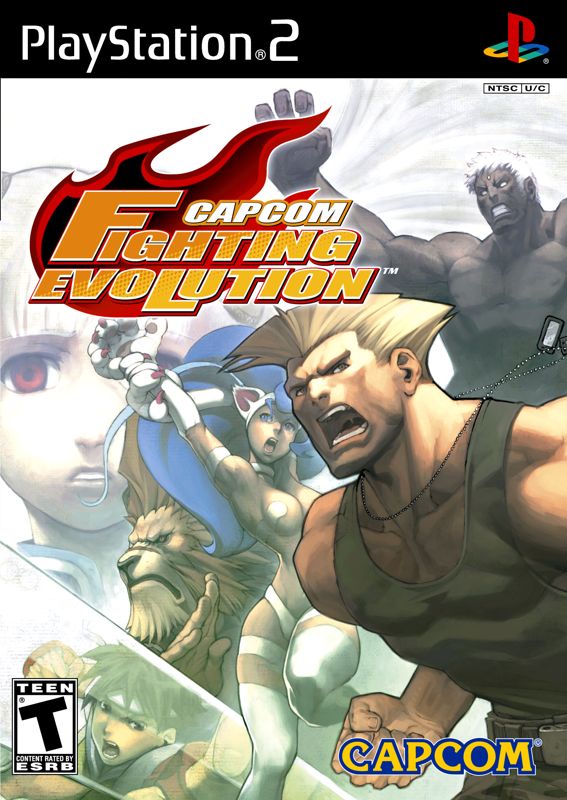
Capcom Fighting Evolution delivers a classic 2D head-to-head brawler experience that leans heavily on nostalgia, bringing together fighters from Street Fighter II, Street Fighter III: 3rd Strike, Street Fighter Alpha, Darkstalkers and Red Earth. Each character retains their original move sets and fighting styles, which means longtime fans will appreciate familiar inputs and techniques. The result is a sprawling “dream match” roster where you might pair Ryu against Morrigan or Zangief against Ingrid, all without compromise to their signature mechanics.
(HEY YOU!! We hope you enjoy! We try not to run ads. So basically, this is a very expensive hobby running this site. Please consider joining us for updates, forums, and more. Network w/ us to make some cash or friends while retro gaming, and you can win some free retro games for posting. Okay, carry on 👍)
The game offers multiple modes to keep players engaged. Beyond the standard Arcade and Versus modes, you can select two-on-two team battles, tag matches or survival challenges. The team battle mode encourages creative lineups and tactical character order, since you can tag in partners to escape pressure or extend combos. Even though this mode isn’t as refined as later tag-based fighters, it adds worthwhile variety to the otherwise one-on-one focus.
Controls feel tight and responsive, with a consistent six-button layout across all characters. Input buffering and execution windows are generous, letting both veterans and newcomers land special moves reliably. However, since the roster spans different hardware generations (from CPS2 to CPS3), you may notice slight discrepancies in frame data and hitbox behavior. Despite occasional balance quirks, the core gameplay loop remains fast, strategic and deeply rewarding.
Graphics
Visually, Capcom Fighting Evolution is a mixed bag that reflects its multi-era heritage. Character sprites are lifted directly from their original arcade releases—some drawn on the CPS2 boards, others from the more advanced CPS3 hardware—so you’ll see an inconsistency in resolution and color depth. Nevertheless, each sprite retains its defining personality, from Chun-Li’s fluid animations in Street Fighter II to Alex’s powerful strikes from 3rd Strike.
The backgrounds combine new artwork and recycled stages, offering a sense of familiarity but lacking the dynamism of standalone titles. By modern standards, stages feel static: minor environmental details hardly react to the fight, and there are no interactive elements. Still, distinctive landmarks—like the gothic cathedral from Darkstalkers or the industrial docks of Red Earth—evoke a strong nostalgic pull for longtime fans.
Special effects such as fireballs, lightning arcs and supers maintain their original flair, albeit with some reduction in particle density compared to the source titles. The trade-off is consistent performance: even on a modest arcade board or home port, the framerate stays locked at 60 FPS with no noticeable slowdown during hectic super combos. In short, while Evolution doesn’t push the boundaries of 2D graphics, it faithfully preserves the look and feel of Capcom’s golden age.
Story
As a crossover title, Capcom Fighting Evolution offers only the barest narrative framework—there is no overarching storyline that ties every character together. Instead, each fighter retains their individual Arcade Mode ending, featuring short text prompts or static illustrations that recap their personal motivations. This fragmented approach means you won’t see a cohesive plot unfold, but you will enjoy bite-sized epilogues for every combatant.
The lack of a unified narrative may disappoint players seeking a deeper single-player journey, but it’s consistent with the “dream match” concept. Rather than weaving a new storyline, the game focuses on pitting iconic rosters against one another. If you’ve ever wondered what would happen if Ken squared off against Jedah or Gill, the game’s flexible mode structure answers that question without narrative baggage.
For those hungry for more context, the character biographies in the options menu provide a quick refresher on each fighter’s backstory. These blurbs—drawn from their original games—add a touch of lore and remind players of the larger universes these warriors inhabit. Though not a substitute for a full story mode, they satisfy casual curiosity and reinforce Capcom’s rich character heritage.
Overall Experience
Capcom Fighting Evolution shines as a nostalgia-driven package, ideal for fans who want a massive roster of classic Capcom combatants under one roof. The dream match concept succeeds in delivering dreamlike pairings and memorable matchups that can’t be found elsewhere. Varied modes and a robust tag system keep the experience fresh, even if some features feel underdeveloped by today’s standards.
Balance can be uneven—some characters from later iterations outshine their older counterparts—but that disparity is part of the charm. Matches feel unpredictable, and refining strategies against unfamiliar foes encourages experimentation. Players seeking a meticulously balanced competitive fighter might look elsewhere, but those who appreciate chaotic mash-ups will find plenty to love.
Ultimately, Evolution is a love letter to Capcom’s storied fighting legacy. It won’t replace your favorite standalone entry, nor will it satisfy hardcore eSports demands, but it offers an engaging, varied battler that celebrates decades of 2D combat. For collectors, casual players and nostalgia junkies alike, Capcom Fighting Evolution remains a unique and worthwhile entry in the publisher’s extensive library.



Reviews
There are no reviews yet.