 Retro Replay Retro Replay gaming reviews, news, emulation, geek stuff and more!
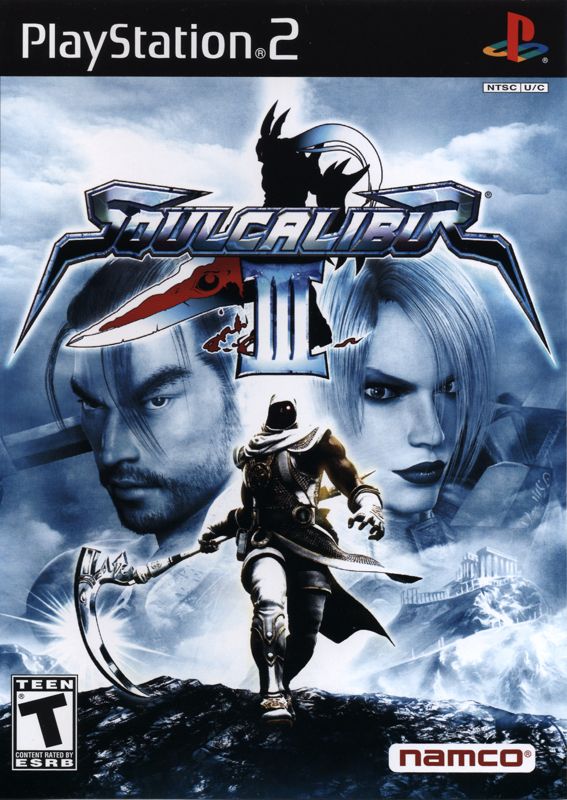
Retro Replay Review
Gameplay
SoulCalibur III refines the series’ signature weapon-based combat with a seamless blend of stances, Horizontal Attacks, Vertical Attacks, Throws, Kicks and the dynamic Soul Charge mechanic. Executing precise timing and directional inputs is key, as each character’s unique weapon and style reward mastery. Whether you’re eyeing a lightning-fast spear thrust or a devastating greatsword swing, the core 1vs1 clashes feel weighty and responsive, with clear feedback on hits, blocks and counters.
(HEY YOU!! We hope you enjoy! We try not to run ads. So basically, this is a very expensive hobby running this site. Please consider joining us for updates, forums, and more. Network w/ us to make some cash or friends while retro gaming, and you can win some free retro games for posting. Okay, carry on 👍)
The title’s two flagship modes—Tales of Souls and Chronicles of the Sword—offer contrasting approaches to progression. Tales of Souls drops you into individual character arcs, guiding 24 fighters through branching story choices on the world map, punctuated by fight-or-die cutscenes. These narrative forks add replay value, encouraging multiple playthroughs to uncover rivalries, hidden endings and character-specific secrets.
Chronicles of the Sword shifts gears entirely, inviting you to craft a custom soldier and navigate a war-torn world map. This hybrid strategy-RPG mode tasks you with directing units, capturing strongholds and leveraging battlefield “effects” like altered gravity or sudden darkness. Victory yields gold, which can be spent on new weapons, outfits and unlockable content that carry over into the main fighting modes.
Beyond the majors, a robust suite of extras awaits. Versus mode delivers straightforward local duels, while Soul Arena and Survival place escalating challenges before you. The deep character creation suite—drawing on dozens of body parts, costumes and visual effects—ensures your custom combatant stands out. Hidden objectives and gold-grind mechanics keep unlock hunters busy long after the main campaigns have concluded.
Graphics
On the PlayStation 2, SoulCalibur III represents a visual high point: character models boast sharp textures and fluid animations, faithfully conveying the heft of each weapon. The Soul Charge glow and particle trails inject dramatic flair into special moves, while hit impacts register with a satisfying burst of sparks. Frame rates remain impressively stable, even in the heat of battle.
Arenas are richly detailed, ranging from moonlit courtyards to jungle temples and ship decks. Subtle environmental touches—rippling water, swaying foliage and dynamic lighting—imbue each stage with atmosphere. Some maps even feature interactive or destructible elements, as fighters can be knocked into walls or hazards for extra strategic depth.
Cutscenes and story sequences demonstrate the game’s cinematic aspirations, showcasing expressive facial work and finely sculpted armor designs. Whether it’s Nightmare’s cruel visage, Tira’s swirling skirts or your custom hero’s bespoke ensemble, the art direction remains consistently high. Although originating on PS2, many of these visuals still hold up today, thanks to thoughtful color palettes and design coherence.
Story
The saga of the Soul Edge—a malevolent blade capable of twisting its wielder—serves as the series’ dark backbone. In SoulCalibur III, we learn of Siegfried’s tragic fall into Nightmare, the nightmarish creature he became while wielding Soul Edge. A mysterious scythe-bearer intervenes, severing Siegfried from the cursed armor and reanimating the Azure Armor as the new “Nightmare.”
Meanwhile, the fan-favorite antagonist Tira fully embraces the dark whispers of Soul Edge, her twisted loyalty driving barbed-wire staff attacks. Setsuka emerges on the other side, a stoic swordswoman out for vengeance. Their personal journeys intertwine with the broader hunt for Soul Edge, as rumors spread across Europe and beyond, drawing old rivals and fresh faces back into the fray.
Tales of Souls unfolds these threads in bite-sized chapters, complete with dialogue choices that can alter alliances and outcomes. Chronicles of the Sword, by contrast, positions you at the heart of a continent-wide conflict, pitting three nations against each other in a war for dominance. Both modes reward engagement with lore and world-building, filling in gaps while laying the groundwork for future installments.
Overall Experience
SoulCalibur III offers tremendous replay value, balancing deep, technical combat with a buffet of modes that cater to fighters and strategy enthusiasts alike. The thrill of mastering a favorite character’s combos or testing out a newly crafted warrior keeps each session feeling fresh. Local versus matches, team battles and survival challenges extend the lifespan even further.
The game’s progression systems—gold earned in Chronicles, items unlocked through Tales, and bonus gear hidden behind secret conditions—create a constant sense of reward. Collecting new weapons and outfits isn’t just cosmetic; it fosters attachment to characters and your custom avatar, driving you to explore every corner of the game’s offerings.
Accompanied by a stirring orchestral score, impactful sound design and period-faithful voice performances, the audiovisual presentation pulls you into a medieval-fantasy world fraught with danger and intrigue. Even years after its release, SoulCalibur III’s distinctive style and robust mechanics ensure it remains a standout entry in the weapon-based fighting genre.
For fans seeking deep, engaging combat wrapped in a multilayered package of story, strategy and unlockables, SoulCalibur III remains a compelling purchase. It’s a testament to the series’ strengths and a worthy challenge for both newcomers and seasoned veterans.


Reviews
There are no reviews yet.