 Retro Replay Retro Replay gaming reviews, news, emulation, geek stuff and more!


Retro Replay Review
Gameplay
Brain Games delivers a straightforward yet addictive puzzle experience that challenges both solo players and duos to flex their mental muscles. The game is structured around six distinct mini-games—Touch Me, Count Me, Picture Me, Find Me, Add Me, and Play Me—each designed to test memory, speed, logic, pattern recognition, and creativity. From the moment you select a mode, you’re thrust into a focused exercise that rewards accuracy and quick thinking, making it simple to pick up but increasingly tough to master.
(HEY YOU!! We hope you enjoy! We try not to run ads. So basically, this is a very expensive hobby running this site. Please consider joining us for updates, forums, and more. Network w/ us to make some cash or friends while retro gaming, and you can win some free retro games for posting. Okay, carry on 👍)
Touch Me and Count Me work hand in hand to test your short-term memory and sequencing skills. In Touch Me, you listen to a series of tones and reproduce them by pressing the corresponding buttons, while Count Me displays numbers on screen that you must tap back in the correct order. Both modes scale in difficulty by lengthening sequences, ensuring that the puzzles remain fresh even after extended play sessions. These memory challenges feel particularly satisfying when you finally nail a long sequence without error.
Picture Me, Find Me, Add Me, and Play Me round out the roster by engaging different cognitive abilities. Picture Me shuffles symbols that you must quickly resequence, while Find Me speeds up your visual discrimination as you locate the odd object out of a group. Add Me shifts focus to basic arithmetic under time pressure, delivering a pleasant math workout, and Play Me invites you to explore musical creativity by assigning notes to buttons for freestyle jamming or duet performance. The variety ensures that Brain Games never feels repetitive, and it caters to a wide range of puzzle preferences.
Graphics
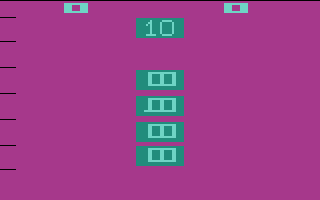
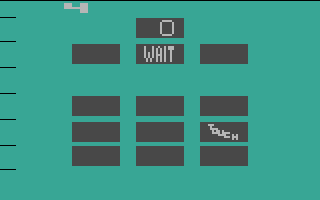
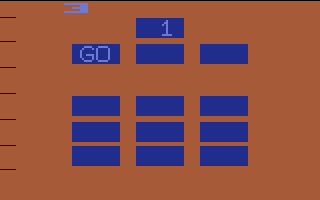
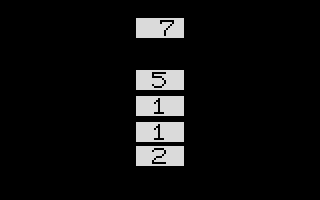
Graphically, Brain Games opts for a clean, minimalistic interface that foregrounds gameplay over flashy visuals. Each mini-game uses distinct colors and symbols to make the objectives crystal-clear: bright tones in Touch Me, bold numerals in Count Me, and crisp icons in Picture Me. This uncluttered design keeps you focused on the puzzles, minimizing distraction and reducing visual fatigue during longer play sessions.
The animations are simple but effective, providing just enough feedback to let you know when you’ve succeeded or slipped up. In Find Me, for instance, the dissimilar object you select is highlighted with a brief glow, while Add Me features a countdown timer that pulses and changes color as it approaches zero. These subtle visual cues are well-calibrated to maintain tension without overwhelming the senses.
Play Me takes a slightly different approach by presenting a virtual keyboard layout onscreen, complete with animated keys that light up when pressed. Though the graphical fidelity isn’t cutting-edge, it’s more than adequate for quickly identifying notes and octaves. Overall, the graphics in Brain Games serve a functional purpose, reinforcing the educational nature of the title and ensuring clarity across every puzzle type.
Story
Brain Games doesn’t offer a traditional narrative or character-driven plot; instead, it embraces an open-ended “brain training” theme that positions you as both student and competitor. While there’s no storyline to follow, the game’s manual suggests a friendly mental contest between players or against your personal high scores, setting an informal framework for progress. This lack of narrative may disappoint those looking for a storyline, but it’s consistent with the game’s focus on cognitive challenges.
The instructional text is concise and placed directly within each mini-game, guiding new players through rules and controls without resorting to lengthy tutorials. You’re never bogged down by exposition—each puzzle mode launches right into the action after a brief on-screen primer. This stripped-down presentation keeps the pace brisk, which is ideal for players who want to warm up their neurons quickly or squeeze in a short session between other tasks.
Although some story-driven gamers might miss a painted backdrop or character progression, Brain Games compensates with an implicit narrative of self-improvement. Watching your scores climb, beating your own best times, or outshining a friend provides a sense of achievement that carries its own motivating momentum. In a way, the game turns your evolving skill level into the central “plot,” letting you craft your own personal challenge arc.
Overall Experience
As a package, Brain Games succeeds as an accessible, varied, and replayable collection of puzzles. Its emphasis on memory, math, and pattern recognition appeals to both casual gamers seeking a quick mental workout and families looking for a shared activity. The ability to switch seamlessly between solo and two-player modes adds to its lasting appeal, making it an excellent choice for game nights or quiet evenings at home.
Replayability is one of Brain Games’ strongest suits. Since each mini-game’s difficulty scales with your performance, you’re continually encouraged to push your limits. Leaderboards or in-house high score lists compound this drive, transforming every session into an opportunity to refine your skills. Moreover, the inclusion of Play Me offers creative freedom, allowing you to explore simple music-making in a stress-free environment.
Ultimately, Brain Games stands out as a title that is easy to learn, hard to master, and never dull. Its straightforward graphics, clear instructions, and six distinct puzzle types ensure there’s always something new to tackle. Whether you’re aiming to sharpen your mind, compete with friends, or introduce younger players to basic logic and arithmetic, Brain Games offers a well-rounded experience that delivers both fun and mental stimulation.


Reviews
There are no reviews yet.