 Retro Replay Retro Replay gaming reviews, news, emulation, geek stuff and more!
Retro Replay Review
Gameplay
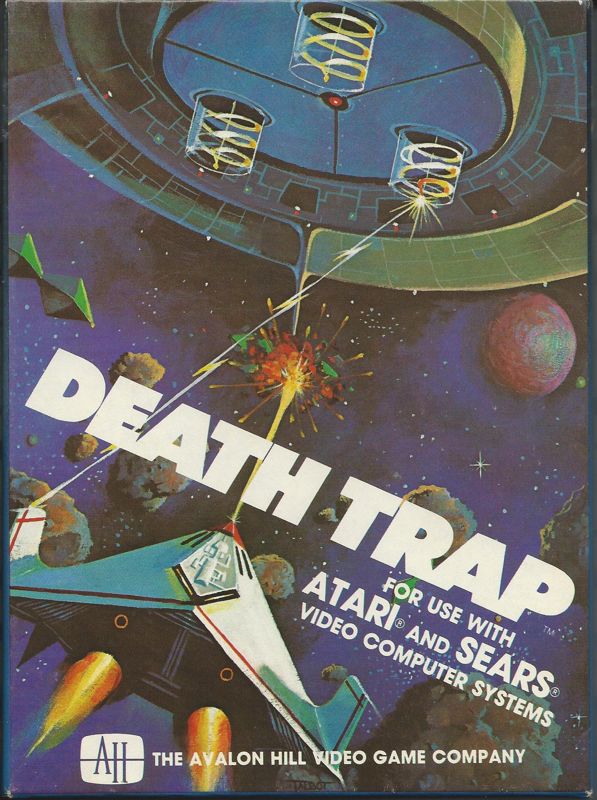
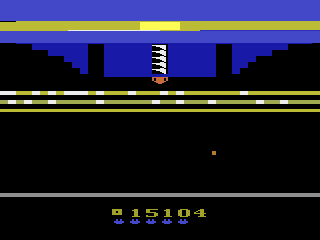
Death Trap delivers a tense, fast-paced arcade experience that puts you in the cockpit of a lone starship tasked with delivering a critical message to the Galactic Emperor. From the outset, you’ll be navigating tight corridors around the massive vessel known only as IT, relying on nimble joystick movements to dodge deadly shields labeled A, B, C above you and D below. One stray touch against any shield results in instant destruction, raising the stakes with every evasive maneuver.
(HEY YOU!! We hope you enjoy! We try not to run ads. So basically, this is a very expensive hobby running this site. Please consider joining us for updates, forums, and more. Network w/ us to make some cash or friends while retro gaming, and you can win some free retro games for posting. Okay, carry on 👍)
The core objective centers on destroying three power generators hidden within IT’s hull. As you damage the left and right generators, the central power core remains concealed until both flank units are fully disabled. During combat, guided fireballs launch from IT, homing in on your ship; sustaining multiple hits costs you one of your six spare ships. Survive long enough under fire, however, and your repair crew can patch you up—provided you’re playing on Easy or Normal mode.
Firing torpedoes is more than just point-and-shoot: holding down the fire button lets you guide each missile left or right and even accelerate its speed at the cost of leaving your ship stationary. This risk–reward tension is at the heart of Death Trap’s strategic depth. Meanwhile, invulnerable segments crawl across shields A, B, and C over time, forcing you to constantly adapt your attack angles and keep the pressure on IT’s defenses.
Adding further complexity, if you don’t strike a flank generator within 15 seconds, IT retaliates by lowering shield C—limiting your maneuvering room and docking a substantial 90 points from your score. Once the two side generators fall, the central unit emerges, and defeating it triggers the rapid rise of shield D, demanding lightning-fast precision to secure victory. With only six ships on your roster, each encounter feels like life-or-death, ensuring every decision carries weight.
Graphics
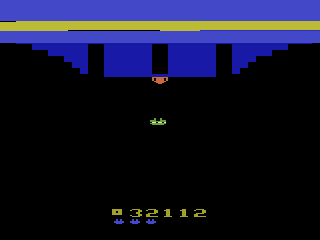
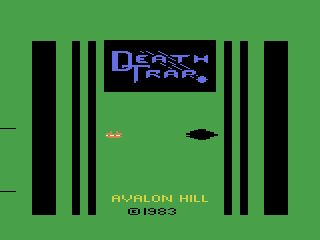
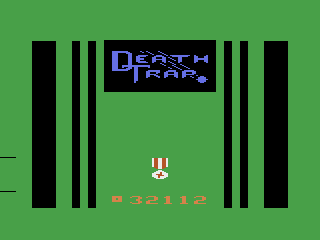
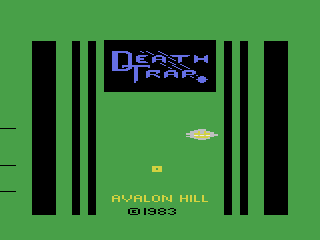
Visually, Death Trap embraces a classic retro aesthetic, with crisp vector-style lines and stark, contrasting colors that evoke the golden age of arcade shooters. IT’s colossal silhouette looms against a star-speckled backdrop, giving a tangible sense of scale as you dart through its shields. The segmented shields A, B, and C stand out in bright hues, clearly indicating vulnerable gaps versus impervious barriers.
Torpedo trails and explosion effects are rendered simply but effectively, delivering instant feedback when you breach a generator or when a fireball finds its mark. The guided fireballs themselves glow with an ominous red hue, making each one immediately identifiable as a threat. Despite limited graphical horsepower, the animation remains smooth, maintaining a steady frame rate even during the most chaotic firefights.
Subtle details—such as the occasional spark when your ship grazes an invulnerable segment, or the brief flash when a generator takes damage—enhance the tactile feel of combat. While the color palette is fairly minimal, it serves the gameplay perfectly: you can instantly spot incoming projectiles, shield movements, and power generator status. For fans of arcade nostalgia, Death Trap’s visuals strike a satisfying balance between clarity and style.
Story
While Death Trap isn’t a narrative-heavy title, its premise is compelling: you’ve been entrusted with a top-secret message intended for the Galactic Emperor. This lone-ship mission carries palpable urgency, especially once IT registers your approach and unleashes all manner of defensive measures. The stripped-down plot effectively channels classic sci-fi stakes without bogging down the action.
The anonymity of the vessel IT itself adds to the mystique. There’s no time for exposition or cutscenes—your only focus is to infiltrate, disable, and escape. This minimalist storytelling leaves room for player imagination, hinting at the Emperor’s importance and IT’s brutal efficiency. The looming threat of utter annihilation heightens tension with every shield segment you see closing in.
By weaving story beats directly into its gameplay mechanics—shields dropping, generators revealing themselves, and repair crews kicking in—the game maintains narrative momentum. Each destroyed generator feels like a tangible victory against an almost omnipotent foe. Despite lacking extensive lore, Death Trap’s scenario-driven design fosters a sense of urgent purpose that keeps you coming back for “just one more run.”
Overall Experience
Death Trap stands out as a high-intensity arcade shooter that expertly balances precision controls, strategic decision-making, and escalating challenge. Whether you’re guiding torpedoes around shifting shield segments or weaving through homing fireballs, the core gameplay loop remains satisfying from start to finish. Difficulty options—from Easy’s forgiving repair crew to Hard’s relentless onslaught—cater to both newcomers and seasoned veterans.
The short play sessions and cyclical generator objectives make Death Trap eminently replayable. Every run tests your reflexes, adaptability, and risk assessment, while the point deductions and repair mechanics reward smart, aggressive play. The lack of a built-in narrative depth will be a nonissue for players seeking tight, action-packed gameplay, though those wanting a richer storyline may crave more context.
In an era of sprawling open worlds and cinematic epics, Death Trap’s purity of design offers a refreshing throwback to arcade fundamentals. It’s easy to pick up, hard to master, and endlessly engaging for anyone who loves precision challenges and retro visuals. If you’re on the hunt for an old-school shooter that demands both skill and strategy, Death Trap is a mission well worth undertaking.


Reviews
There are no reviews yet.