 Retro Replay Retro Replay gaming reviews, news, emulation, geek stuff and more!
Retro Replay Review
Gameplay
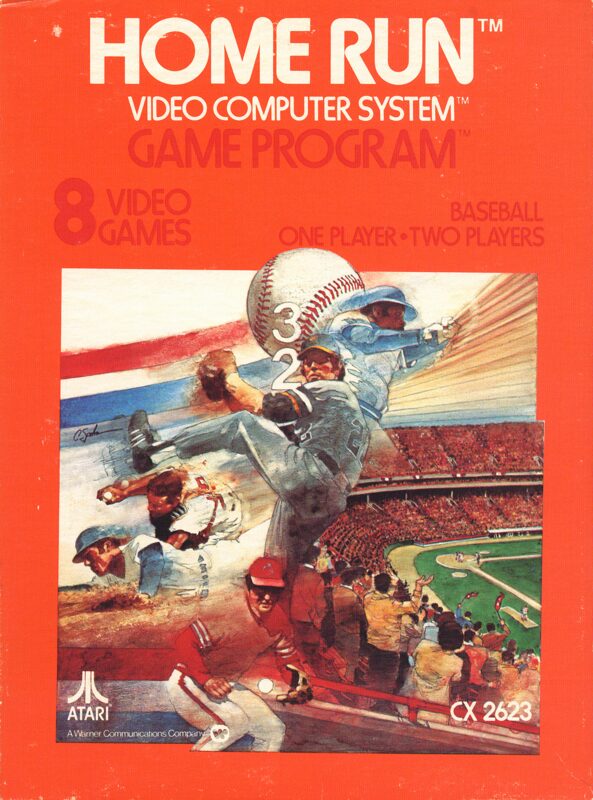
Home Run delivers a straightforward yet surprisingly deep arcade-style baseball experience that caters both to newcomers and seasoned sports fans. Whether you’re squaring off against a CPU opponent or challenging a friend in local multiplayer, the core mechanics feel intuitive from the first pitch. You can choose to field with one, two, or three infielders, which immediately influences your defensive strategy and makes each match a fresh tactical puzzle.
(HEY YOU!! We hope you enjoy! We try not to run ads. So basically, this is a very expensive hobby running this site. Please consider joining us for updates, forums, and more. Network w/ us to make some cash or friends while retro gaming, and you can win some free retro games for posting. Okay, carry on 👍)
As the pitcher, you grab the joystick to shape your delivery—tinker with speed and curve to keep batters off-balance. The tactile feedback of winding up and releasing the pitch gives a satisfying arcade vibe, even if it lacks the precision of modern simulators. Once the ball leaves your hand, the real fun begins: with a single joystick you command all your fielders simultaneously, chasing grounders or racing under high pop flies. It’s simplistic but hectic, turning routine outs into heart-pounding scrambles.
Offensively, Home Run leans into accessibility without sacrificing control. Positioning your bat is as simple as tilting the joystick, and timing your swing never feels unfair or slicked over by arbitrary mechanics. After making contact, you can choose to push your luck—press the button to hold runners at a base if you doubt they’ll make it. This small but meaningful decision point adds real drama to close games, especially when you’re one run away from the lead in the late innings.
True to its arcade roots, Home Run trims away complex baseball minutiae but retains the thrill of strategic choice. You still abide by nine-inning structure, three-strike-outs, four balls to walk, and the classic hit-by-pitch rule. Defensively, executing a double play by catching a line drive and then tagging a runner between bases yields some of the most rewarding moments, especially when you and a friend are battling for bragging rights.
Finally, the crowning glory of Home Run’s gameplay is the simplicity of a home run. Launch the ball over second base without it being corralled by your opponents, and you’ll feel that old-school arcade rush as runners trot home and the scoreboard lights up. It’s an uncomplicated flourish, but it captures the essence of baseball’s most celebrated play—perfect for quick sessions or longer marathon matches.
Graphics
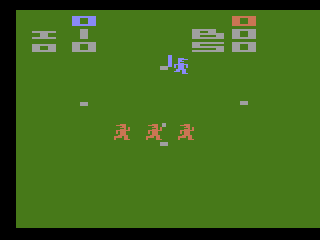
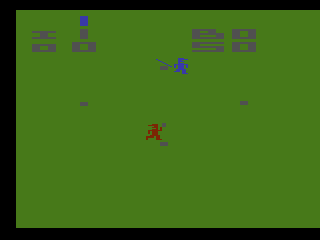
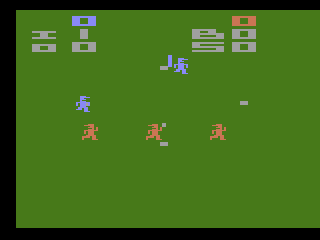
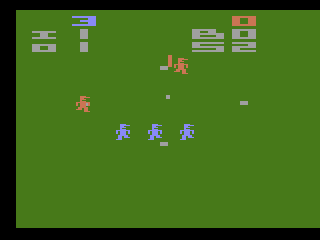
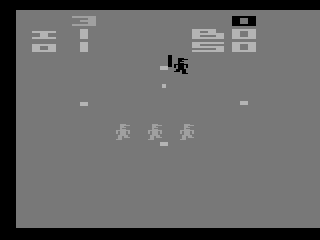
Visually, Home Run opts for bright, colorful pixel art that evokes classic arcade cabinets from the ’80s and ’90s. The field is rendered in crisp green tones, with the diamond clearly demarcated by white baselines that help players judge grounder hops and fly ball depths. Sprites for batters, pitchers, and fielders are small but expressive, sporting just enough animation frames to convey wind-ups, swings, and dramatic dives.
The stadium backdrop is dotted with stylized crowd graphics that, while static, pulse with subtle color shifts to simulate cheering fans. Scoreboards and on-screen indicators adopt bold, easy-to-read fonts, making it effortless to keep track of balls, strikes, outs, and the current inning. When you launch a home run, the scoreboard flashes in a celebratory sequence that harkens back to simple yet effective arcade feedback loops.
Even the sound design complements the pixel-driven visuals: energetic bleeps for bat contact, brief “boings” for catches, and satisfying pings for home-run clearances. Though the audio palette is limited, it’s thoughtfully applied to reinforce gameplay events without becoming grating over extended play. The minimalistic approach to visual and audio design ensures that you’re never overwhelmed by unnecessary bells and whistles.
Camera angles remain fixed in a side-on view, typical of retro baseball games, giving you an unobstructed look at every pitch and hit. While this means you won’t see the full expanse of the outfield, it keeps the action tight and immediate—perfect for fast-paced matches. In its own nostalgic way, Home Run’s visual presentation feels like a charming time capsule rather than a budget restraint.
Overall, the graphics strike a fine balance between nostalgia and clarity. You know exactly when that infield grounder sneaks through or when your outfielders need to hustle for a diving catch. If you’re looking for flashy realism, you won’t find it here—but if you want clarity, charm, and arcade energy, Home Run delivers in spades.
Story
Home Run doesn’t offer a sprawling narrative or dramatic career mode—instead, it focuses on pure baseball action. There’s no managerial intrigue, no player backstories, and no cutscenes; just you, the field, and the goal of scoring more runs than your opponent. For some, this might feel like a missed opportunity to deepen immersion. For others, the lack of narrative padding is a refreshing return to pure arcade fun.
That said, the game sprinkles in enough context to keep you invested in each match. Pre-game screens allow you to select team colors and a generic mascot emblem, giving a small sense of identity to your side. The announcer-style jingles before each inning and the flashing scoreboard add personality, as though you’re playing under the bright lights of a packed stadium—even if there’s no written storyline to accompany it.
In lieu of a traditional story, Home Run builds its own momentum through match-to-match rivalries. The absence of a scripted tale encourages you to create your own: a comeback victory in the bottom of the ninth, a pitching duel that ends in a one-run thriller, or a multiplayer feud that spans multiple games. Your highlight reel emerges organically from these moments, and that can feel more memorable than any pre-designed narrative.
Some players thrive on progression systems and unlockable content, which Home Run doesn’t emphasize. Instead, it offers an open field from the start—no leveling up, no hidden teams, no secret stadiums. Every feature is accessible immediately, which keeps the pace lightning-fast but may leave completionists yearning for more goals to chase.
Ultimately, the story of Home Run is the one you bring to the diamond yourself. If you’re seeking a game with a deep single-player saga, this might not be your first choice. But if you just want to jump into a fun, competitive baseball match with minimal setup, the narrative vacuum becomes its own space for personal triumphs and rivalries.
Overall Experience
Home Run shines as a quick-hit arcade baseball title that nails the essentials: pitching, hitting, fielding, and strategic base running decisions. Its fast load times and instant match setup mean you can dive into a game within seconds, making it ideal for both brief pick-up sessions and longer multiplayer marathons. Whether you’re facing the AI or a human opponent, the pacing rarely drags, and every inning offers chances for drama.
While it doesn’t strive for simulation-level depth, Home Run delivers an accessible, pick-up-and-play formula that’s perfect for families, casual gamers, and retro enthusiasts. The intuitive controls reward practice, yet the learning curve remains gentle enough that newcomers won’t feel shut out. Throw in versatile one-to-three fielder options, and you’ve got a customizable experience that can be tailored to your appetite for challenge.
Visually and sonically, the game embraces its arcade heritage with bright pixel art and satisfying, if limited, sound effects. Though it may seem spartan compared to modern sports franchises, its aesthetic consistency creates a focused environment where gameplay is king. Every crack of the bat and thud of a catch feels purposeful, bolstering the sense of achievement when you pull off a perfectly timed double play or launch a walk-off home run.
In the absence of a traditional storyline or extensive progression mechanics, Home Run stakes its claim on the pure joy of competition. Each victory feels earned, and each defeat fuels the desire for a rematch. The tight gameplay loop, combined with local multiplayer thrills, makes this an excellent option for couch co-op nights or solo skill-building sessions.
For anyone seeking a lean, engaging baseball game that prioritizes fun over frills, Home Run hits it out of the park. Its blend of straightforward rules, responsive controls, and classic arcade charm ensures that every game—whether a quick inning or a full nine—remains compelling from first pitch to final out.


Reviews
There are no reviews yet.