 Retro Replay Retro Replay gaming reviews, news, emulation, geek stuff and more!


Retro Replay Review
Gameplay
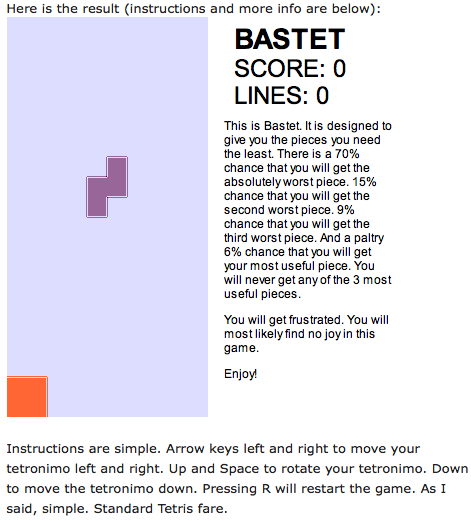
Bastet takes the classic Tetris formula and turns it on its head with its infamous “least useful piece” algorithm. Rather than delivering a random sequence of tetrominoes, Bastet analyzes your current stack and intentionally hands you the shapes that will give you the most trouble. This design choice transforms a familiar puzzle into an exercise in adaptability and foresight, forcing you to think several moves ahead and keep your field as flexible as possible.
(HEY YOU!! We hope you enjoy! We try not to run ads. So basically, this is a very expensive hobby running this site. Please consider joining us for updates, forums, and more. Network w/ us to make some cash or friends while retro gaming, and you can win some free retro games for posting. Okay, carry on 👍)
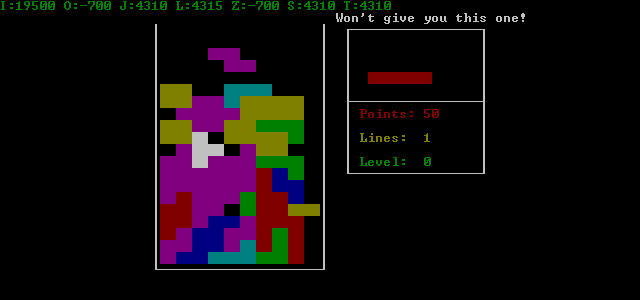
Controls are straightforward—use the arrow keys for horizontal movement, rotation, and soft drop—but the real challenge lies in predicting which problematic piece is coming next. The “Won’t give you this one!” display adds a layer of psychological warfare, taunting you with the shape you’ll never see. This mockery can be frustrating, yet it also motivates you to master your stacking strategy and minimize vulnerabilities in your pile.
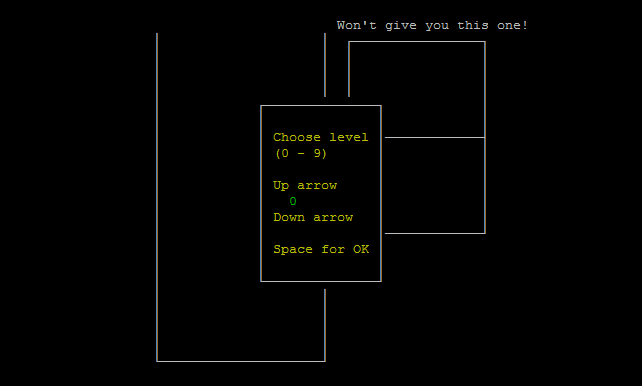
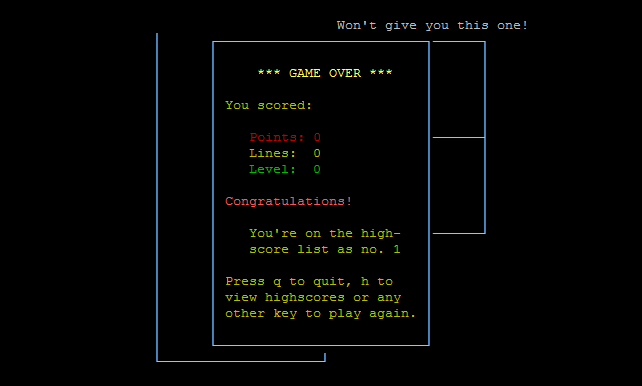
The game’s level selection at startup allows you to set an initial drop speed, which dictates how quickly the algorithm ramps up the pressure. Beginners can start at a slow pace to learn how to manage the worst-case scenarios, while veterans can jump straight into lightning-fast levels where split-second decisions mean the difference between a satisfying combo and a sudden game over. High score tracking provides an extra layer of replayability, as you continually strive to outdo your own best runs.
Graphics
Rather than flashy 3D models or elaborate animations, Bastet embraces a minimalist text-mode interface reminiscent of classic UNIX games. Colored ASCII characters represent each tetromino, delivering clear visual feedback without taxing system resources. This stripped-down aesthetic not only runs smoothly on virtually any hardware but also evokes a sense of retro charm that few modern puzzle games can match.
The simplicity of the presentation is part of Bastet’s appeal. Every piece is distinctly colored, making it easy to differentiate shapes at a glance even as the action speeds up. The monochrome borders and clean statistics panel—displaying points, lines cleared, and current level—keep the screen uncluttered, so you can focus entirely on your stacking strategy.
Although there’s no background music or dynamic lighting, the constant stream of text updates and the teasing “Won’t give you this one!” message create a compelling tension. It’s proof that engaging gameplay can thrive without elaborate visual frills. If you’re nostalgic for the days of text-based interfaces or prefer your gaming experiences lean and distraction-free, Bastet’s graphics will feel like a breath of fresh air.
Story
On paper, Bastet has no narrative in the traditional sense—there’s no protagonist to guide, no world to explore, and no plot twists to unravel. What it does offer, however, is a meta-story of frustration, perseverance, and eventual triumph as you wrestle with the game’s relentless piece-selection algorithm.
Each session becomes its own little saga: you start with high hopes, plan out your placements, and then—inevitably—get saddled with a long string of “useless” pieces. Your challenge is to adapt your strategy on the fly, turning potential disasters into clearing opportunities. In that sense, the story is written by your own reactions and the emotions that bubble up when you barely inch forward line by line.
For many players, the real narrative emerges in the competition against oneself. Chasing a new high score or besting a previous playthrough imbues each session with personal stakes. Though Bastet doesn’t hand you a cinematic storyline, it crafts a compelling journey through its cleverly designed mechanics.
Overall Experience
Bastet offers a fresh, challenging spin on Tetris that will test your mental agility and patience. Its unique piece-selection engine rewards players who can think several moves ahead and stay calm under pressure. If you’re a puzzle enthusiast looking for more than just a random sequence of blocks, Bastet will keep you coming back for “just one more try.”
The minimalist, text-based graphics and absence of soundtrack mean Bastet won’t overwhelm you with sensory stimuli; instead, it directs all of your focus to the core gameplay loop. This pared-down presentation feels deliberate and nostalgic, catering to fans of classic computing as well as newcomers seeking a pure, unadulterated puzzle challenge.
Whether you’re a casual player intrigued by the twist or a seasoned Tetris veteran craving an unforgiving new variant, Bastet delivers endless replay value. Its deceptive simplicity conceals a deep well of strategic possibilities, making each session a fresh test of wits. For anyone seeking a puzzle game that refuses to go easy, Bastet is a must-try.


Reviews
There are no reviews yet.