 Retro Replay Retro Replay gaming reviews, news, emulation, geek stuff and more!



Retro Replay Review
Gameplay
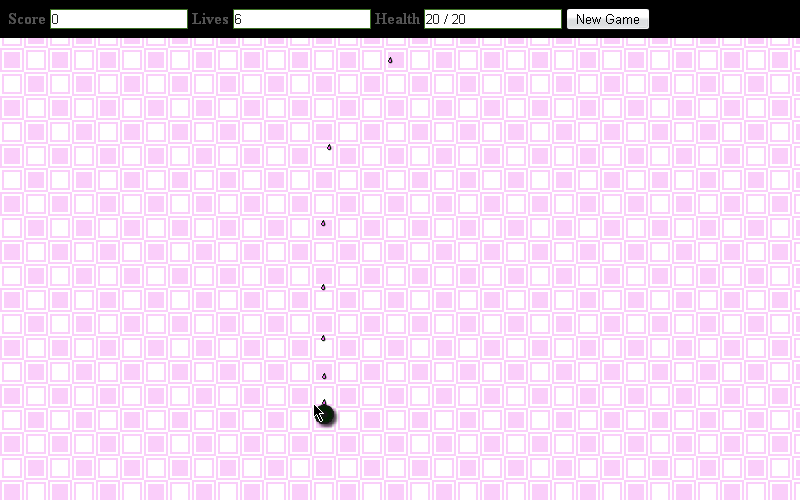
Evolution SHMUP delivers on its titular promise by serving up a classic shoot-’em-up framework with an ever-shifting roster of variables. Each playthrough begins with a familiar setup: a player-controlled sprite perched at the bottom of the screen, blasting upward at waves of descending enemies. From there, the game leans into procedural generation to remix virtually every superficial aspect of the experience, from enemy shapes and firing patterns to background visuals and soundtrack snippets.
(HEY YOU!! We hope you enjoy! We try not to run ads. So basically, this is a very expensive hobby running this site. Please consider joining us for updates, forums, and more. Network w/ us to make some cash or friends while retro gaming, and you can win some free retro games for posting. Okay, carry on 👍)
While the core mechanics remain steadfastly rooted in SHMUP tradition—move, dodge, shoot—the permutations applied from session to session can drastically alter pacing and challenge. In one iteration you might face nimble, zigzagging foes that pepper the screen with lasers; in another, lumbering metallic behemoths will lob volleys of homing missiles. The result is a constant sense of novelty, which keeps the adrenaline pumping for players who thrive on quick reflexes and pattern recognition.
Underneath the surface, the game’s “evolution” system tracks which configurations hold your attention the longest. The AI then prioritizes those elements in future runs, tailoring the chaos to your personal tastes. This adaptive approach adds a subtle meta-arc, as you begin to notice which enemy types or firing frequencies the computer favors—and how your own playstyle shapes subsequent iterations.
Graphics
Visually, Evolution SHMUP embraces a kaleidoscopic pixel-art aesthetic that nods to arcade classics while experimenting with color palettes and sprite geometries. No two backgrounds look alike: you might find yourself zooming past neon grids in one session, then navigating a field of drifting asteroids in the next. This keeps the eyes engaged, even as the core gameplay loop remains unchanged.
Enemies and player sprites themselves take on wildly different forms each time you press Start. One run may feature insectoid vectors darting across the screen; another might pit you against crystalline constructs that shimmer and rotate in hypnotic patterns. This diversity can be visually stimulating, but at times it undermines the coherence you’d expect from a more curated art direction.
Special effects—explosions, projectile trails, and screen-shaking impacts—are crisp and satisfyingly weighty. Though the presentation never aims for hyper-realism, its retro-inspired charm is enhanced by smooth animations and well-tuned color contrasts. Evolution SHMUP’s graphical toolbox is clearly built for variety, and it mostly succeeds in making each match feel fresh.
Story
True to the archetype it emulates, Evolution SHMUP doesn’t offer a traditional narrative. There’s no interstellar conflict laid out in lengthy cutscenes, no character-driven drama—just an implicit tale of adaptation and survival encoded in its procedural systems. You’re essentially a test pilot in an ever-changing simulation, refining your approach against successive permutations of attack patterns.
That abstract premise suffices for players seeking pure action, but those craving a deeper storyline may find it wanting. There are no lore nuggets or world-building extras hiding behind menus; the game’s “plot” is entirely emergent, arising from the feedback loop between your evolving preferences and the AI’s adaptive tweaks.
In lieu of a conventional narrative, Evolution SHMUP offers a different kind of engagement: the satisfaction of mastering a mutable challenge. If you’re open to discovering your own story through repeated runs and self-imposed goals—such as conquering every enemy archetype or achieving a personal high time—this minimalistic approach can feel surprisingly rewarding.
Overall Experience
Evolution SHMUP stands out for its commitment to procedural variability within a tried-and-true genre framework. Players will appreciate the game’s willingness to break out of rote SHMUP formulas by remixing visual, mechanical, and pacing elements on the fly. The adaptive evolution engine elevates repeat playthroughs, offering a personalized twist on bullet-hell action that can feel both familiar and novel.
However, the game’s greatest strength is also its most glaring weakness: beneath the colorful exterior and shifting patterns lies the same fundamental shoot-’em-up gameplay, no matter how many cosmetic or firing-rate changes occur. Those seeking deep progression systems, branching narratives, or radical mechanical overhauls might find the “evolved” permutations more superficial than substantive.
Ultimately, Evolution SHMUP is best suited for arcade purists and procedural-game enthusiasts who relish endless do-overs and adaptive difficulty. It’s an engaging way to scratch the SHMUP itch without committing to a single, unchanging design—though you should go in knowing that the core formula remains resolutely, deliciously old-school. If quick-fire reflex tests and randomized flair appeal to you, this title offers a fresh spin on retro thrills.


Reviews
There are no reviews yet.