 Retro Replay Retro Replay gaming reviews, news, emulation, geek stuff and more!
Retro Replay Review
Gameplay
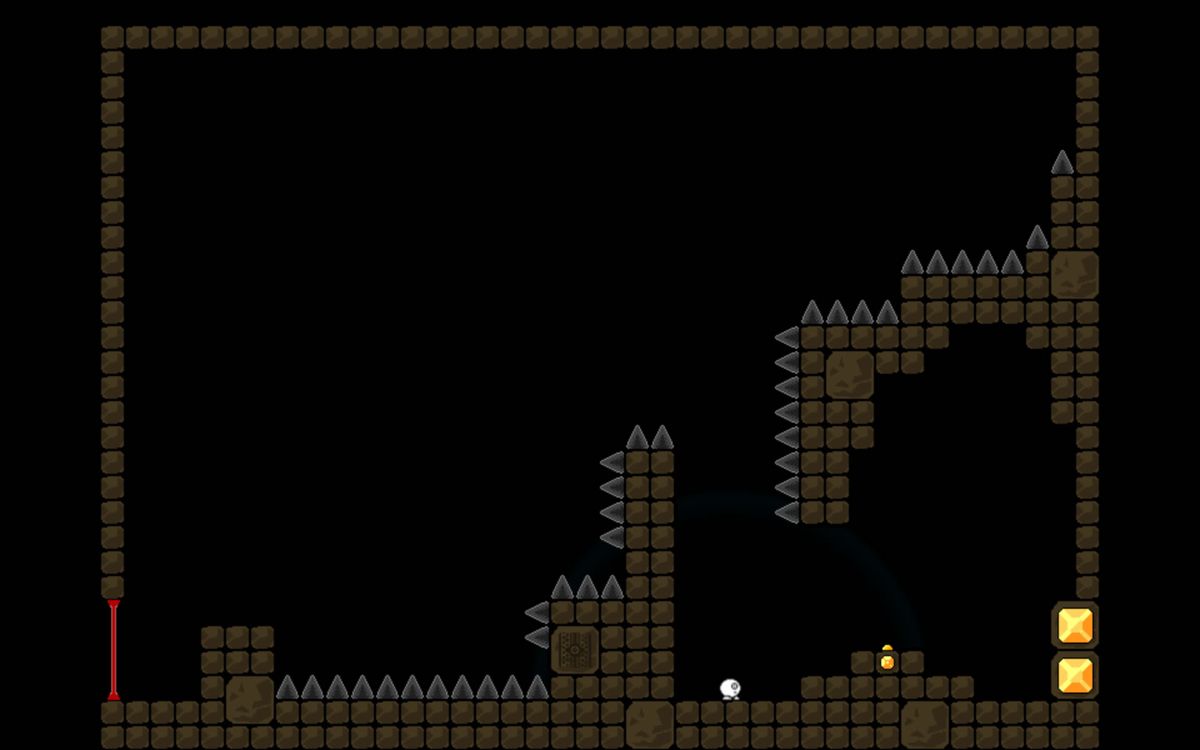
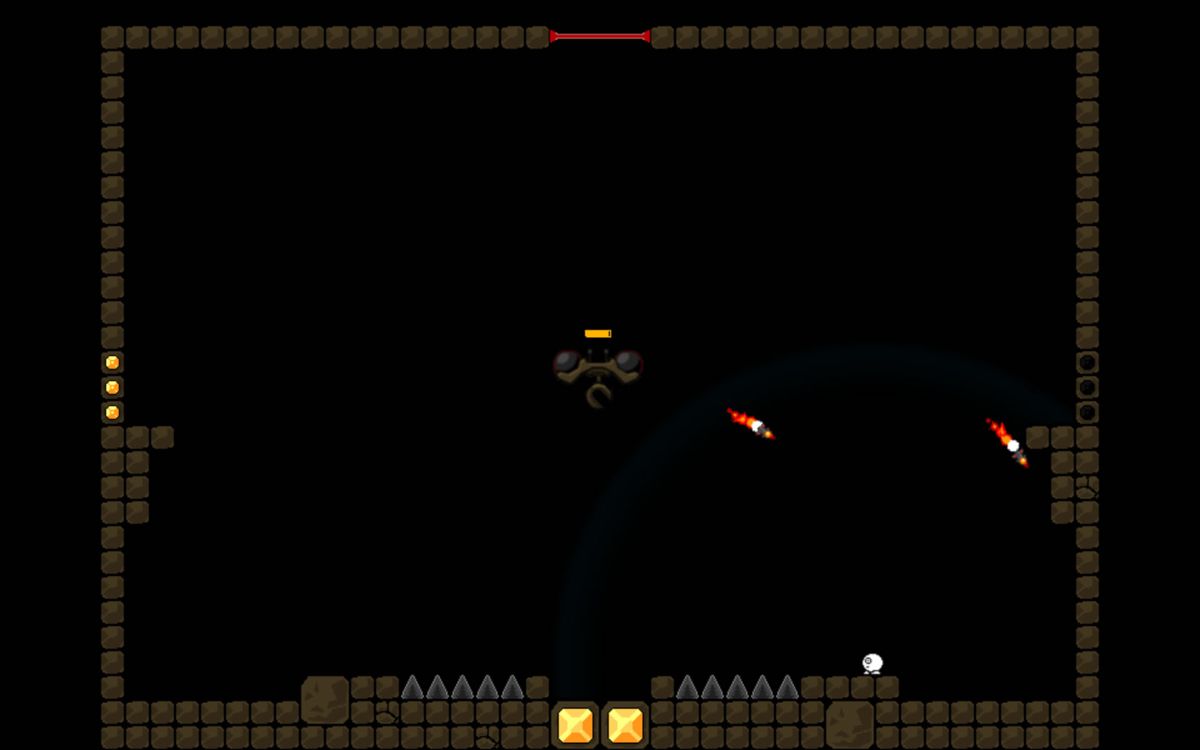
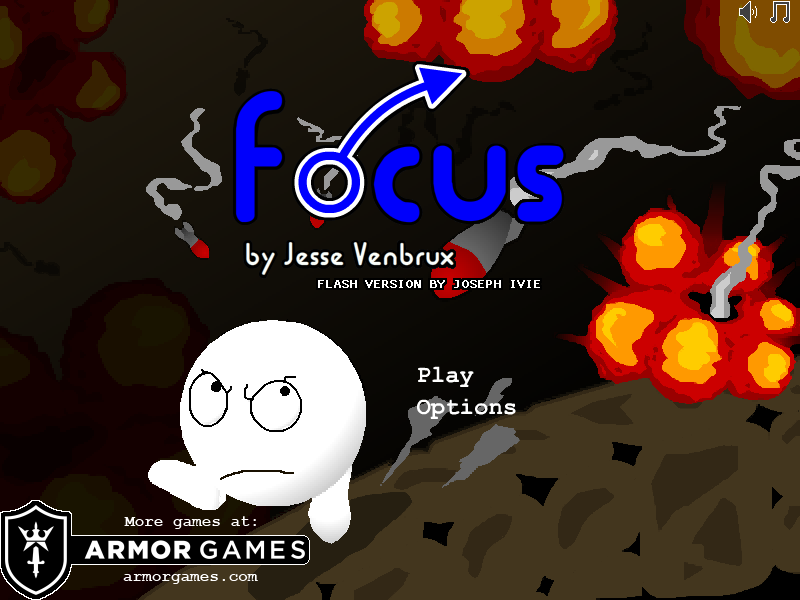
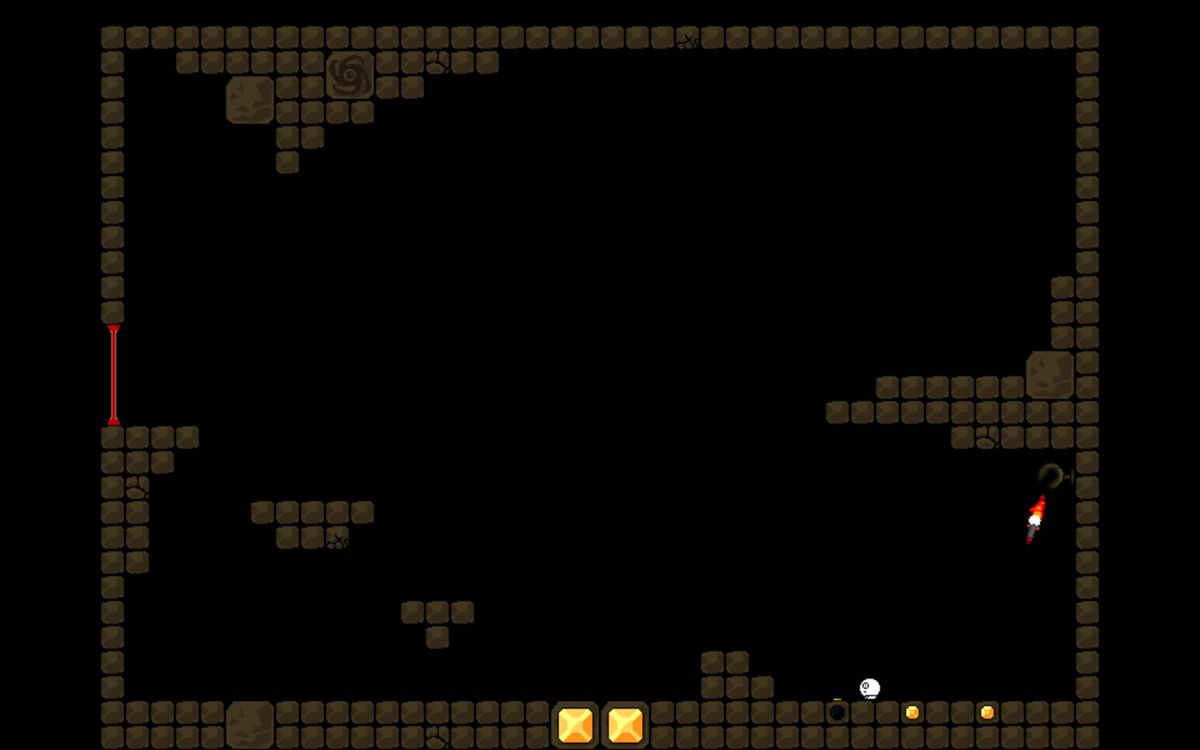
Focus delivers a razor-sharp platforming experience built around tight controls and increasingly challenging puzzle-like arenas. You guide a diminutive white creature through a series of compact, non-scrolling rooms, each demanding both precision and quick thinking. Early stages ease you in by letting you simply walk over bright yellow buttons to open the exit, but the game soon raises the stakes by introducing enemy rockets you must tactically redirect.
(HEY YOU!! We hope you enjoy! We try not to run ads. So basically, this is a very expensive hobby running this site. Please consider joining us for updates, forums, and more. Network w/ us to make some cash or friends while retro gaming, and you can win some free retro games for posting. Okay, carry on 👍)
The heart of Focus’s gameplay lies in the interplay between danger and empowerment. Every rocket you fire is a double-edged sword: while it can trigger distant switches, the blast and resulting debris are just as lethal to your character as they are to foes. This forces you to carefully position yourself and anticipate ricochets. As levels progress, you’ll face obstacles like spikes, explosive blocks, and moving platforms that demand split-second decisions and refined spatial awareness.
Midway through the campaign, Focus introduces its signature Focus Mode, a bullet-time mechanic that momentarily slows the action and reveals teleportation targets around your avatar. You must manage a limited energy meter, using it not only to teleport past lasers and walls but also to evade fast-approaching rockets. The ability to chain teleports in rapid succession turns each room into a high-stakes chessboard, where making—or breaking—a single move determines success.
With three distinct difficulty settings, fifty core stages, collectible medals tied to in-game achievements, and an unlockable speedrun mode, Focus offers substantial replay value. The browser version even adds an Insane mode, providing veteran players with a fresh gauntlet of punishingly clever levels. Whether you’re a casual gamer seeking a quick challenge or a die-hard platformer aficionado hunting for tight, demanding gameplay loops, Focus caters to a variety of play styles and skill levels.
Graphics
Visually, Focus opts for a minimalist aesthetic that complements its fast-paced action. The clean, monochromatic character design contrasts sharply with the vivid yellow buttons and brightly colored hazards, ensuring that key game elements always stand out. This simplicity keeps your attention where it matters—on the puzzle and precision platforming.
The environments are composed of geometric shapes and solid colors, giving each room a distinct silhouette that’s easy to parse even in the throes of chaotic bullet-time sequences. Particle effects, such as shattering debris or rocket blasts, add moments of visual flair without overwhelming the screen or muddying gameplay readability.
Animations are crisp, with smooth transitions between running, jumping, and teleporting states. The game maintains a consistent frame rate even when multiple rockets are hurtling toward you in slowed time, which is crucial for pulling off complex dodge-and-teleport maneuvers. Overall, the graphics serve the gameplay exceptionally well, delivering both style and function.
Story
Focus does not lean heavily on traditional narrative conventions; instead, it weaves its story through environmental cues and escalating gameplay mechanics. You control a curious creature navigating a series of test chambers that suggest an underlying experiment or trial, inviting you to infer the broader context through level design alone.
This minimalist approach to storytelling places the emphasis squarely on player discovery. Each new hazard or power-up reveals a bit more about the world and its challenges, creating a sense of progression that feels earned. While there are no voiced characters or cutscenes, the pure gameplay-driven narrative effectively keeps you invested in overcoming the next hurdle.
If you’re looking for a deep, lore-heavy saga, Focus may feel sparse in story content. However, for those who appreciate emergent storytelling and piecing together context through gameplay, the game’s design encourages your imagination to fill in the blanks and lends a unique charm to the overall experience.
Overall Experience
From its opening rooms to its most punishing Insane mode, Focus offers a gratifying loop of experimentation, failure, and eventual mastery. The blend of precise platforming, puzzle elements, and the signature Focus Mode teleportation mechanic makes it stand out in the crowded action-platformer genre. Each new level introduces a small twist that keeps the core gameplay fresh and exciting.
The difficulty curve is steep but fair, gradually teaching you new mechanics before demanding split-second reflexes and strategic planning. The addition of medals and speedrun leaderboards extends the game’s longevity, inviting competitive players to refine their routes and aim for flawless runs. Casual gamers will still find enjoyment in breezing through the early stages and tackling optional challenges at their own pace.
While the lack of a traditional storyline might disappoint narrative-focused players, the elegant, gameplay-driven world-building provides its own reward. Visually coherent designs and responsive controls ensure that frustration never stems from unclear objectives or inconsistent mechanics. Instead, your setbacks feel like personal opportunities to hone your skills and discover novel strategies.
In sum, Focus presents a compelling package of addictive mechanics, minimalist aesthetics, and robust replayability. It’s a game that respects your time by delivering concise, highly polished levels, yet continually entices you back with deeper challenges and hidden feats to conquer. For anyone seeking a distilled, action-packed platformer with a unique teleportation twist, Focus is an outstanding choice.


Reviews
There are no reviews yet.