 Retro Replay Retro Replay gaming reviews, news, emulation, geek stuff and more!

Retro Replay Review
Gameplay
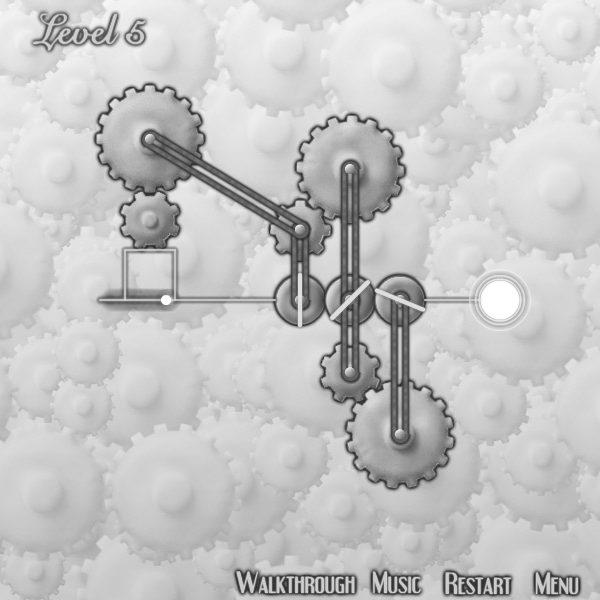
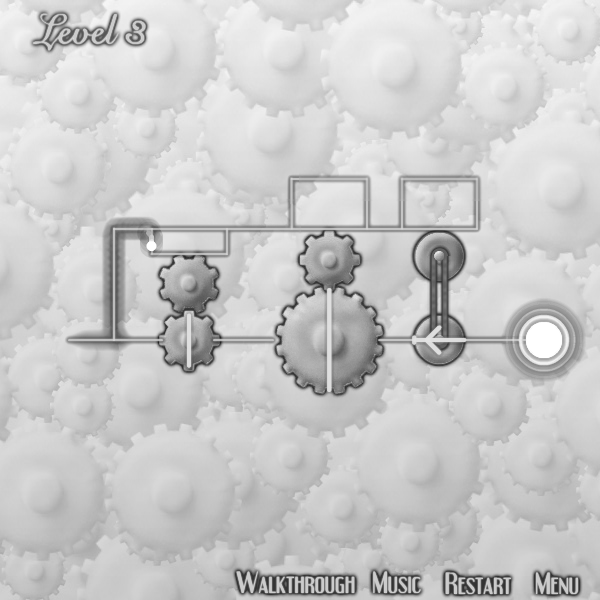
Grayscale delivers a refreshing blend of cerebral challenge and precise timing, tasking players with guiding a small ball of light through increasingly intricate networks of pathways. At its core, the gameplay revolves around strategically activating gears that shift the orientation of connecting routes. Successfully navigating these mechanical puzzles requires careful observation, quick decision-making, and an evolving understanding of how each gear interacts with the overall system.
(HEY YOU!! We hope you enjoy! We try not to run ads. So basically, this is a very expensive hobby running this site. Please consider joining us for updates, forums, and more. Network w/ us to make some cash or friends while retro gaming, and you can win some free retro games for posting. Okay, carry on 👍)
The early levels introduce the basic concept of rotating gears and simple track layouts, allowing newcomers to familiarize themselves with the controls and logic. As you progress through the 20 levels, new elements appear — one-way paths that force you to reconsider previous strategies, and single-use corridors that demand forethought. Each added constraint raises the stakes, transforming straightforward maze running into an exercise in foresight and adaptability.
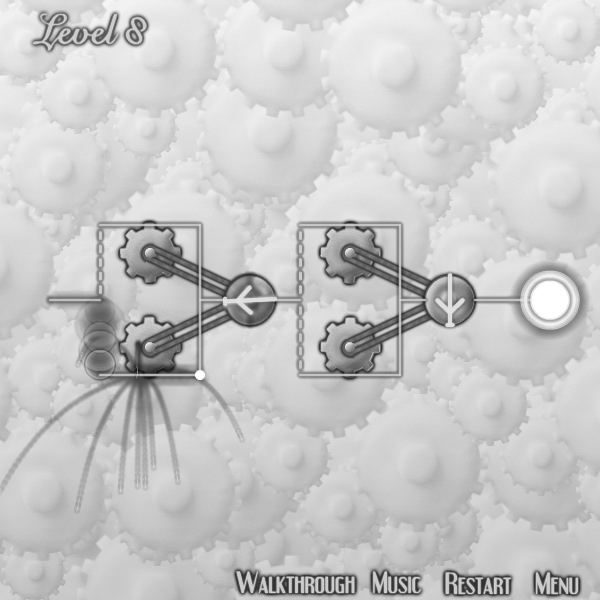
The game’s control scheme is delightfully intuitive. A single click or tap on a gear spins it into a new orientation, immediately updating the available paths. This simplicity masks a surprising depth: later stages feature intertwined gear clusters where a single rotation can open one avenue but block another. Balancing the consequences of each movement keeps the puzzle design both challenging and rewarding.
Despite its minimalist premise, Grayscale manages to maintain a steady sense of progression. There are no overly punishing “trial-and-error” sequences; instead, each level feels fair, encouraging players to learn from near-misses and refine their approach. A gentle difficulty curve ensures that both casual puzzle fans and hardcore strategists will find something to enjoy.
Furthermore, the pacing strikes a near-perfect balance. No two levels feel the same, thanks to the introduction of novel gear types and track obstacles. While some puzzles may require multiple attempts to master, none drag on unnecessarily, allowing you to savor each “eureka” moment when the final piece clicks into place.
Graphics
Grayscale lives up to its name with a striking monochromatic palette that emphasizes contrast and clarity. The game’s visual design is clean and uncluttered, ensuring that every pathway, gear, and barrier stands out crisply against the dark background. This minimalist aesthetic not only looks elegant but also serves the gameplay by keeping distractions to a minimum.
Animated transitions are smooth and purposeful. When a gear rotates, its movement is fluid, accompanied by a subtle glow that signals the change in route. The ball of light itself emits a soft luminescence, creating a satisfying visual trail as it rolls along activated paths. These delicate touches reinforce the game’s thematic focus on light and motion.
Each level features a distinct layout that feels fresh, even if the core color scheme remains the same. Subtle variations in shading and line thickness help differentiate pathways of different types — for instance, one-way tracks are slightly darker, while single-use corridors have a faint, dotted outline. This visual shorthand reduces confusion during complex maneuvers and keeps the player’s focus squarely on puzzle-solving.
The sound design complements the visuals with gentle chimes and resonant clicks each time you interact with a gear. Though minimalist, the auditory feedback adds another layer of polish, making every rotation and successful passage feel weighty and satisfying. Together, the graphics and sound create an atmosphere of calm concentration.
Overall, Grayscale’s presentation prioritizes functional elegance over flashy effects. Its deliberate design choices ensure that the player’s attention is never pulled away from the puzzle at hand, while still delivering an artful, cohesive visual experience.
Story
While Grayscale is foremost a puzzle experience, it weaves a subtle narrative of restoring light in a world of shadow. The premise is straightforward: guide a lone ball of light along fractured pathways to reignite a distant beacon. Though there are no cutscenes or dialogue, the game’s structure evokes a sense of purposeful pilgrimage.
Each level feels like a step in a larger journey. As you unlock more complex gear systems and traverse ever-more intricate tracks, you sense that the world itself is emerging from darkness. The simplicity of the story allows players to project their own interpretations onto the game, whether it’s a metaphor for problem-solving, self-discovery, or perseverance.
Grayscale relies on environmental storytelling rather than text or voice-over. The sparse arrangement of gears and tracks suggests an abandoned or forgotten machinery, hinting at a backstory of civilization lost to shadow. As the ball of light inches closer to the beacon, there’s a tangible feeling that you’re piecing together remnants of this silent world.
Despite its lack of explicit narrative elements, the game’s thematic coherence — light overcoming darkness, order emerging from chaos — imbues each puzzle with purpose. You’re not just solving abstract mazes; you’re bringing illumination to a dim realm, and each completed level feels like progress toward a meaningful goal.
For players seeking a story-driven adventure, Grayscale’s plot may seem sparse. But for those who appreciate thematic subtlety and let their imagination fill in the gaps, the minimalism enhances the overall charm, transforming each pathway into part of a grander design.
Overall Experience
Grayscale stands out in the crowded puzzle genre for its elegant mechanics, minimalist aesthetics, and thoughtful progression. It’s a game that never overcomplicates its core concept, yet finds endless ways to challenge the player through carefully designed gear interactions and pathway constraints. Whether you’re a puzzle veteran or new to the genre, the learning curve feels natural and rewarding.
The combination of intuitive controls, crisp graphics, and understated sound design creates a focused environment where nothing detracts from the central puzzle experience. Every rotation and rerouted track carries a satisfying weight, making progress feel genuinely earned. Occasional moments of frustration are always tempered by the knowledge that solutions lie within reach, waiting to be discovered through observation and experimentation.
While the game’s story is minimal, it provides just enough context to motivate the journey without overshadowing the puzzles. The thematic undercurrent of light against darkness lends emotional resonance to each level, transforming routine tasks into acts of restoration. For players who enjoy solving mechanical riddles and piecing together visual logic, Grayscale offers a compelling reason to keep going until the final beacon glows brightly.
One potential drawback is the game’s relatively short length. With 20 levels, Grayscale can be completed in a single sitting by seasoned players. However, the replay value remains respectable, as trying to optimize moves or achieve perfect runs adds an extra layer of challenge. In addition, the game’s clean design and accessible difficulty make it ideal for brief, focused play sessions on the go.
In conclusion, Grayscale is a polished, engaging puzzle title that succeeds through simplicity and precision. Its thoughtful progression, elegant visuals, and subtly woven theme will appeal to anyone who loves tackling mechanical brainteasers. If you’re in search of a game that balances serenity with mental stimulation, guiding a ball of light through a labyrinth of gears is an illuminating choice.


Reviews
There are no reviews yet.