 Retro Replay Retro Replay gaming reviews, news, emulation, geek stuff and more!





Retro Replay Review
Gameplay
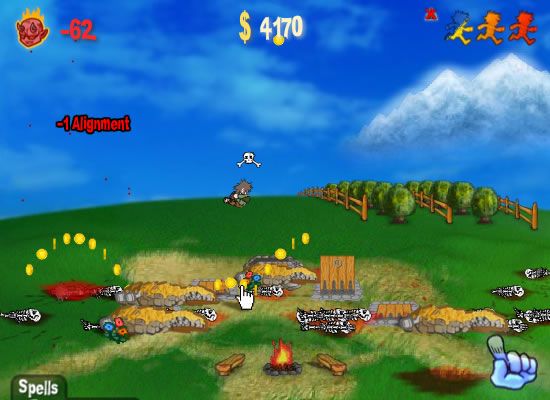
Pillage the Village places you in the role of an omnipotent hand with one goal: wreak havoc on unsuspecting villagers. The core mechanic is delightfully simple—you grab villagers by swiping or clicking, fling them into the air, and watch the ragdoll physics carry out grisly results. Gold drops from each victim, which you use to purchase new spells, traps, and upgrades. The visceral feedback of every toss, combined with gesture recognition support, makes each kill feel both tactile and darkly humorous.
(HEY YOU!! We hope you enjoy! We try not to run ads. So basically, this is a very expensive hobby running this site. Please consider joining us for updates, forums, and more. Network w/ us to make some cash or friends while retro gaming, and you can win some free retro games for posting. Okay, carry on 👍)
What truly sets the gameplay apart is the alignment system. Early on, you choose between the pacifist path or the antagonist path, each unlocking unique spells and abilities. Follow the moral road and you gain access to “euthanasia” and protective barriers designed to minimize suffering. Succumb to your darker urges and you master the slave cage, acme anvil, and more destructive tools. This divergence ensures that two playthroughs feel distinct, as certain upgrades simply cannot be used if you pledge to the opposite alignment.
Between waves of villagers, you’ll encounter increasingly clever foes. Parachutes, gliders, jetpacks, and ninja ropes grant survivors a desperate second chance, while armored knights and caped superheroes attempt to defend their people. If too many villagers escape the screen, a “morale meter” drains and the game ends. This tension forces a careful balance between chaining perfect kills and upgrading your arsenal between rounds.
Pillage the Village offers both a standard campaign and a sandbox mode for experimentation. The campaign steadily ramps up difficulty and alignment choices, while the sandbox is a playground for testing every spell in isolation or setting up Rube Goldberg–style traps. For players craving variety, enhanced regular mode introduces bonus rounds, time trials, and hidden achievement challenges that extend replayability well beyond the first dozen hours.
Graphics
The visual style of Pillage the Village is cartoonish but drenched in macabre flair. Villagers have exaggerated limbs and expressive faces that contort with comedic terror as you hurl them skyward. Against pastel-colored backdrops of idyllic hamlets, each gruesome toss creates an appealing contrast that heightens the dark humor. Animations are fluid, and the ragdoll physics-driven movement feels natural and unpredictable, leading to emergent moments that make you chuckle or cringe.
Detail shines in the environment design. Villages are rendered with charming simplicity: thatched roofs, wooden fences, and wandering livestock offer enough variety to keep each level visually distinct. Weather effects, such as drifting snow or swirling sand, add atmosphere without detracting from the carnage in the foreground. The UI is clean and intuitive, displaying your gold, mana, and active upgrades along the screen edges so you never lose sight of the action.
Spell visuals pop with flair. A freeze-time ability coats villagers and scenery in frosty blues, while the acme anvil plummets with a satisfying metallic clang and dust cloud. Particle effects—sparkles from magic barriers, smoke puffs from explosions—are polished and never overwhelming. Even in the heat of frenzied button-mashing, clarity is maintained: you always know which villagers are targets, which are allies, and which are potential escape risks.
Performance is rock-solid on modern hardware. Ragdoll-heavy scenes rarely stutter, and the gesture-recognition camera rarely misses a command. Load times between rounds are minimal, so the carnage flows uninterrupted. Whether played on a high-end PC or a midrange laptop, Pillage the Village remains consistently smooth, letting you focus on creating the most spectacularly absurd combos you can imagine.
Story
Though Pillage the Village emphasizes mechanics over narrative, it offers a concise prologue that enriches the experience. Set before the events of the classic Defend Your Castle, the opening sequence hints at why a horde would later mount a fanatical assault against a mysterious hand. This backstory frames your actions: are you a misunderstood deity seeking balance or a malevolent force bent on domination?
Dialogue is sparse but effective. Brief interludes between rounds feature villagers pleading for mercy, knights rallying their troops, or heralds warning of your coming ruin. These snippets of dark humor—an anxious bard exclaiming, “I didn’t sign up for this!” or a priest chanting pleas for deliverance—add personality without bogging down the pace. The story never overstays its welcome, showing up just long enough to contextualize your rampage before fading into the background.
The alignment choices also carry narrative weight. Opting for the pacifist route yields occasional voiceovers that question the ethics of violence and hint at a hidden, gentler purpose behind the hand’s wrath. Conversely, the antagonist path is peppered with taunts and jeers that celebrate destruction for destruction’s sake. This branching narrative, though light, gives thematic resonance to your spell upgrades and ensures your playstyle feels narratively coherent.
By drawing on lore from its predecessor and weaving in new character archetypes—fearful villagers, zealous knights, and the occasional caped savior—Pillage the Village crafts a thematic bridge between titles. Fans of Defend Your Castle will appreciate the context, while newcomers can simply enjoy the twisted premise and darkly comedic tone without prior knowledge.
Overall Experience
Pillage the Village excels as a pick-up-and-play god game that delivers fast-paced action and dark humor in equal measure. Its simple core loop—grab, fling, collect gold, upgrade—evolves through alignment choices and unpredictable ragdoll physics, keeping sessions fresh and often hilarious. Whether you aim to be a reluctant guardian or a gleeful destroyer, the game accommodates both playstyles with satisfying depth.
Replayability is high. Between branching upgrade trees, sandbox experimentation, and post-campaign unlocks, you’ll find reasons to revisit villages even after mastering the early waves. Secret challenges and timed runs add a competitive edge, while the gesture recognition mode provides a unique interactive thrill. The balance between risk and reward is well-tuned, ensuring that even expert players feel challenged without slipping into frustration.
If there’s one drawback, it’s the relatively short storyline—it can be completed in a handful of hours on a first run. However, the addition of sandbox mode and alignment-based gameplay dramatically extends longevity. The dark comedic tone may not be for everyone, but if you appreciate tongue-in-cheek violence and physics-driven mayhem, Pillage the Village delivers ample entertainment at a modest price point.
In conclusion, Pillage the Village is a triumph of simple mechanics, clever progression, and wicked humor. It stands out in the god-game genre by putting you behind the most mischievous deity imaginable and refusing to let up on the laughs or the challenge. For players seeking a blend of absurdity, strategy, and visceral feedback, this twisted “bash ’em up” is an absolute must-try.


Reviews
There are no reviews yet.