 Retro Replay Retro Replay gaming reviews, news, emulation, geek stuff and more!

Retro Replay Review
Gameplay
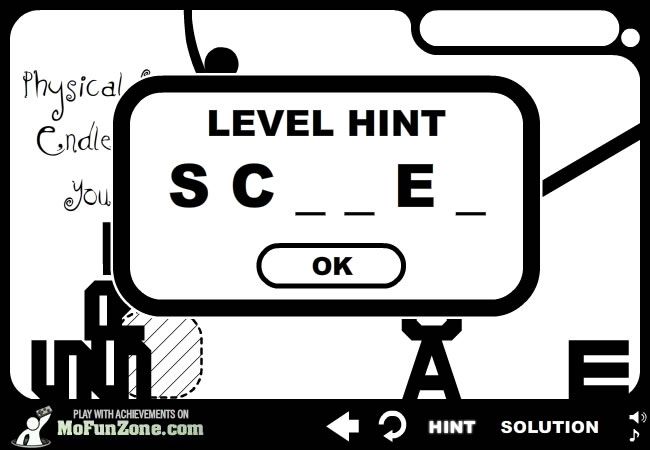
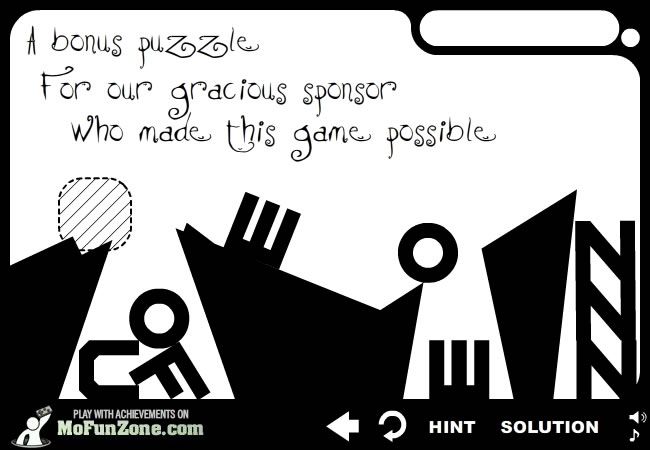
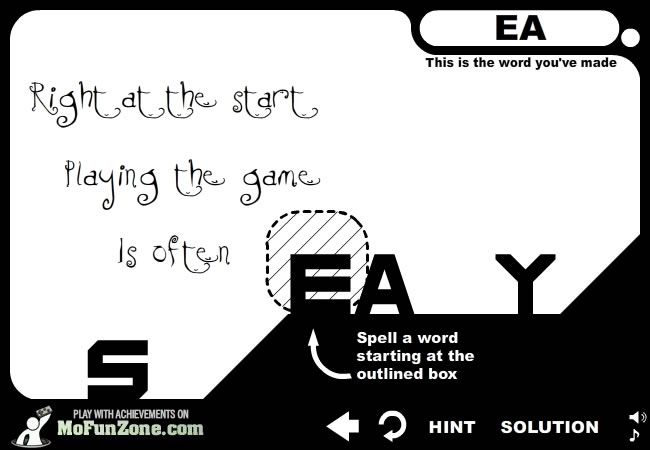
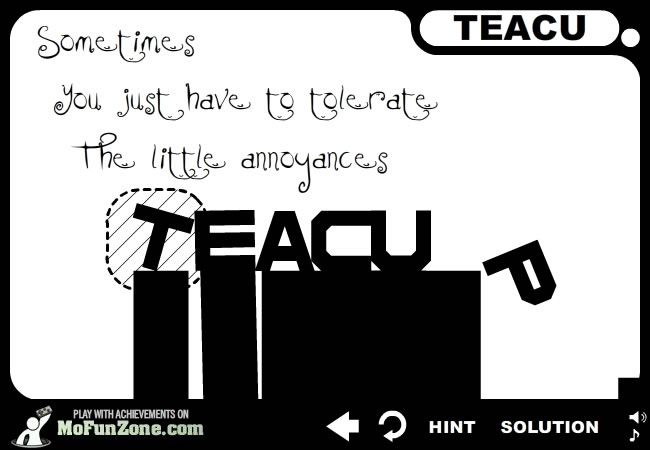
Prose and Motion transforms the classic word puzzle into an interactive physics playground. Rather than simply typing or selecting letters, players must click, drag, and maneuver pendulous letter blocks across a varied landscape. Each level presents a jumble of bold capital letters, and your objective is to spell out a target word by physically guiding these letters into place. The tactile nature of the gameplay—complete with gravity, inertia, and collision—adds an extra layer of challenge that tests both your vocabulary and your dexterity.
(HEY YOU!! We hope you enjoy! We try not to run ads. So basically, this is a very expensive hobby running this site. Please consider joining us for updates, forums, and more. Network w/ us to make some cash or friends while retro gaming, and you can win some free retro games for posting. Okay, carry on 👍)
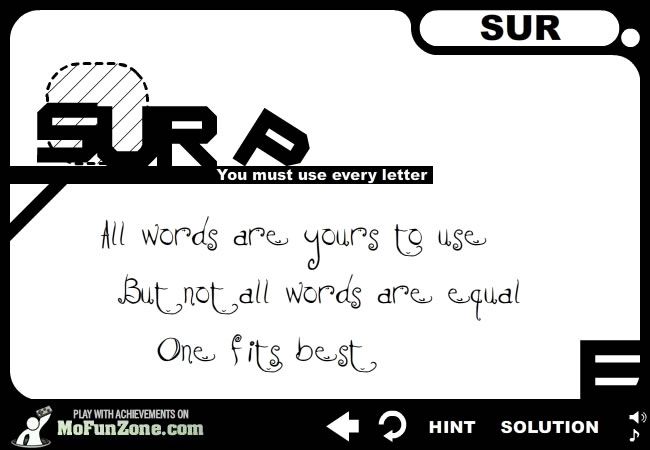
The game delights in its flexibility: most letters can be interpreted differently when rotated or flipped. An N might become a Z, an E can be flipped to read as an M or a W, and even more unusual gambits can yield surprising solutions. Levels can be completed with any valid word that fits the available letters, but the game also has “best fit” answers it prefers. These preferred answers are hinted at through background text descriptions, encouraging players to experiment and discover the developer’s intended solution.
Beyond simple letter arrangement, the core mechanics expand to include blocks, platforms, and lever-like line segments that must be repositioned to support or redirect your letters. Certain puzzles require you to prop up a slope so letters can roll into place, or to brace a letter with a beam to prevent it from toppling. This coupling of block-manipulation with word construction keeps each stage dynamic, as you juggle both spatial reasoning and vocabulary skills.
Graphics
Visually, Prose and Motion opts for a clean, minimalist 2D aesthetic that highlights the bold letters and simple mechanical elements. The backgrounds are subtly textured, often featuring the faint outlines of the game’s word hints or related imagery. This not only adds atmosphere but also serves as a gentle nudge toward the “intended” word solution without feeling intrusive. The letter blocks themselves are vividly colored, ensuring they stand out against the muted stationary structures.
Animations are smooth and satisfying. When you drag a letter, it swings realistically on its pivot point; when it collides, there’s a small but gratifying bounce. These touches reinforce the sense of a fully simulated environment, and the game handles fast movements without choppiness. Even on modest hardware, load times are minimal, and frame rates remain stable through complex multi-object interactions.
The user interface is straightforward and unobtrusive. A simple toolbar presents undo, reset, and hint options, while level progression is mapped out on a subtle, diagrammatic overworld. This approach keeps players focused on the puzzle at hand, rather than cluttering the screen with unrelated HUD elements. Overall, the graphical presentation serves the gameplay perfectly, marrying form and function in a way that feels both polished and purposeful.
Story
While Prose and Motion is not a narrative-driven adventure, it weaves a subtle thematic thread throughout its puzzles. Each level’s background description hints at a broader context or metaphor—an evocative phrase that frames the ideal word solution. These hints act like breadcrumbs, inviting players to not just solve a puzzle, but to engage with a miniature story embedded in every challenge.
The interplay between text and mechanics creates a quiet narrative tension. Dragging a letter across a treacherous gap or balancing it on a makeshift ramp can feel like guiding a character through a perilous scene. The vague textual clues—sometimes poetic, sometimes cryptic—lend emotional or conceptual weight to otherwise abstract puzzles. You may find yourself wondering why a particular word feels more “right” than another, deepening your investment in each stage.
Though there is no central protagonist or overarching saga, the gradual unveiling of new mechanics—flipping beams, tilting platforms, chaining multiple objects—gives a sense of progression akin to chapters in a book. By the time you reach the later levels, the game’s unique blend of prose-inspired hints and physics-based challenges feels like a cohesive creative journey rather than a series of disconnected brain teasers.
Overall Experience
Prose and Motion stands out in the crowded puzzle genre by marrying wordplay with physics-based interaction. Its inventive mechanics ensure that no two levels feel quite the same, and the generous room for creative solutions fosters a genuine sense of accomplishment. Whether you’re a fan of word games looking for a fresh twist, or a physics-puzzle enthusiast curious about a textual component, this title offers a satisfying blend.
New players may experience a brief learning curve as they get accustomed to the game’s unique control scheme and the idea of rotating letters for multiple interpretations. However, the thoughtfully paced tutorials and early levels ease you into both the spelling and mechanical aspects. For those who enjoy experimentation, the game rewards lateral thinking: sometimes the cleverest solution involves turning an E on its side to become an M, or inventively propping up a W to read as an E.
In the end, Prose and Motion is more than the sum of its parts. Its delicate balance of tactile puzzle-solving and linguistic creativity results in an experience that feels both brainy and playful. The minimalist graphics, subtle storytelling, and robust physics simulation come together seamlessly, making it a standout choice for players seeking a cerebral challenge with a delightful twist.


Reviews
There are no reviews yet.