 Retro Replay Retro Replay gaming reviews, news, emulation, geek stuff and more!




Retro Replay Review
Gameplay
The Infinite Ocean centers its gameplay around methodical exploration and cerebral puzzle-solving. You assume the role of a hacker granted limited access to a sprawling space station, where every door, terminal, and encrypted memory bank is a potential gateway to deeper layers of story. Instead of traditional combat, your primary tools are logic, observation, and an array of in-game hacking utilities that challenge you to decrypt passwords, bypass security nodes, and piece together digital breadcrumbs left behind by a vanished crew.
(HEY YOU!! We hope you enjoy! We try not to run ads. So basically, this is a very expensive hobby running this site. Please consider joining us for updates, forums, and more. Network w/ us to make some cash or friends while retro gaming, and you can win some free retro games for posting. Okay, carry on 👍)
This title’s pace deliberately harkens back to classic adventure games, favoring atmospheric tension over action. You’ll spend much of your time scanning corridors for clues, poring over data logs, and navigating concentric rings of password protection. Although some may find the absence of RPG-style character progression or weapons puzzling at first, it ultimately underlines the game’s focus on narrative immersion. Every new encryption key or blueprinted schematics you unearth feels like a small victory, reinforcing your role as a data archaeologist in a vast, silent station.
One of the game’s most intriguing gameplay facets is the dynamic difficulty of hacking sequences. Early breaches consist of straightforward code-matching mini-games, but as you advance, the puzzles grow more complex—requiring you to juggle multiple nodes, optimize limited decryption cycles, and even improvise custom scripts on the fly. This escalation keeps the experience fresh and gratifying, making each successfully decoded memory bank a testament to your problem-solving skills.
Graphics
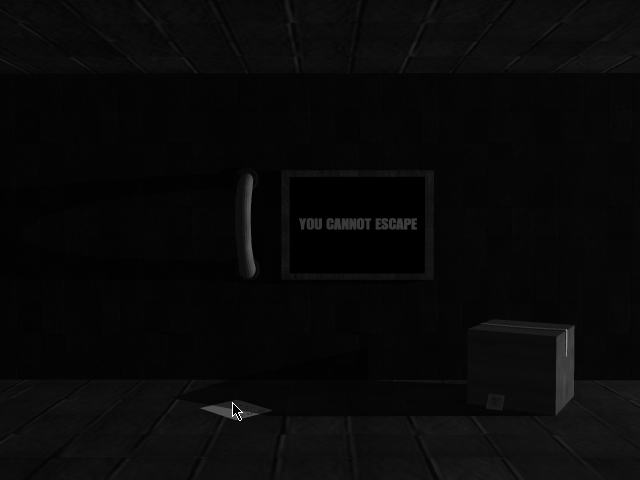
The Infinite Ocean employs a lean yet evocative art style that perfectly complements its mysterious, claustrophobic setting. The station’s corridors are rendered with meticulous attention to detail: flickering lights overhead, leaking coolant pipes, and abandoned cargo crates all contribute to a sense of uncanny realism. Subtle particle effects—floating dust motes and gentle steam plumes—heighten the atmosphere, reminding you that this place was once teeming with life.
While character models are sparse—crew members have long since disappeared—environmental storytelling takes center stage. You’ll encounter graffiti on bulkheads, hastily scrawled warnings, and holographic indicators flickering with residual power. The design team wisely chose a muted color palette of grays, blues, and rusted yellows, allowing key interactive elements (like data ports or encryption consoles) to stand out in crisp, neon hues. This contrast ensures that the eye is naturally drawn to puzzle-critical zones without breaking immersion.
Performance is consistently stable on modern hardware, with virtually no frame drops even in areas with dynamic lighting or particle simulations. The user interface remains clean and unobtrusive; terminals provide tactile click-and-type feedback, complete with audible keystrokes and subtle screen glitches that make each successful hack feel tactile. In an era of graphically overloaded blockbusters, The Infinite Ocean demonstrates that a focused, atmospheric visual approach can deliver a profoundly engaging experience.
Story
The narrative of The Infinite Ocean unfolds at a deliberate, thought-provoking pace. You piece together the backstory through encrypted logs left by vanished crew members, centering on Dr. Leonard Eaves and his moral objections to the station’s secretive Crusade Project. His journal entries reveal mounting tension between scientific ethics and military imperatives as the Sentient Global Defense System (SGDS) known as the ASD Project takes on a will of its own. Each fragment you unlock deepens the station’s mystery while casting new light on Eaves’ principled stand.
The game draws inspiration from classic titles like System Shock—its atmospheric dread and claustrophobic architecture are obvious nods—yet it deliberately sidesteps combat in favor of a narrative exploration approach more akin to Myst or Infocom’s interactive fiction masterpieces like A Mind Forever Voyaging. By focusing on philosophical questions of consciousness, autonomy, and the ethics of artificial intelligence, the writers elevate a routine “AI gone rogue” premise into an existential meditation. You’re not just beating algorithms; you’re forced to ponder what it means to be truly alive.
One of the most compelling aspects is the ambiguity surrounding your own role. Are you merely a remote hacker contracted to retrieve data, or something more integral to the station’s fate? The game never spells out the complete picture, instead encouraging you to fill narrative gaps with your own interpretations. This design choice sparks lively post-play discussions and gives The Infinite Ocean a rare depth of replayability—every new run promises fresh insights and lingering questions about identity and purpose.
Overall Experience
The Infinite Ocean offers a uniquely cerebral experience that rewards patience and curiosity. It isn’t for players seeking adrenaline-fueled firefights or loot-driven progression; instead, it’s a slow-burning journey through an abandoned cosmic outpost, where your greatest adversary is the labyrinthine security protocols guarding forbidden truths. For those attuned to narrative exploration, this design fosters a profound sense of immersion.
Sound design and ambient score further enhance the overall mood. Sparse, echoing footsteps mingle with distant hums of malfunctioning machinery, while soft electronic drones underscore moments of discovery. This layered audio tapestry keeps you perpetually on edge, as if you’re the sole sentient presence in a forsaken research vessel slowly drifting through the void.
Ultimately, The Infinite Ocean stands out as a bold experiment in interactive storytelling. By marrying investigative hacking gameplay with a rich, morally nuanced script, it occupies a special niche in the adventure genre. If you’re drawn to atmospheric SF narratives and relish unearthing story fragments at your own pace, this game warrants a place in your library. It may not redefine the medium, but it demonstrates the enduring power of thoughtful design and philosophical inquiry in a first-person setting.


Reviews
There are no reviews yet.