 Retro Replay Retro Replay gaming reviews, news, emulation, geek stuff and more!


Retro Replay Review
Gameplay
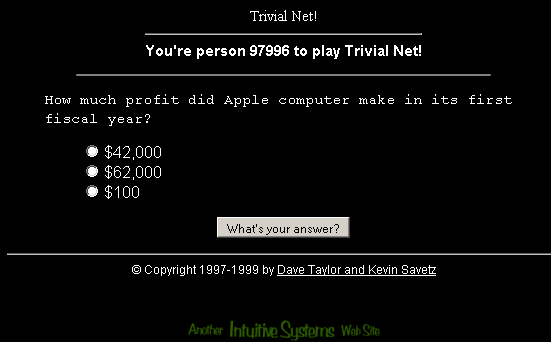
Trivial Net’s core gameplay is deceptively simple: players are presented with a series of computing science and computer culture questions, each accompanied by a set of radio-button choices. This format encourages quick decision-making and rewards depth of knowledge, making it a perfect fit for tech enthusiasts who want to test their memory on programming languages, hardware milestones, and culture-shaping software. The lack of time pressure on each question gives you the freedom to ponder every choice, yet the cumulative nature of the quiz keeps you engaged through each round.
(HEY YOU!! We hope you enjoy! We try not to run ads. So basically, this is a very expensive hobby running this site. Please consider joining us for updates, forums, and more. Network w/ us to make some cash or friends while retro gaming, and you can win some free retro games for posting. Okay, carry on 👍)
Despite its straightforward mechanics, the quiz’s question pool is remarkably well-curated. Early rounds ease players in with foundational queries—“What year was the first PC released?”—while later sections delve into esoteric computing lore, such as landmark RFCs or obscure Unix commands. This tiered approach to difficulty strikes a satisfying balance between nostalgia-inducing trivia and genuine brain teasers, ensuring that both newcomers and seasoned veterans find the challenge worth revisiting.
Another layer of engagement comes from the game’s companion e-mail list, which served as a community hub for players to compare scores, debate answers, and propose new questions. Although the automated quiz service was retired in 2006, the spirit of friendly competition lives on in archives and in successor projects like Etymologic! This communal backbone made Trivial Net more than just a solo pastime—it was a launchpad for collective dives into computer history.
Graphics
Visually, Trivial Net wears its late-1990s heritage on its sleeve. The interface relies on basic HTML styling—plain backgrounds, minimal icons, and clear typography—that loads instantly on any browser, even by today’s lightweight standards. While there are no flashy animations or 3D renderings, this stripped-down aesthetic underscores the game’s focus on substance over spectacle.
The straightforward design also enhances accessibility. Radio-button choices are large, well-spaced, and uniformly labeled, so there’s no guesswork when selecting an answer. The question text is displayed in a readable font size, and hyperlinks to the e-mail list archives are clearly marked, making navigation intuitive for users of all technical comfort levels.
Some players may find the lack of modern graphical flourishes a drawback, but for many, these retro visuals evoke a strong sense of web-pioneer nostalgia. If you appreciate the charm of early browser experiences or enjoy minimalistic interfaces that prioritize content, Trivial Net’s graphics feel unusually refreshing compared to today’s over-designed games.
Story
Unlike narrative-driven titles, Trivial Net doesn’t weave a fictional storyline; instead, its “story” emerges from the historical tapestry of computing lore embedded within each question. As you progress, you effectively traverse a timeline of technological milestones—from the punch-card era to the dot-com boom—learning anecdotes about key figures, pivotal breakthroughs, and forgotten artifacts along the way.
This implicit narrative structure shines when you encounter a cluster of questions centered on a particular decade or theme. Answering trivia about early mainframes naturally leads into queries about the rise of microprocessors, which in turn segues into questions about the graphical user interface revolution. Through this progression, players gain a deeper, more cohesive understanding of how one innovation paved the way for the next.
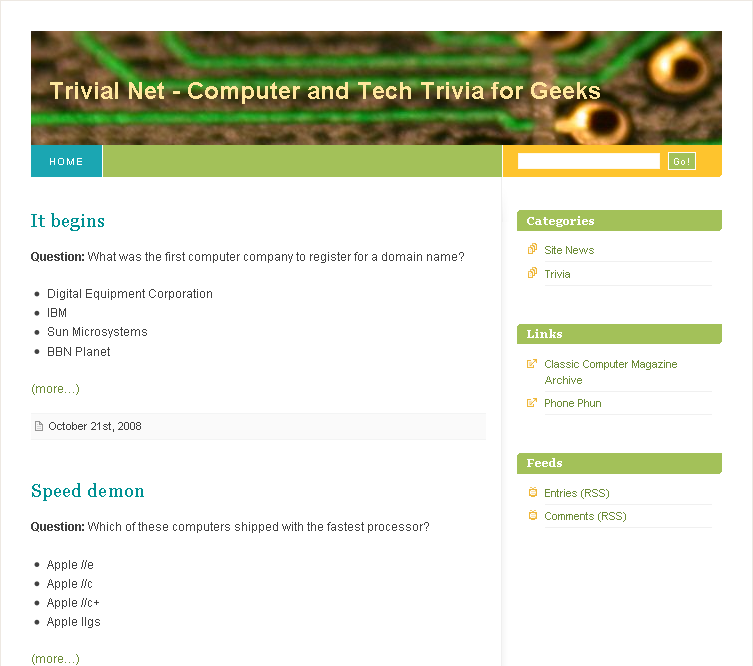
After nine years of automated quizzing, Trivial Net transitioned in March 2006 to a non-automated blog series of computer history stumpers. This shift underscored the developers’ commitment to preserving the game’s educational core while exploring new formats. Though the original engine remains inaccessible online, its legacy lives on via adaptations like Etymologic!, which carry forward Trivial Net’s dedication to celebrating computing culture.
Overall Experience
Playing Trivial Net today feels like uncovering a time capsule from the early web era. The service’s swift load times, uncluttered design, and ever-challenging quizzes offer a clean, retro modern experience that complements contemporary, resource-heavy games. If you’re looking for a nostalgic detour or an educational pastime that sharpens your knowledge of computing history, few free-form experiences deliver as solidly.
While the original interactive quiz is no longer live, fans can still access archived versions or explore spiritual successors that harness the same engine. For collectors of vintage software or educators seeking a playful way to introduce students to landmark concepts, Trivial Net’s straightforward format and broad question base remain highly appealing. Even in its static archive form, the quiz content provides hours of insightful entertainment.
Ultimately, Trivial Net stands out as a pioneering web quiz that married simple mechanics with rich subject matter. Its enduring influence—evident in community debates, legacy e-mail lists, and remake projects—speaks to the timeless appeal of well-crafted trivia. If you value streamlined interfaces, intellectually rewarding challenges, and a nostalgic nod to the early internet, Trivial Net is a worthy addition to your virtual shelf.


Reviews
There are no reviews yet.