 Retro Replay Retro Replay gaming reviews, news, emulation, geek stuff and more!


Retro Replay Review
Gameplay
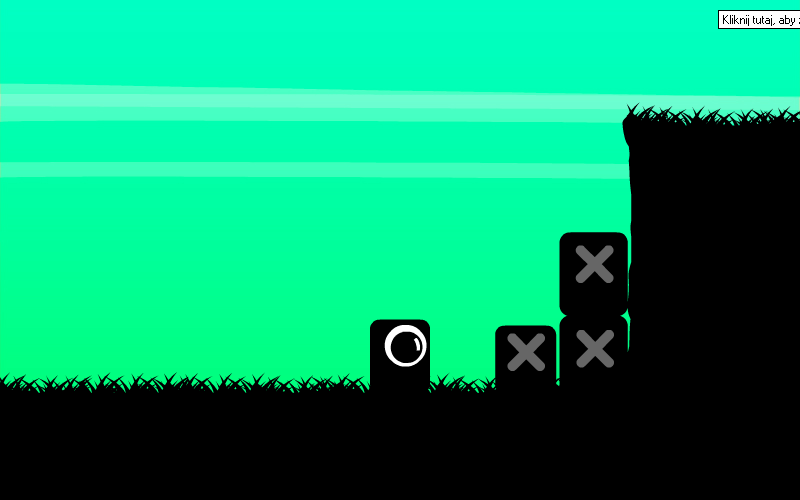
We The Giants offers a uniquely collaborative approach to platform gaming. At first glance, you control a simple black rectangle with a single eye—your “giant”—able to move left, right, and perform modest jumps. This minimal move set belies the depth of the experience. The core twist is the ritual of sacrifice: your own death becomes a literal stepping stone for other players seeking to build a staircase of corpses to reach the distant star.
(HEY YOU!! We hope you enjoy! We try not to run ads. So basically, this is a very expensive hobby running this site. Please consider joining us for updates, forums, and more. Network w/ us to make some cash or friends while retro gaming, and you can win some free retro games for posting. Okay, carry on 👍)
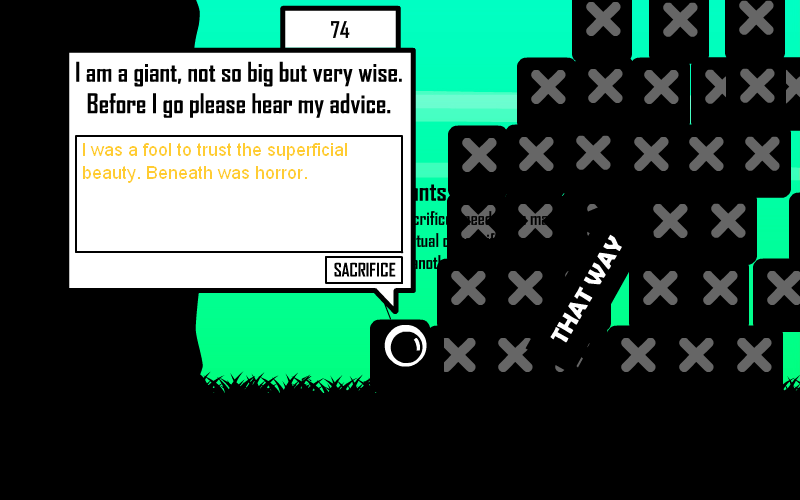
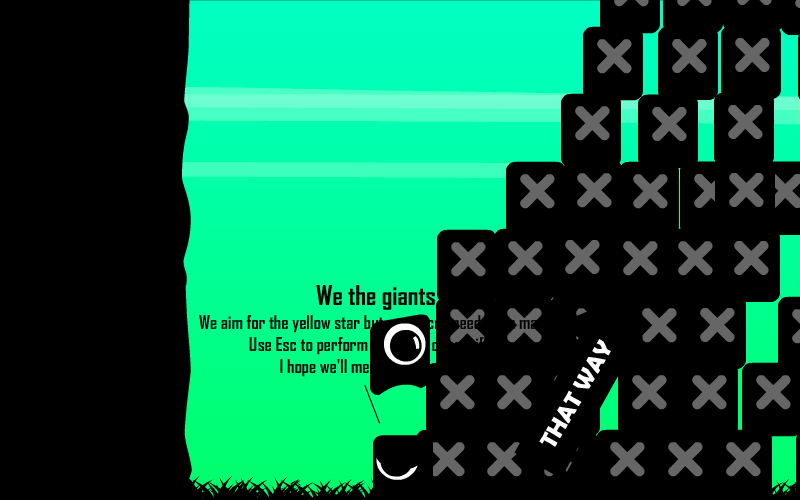
This encourages a level of global teamwork rarely seen in gaming. You aren’t simply racing against friends or strangers to the top—you are contributing your body to a shared cause. When you sacrifice yourself, your corpse remains in the world as a solid platform. As more players follow suit, corpses stack like bricks, building emergent pathways through an otherwise flat world.
The pacing is deliberate. There are no timers or direct competition; success is measured by the collective achievement of players worldwide. The option to type a short message upon sacrifice—broadcast via Twitter—adds a layer of personal expression. You can motivate others, propose strategies, or simply leave a poetic farewell, turning each death into a small piece of digital performance art.
However, the permanence of sacrifice ramps up the emotional stakes. Once you’ve laid down your life, your playable journey ends. You transition to a spectator role, watching the world evolve and hoping that your contribution wasn’t in vain. This one-shot mechanic may frustrate completionists or more casual players, but it underpins the game’s experimental ethos.
Graphics
Visually, We The Giants embraces a stark, minimalist aesthetic. The world is rendered in simple, flat colors with clean lines and almost no texturing. Giants themselves are unadorned black rectangles with a single glowing eye. This art style might strike some as austere or too barebones, but it underscores the game’s focus on shared action over visual spectacle.
The environment remains consistent throughout: a flat horizon, a vast sky, and a solitary star hanging high above. While you can press Shift to zoom out and view the entire level, the graphical presentation remains faithful to the minimalist design. By eschewing elaborate backgrounds or animated flourishes, the game centers your attention on the communal staircase-building process.
The UI elements are equally restrained. Basic indicators for jump and shift, a simple chat box at the time of sacrifice, and a counter of how many corpses are currently contributing to the staircase. The absence of cluttered menus or overlays keeps the experience immersive and immediate.
That said, players seeking high-fidelity textures, dynamic lighting, or character animations may find the visuals underwhelming. But in context, the art direction feels intentional—a blank canvas for communal expression rather than a showcase of technical prowess.
Story
Rather than a traditional narrative, We The Giants relies on emergent storytelling. The premise is framed by a brief introduction from veteran giants who teach you the basics and guide you through the ritual of sacrifice. Beyond that, the story unfolds through your actions and the collective effort of the player base.
Every sacrifice carries a message—up to 140 characters—that is broadcast to three Twitter feeds. These snippets form a decentralized, crowd-sourced lore that lives outside the game client, on social media. Reading other players’ messages can be poignant, humorous, or haunting, creating a patchwork narrative that spans continents and time zones.
The golden star in the sky acts as both a literal goal and a metaphorical beacon. Why are giants building a stairway to the heavens? What meaning do they derive from self-sacrifice? The game never hands you explicit answers. Instead, it invites philosophical reflection: on cooperation, the value of individual contribution, and the bittersweet finality of mortality.
For players who prefer scripted quests or character-driven arcs, this loose framework may feel sparse. But for those intrigued by open-ended, player-driven myth-making, the story of We The Giants is as rich as the community you help to build.
Overall Experience
We The Giants is undeniably an experimental title. Its core concept—permanent sacrifice as a gameplay mechanic—polarizes audiences. If you’re seeking a casual drop-in platformer, this one-shot mechanic may be off-putting. But if you’re drawn to collaborative art projects or social experiments, it’s a powerful experience.
The emotional resonance is the game’s standout feature. Sacrificing yourself for the greater good creates a rare sense of purpose. Watching as subsequent giants climb the staircase you helped form generates a profound feeling of connection, even with complete strangers.
On the flip side, the minimal gameplay loop and the absence of traditional progression systems mean that the title may have limited replay value for some. Once the star has been reached—or once you’ve sacrificed yourself—there’s little left to explore except observing or reading Twitter feeds.
Ultimately, We The Giants is best appreciated as a social experiment masquerading as a platformer. It challenges conventional notions of multiplayer cooperation, narrative delivery, and player agency. For the right audience, it offers a memorable, thought-provoking journey; for others, it may feel too abstract. Know that you’re buying into an artistic vision before you press Shift to change your view of the world.


Reviews
There are no reviews yet.