 Retro Replay Retro Replay gaming reviews, news, emulation, geek stuff and more!

Retro Replay Review
Gameplay
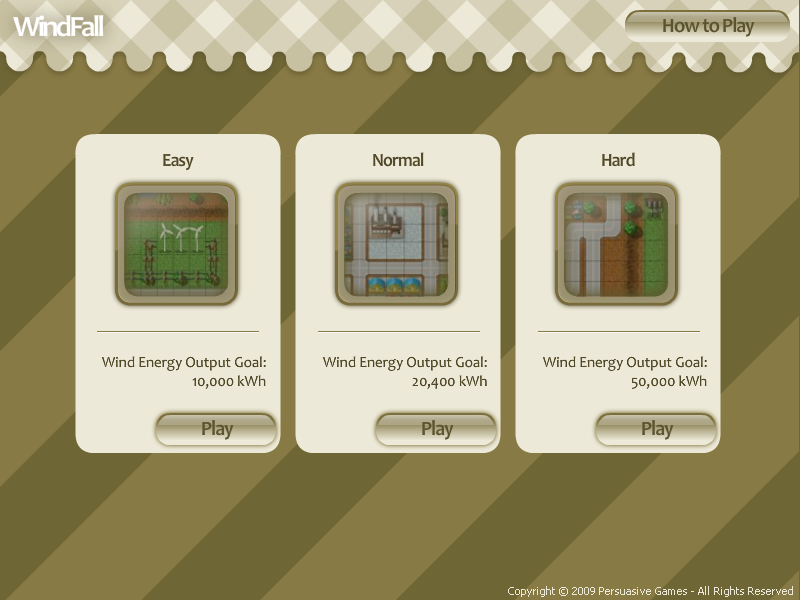
WindFall challenges players to become both engineers and diplomats in a dynamic simulation that revolves around wind power generation. Right from the start, you’re presented with a clear energy target and a ticking clock, setting a high-stakes environment that demands strategic planning. Choosing between Easy, Normal, and Hard difficulties allows newcomers to ease in gently, while veterans can ramp up the political pressure and financial constraints for a tougher test of skill.
(HEY YOU!! We hope you enjoy! We try not to run ads. So basically, this is a very expensive hobby running this site. Please consider joining us for updates, forums, and more. Network w/ us to make some cash or friends while retro gaming, and you can win some free retro games for posting. Okay, carry on 👍)
Core mechanics center on researching land parcels before committing to turbine installations. The research phase is intuitive: a simple click reveals data on average wind speeds, terrain obstacles, and cost estimates. This upfront investment prevents costly mistakes later on, but it also eats into your budget and time. Deciding whether to spend resources on extensive surveys or dive straight into construction becomes a recurring dilemma, especially on Normal and Hard difficulties.
Turbine placement is where WindFall truly shines. Turbines come in three sizes—small, medium, and large—and each size offers a trade-off between generation capacity and local discontent. Large turbines generate power quickly but spark fierce protests, while smaller units are neighbor-friendly but require more installations to meet goals. Managing this balance creates emergent scenarios that feel both strategic and personal, as you must weigh monetary gains against potential political fallout.
As you progress, random events such as budget cuts, extreme weather alerts, or activist-led petitions force you to adapt on the fly. These events punctuate the gameplay loop, preventing it from feeling repetitive. Tools like temporary subsidies or one-time public relations campaigns add layers to your decision-making. Overall, WindFall’s gameplay is a well-crafted blend of risk management, resource allocation, and ethical considerations that keeps you engaged from the first turbine to the last megawatt.
Graphics
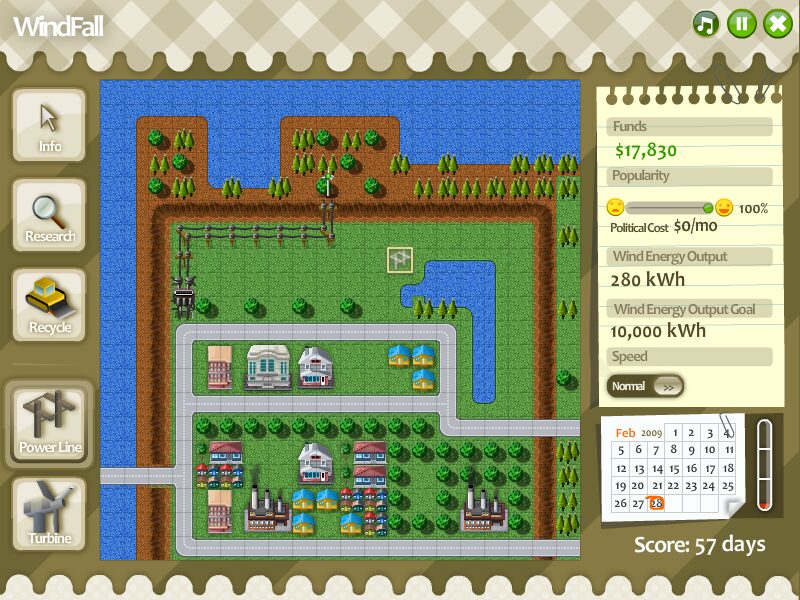
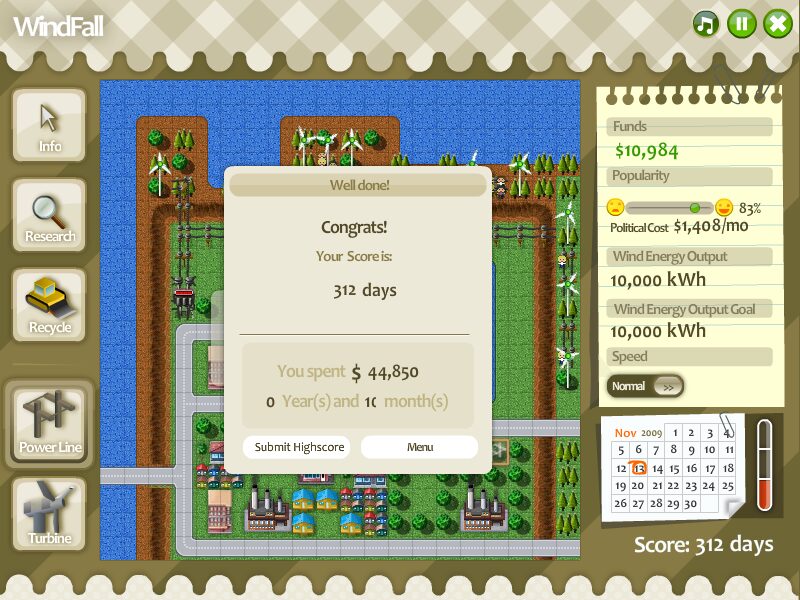
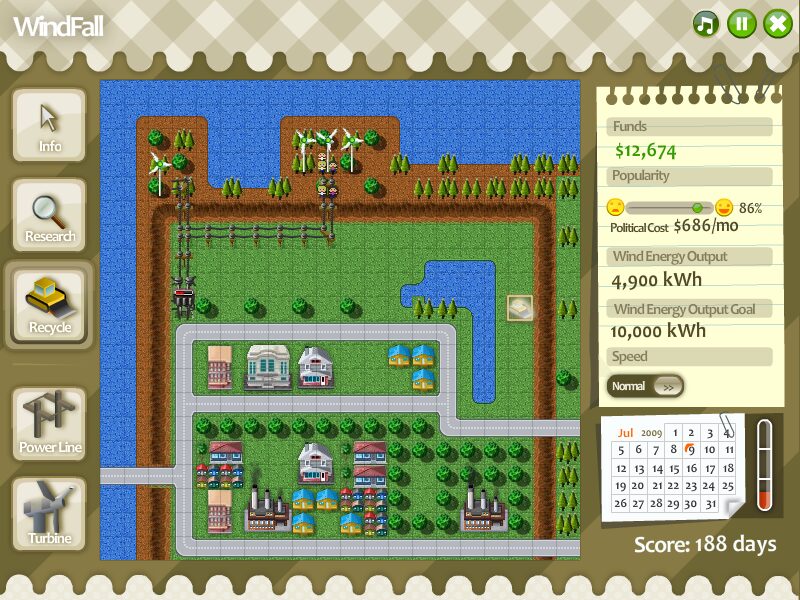
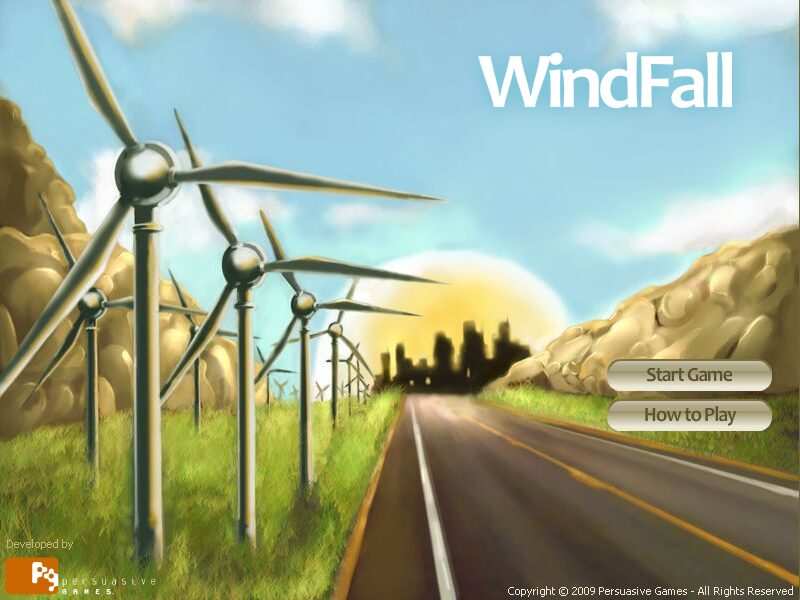
Visually, WindFall presents a clean and modern aesthetic that mirrors the eco-friendly theme of the game. Landscapes are rendered with rolling hills, lush fields, and glinting coastlines, offering a serene backdrop for your engineering feats. Turbines spin gracefully against vibrant skies, and subtle animations—like birds fluttering or clouds drifting—enhance immersion without overwhelming your attention.
The user interface is both polished and practical. Buttons, sliders, and charts are clearly labeled and color-coded, making it easy to track your finances, energy output, and protest levels at a glance. Detailed terrain maps use simple overlays to display wind intensity, protest hotspots, and accessibility ratings, ensuring you have all the information you need to plan your next move.
Although WindFall doesn’t chase hyperrealism, its stylized visuals strike a pleasing balance between function and flair. Turbines have just enough detail to feel tangible, while the overall art style remains uncluttered. Day-night cycles and weather effects—such as rain or fog—provide variety and create moments of cinematic beauty, particularly at dawn when turbines rise majestically against a pastel sky.
Performance-wise, the game is well-optimized even on mid-range hardware. Frame rates stay smooth during intense construction and protest sequences, and loading times are minimal when switching between maps or difficulty modes. With minimal graphical hiccups, WindFall ensures that technical distractions never get in the way of your strategic planning.
Story
WindFall may not follow a traditional narrative arc, but it weaves a compelling story through its simulation mechanics and event-driven scenarios. From your first modest turbine deployment to your final push for peak efficiency, the game crafts a sense of progression that feels both personal and globally significant. Each victory—whether generating a clean power milestone or defusing a protest—is a narrative beat in your journey as an eco-ambassador.
Randomized events and local responses to your projects create emergent storytelling moments. You might find yourself negotiating with a vocal community leader, or scrambling to repair damage after a sudden storm. These incidents add depth, turning a straightforward building sim into an interactive drama about public perception, environmental stewardship, and political compromise.
Characterful voiceover snippets and newspaper-style pop-ups provide context and flavor. Citizens’ comments range from enthusiastic support to sharp criticism, giving you insight into the cultural climate of each region. This human element enriches the gameplay, reminding you that behind every turbine lies a community whose views can make or break your campaign.
While there’s no overarching villain or hero’s redemption, WindFall’s story emerges organically through player choices. Your successes and setbacks collectively form a narrative tapestry, making each playthrough feel unique. In this way, the game tells a story not just about wind energy, but about leadership, negotiation, and the delicate balance between progress and public opinion.
Overall Experience
WindFall delivers a thoughtful simulation that rewards careful planning and adaptive thinking. The blend of research mechanics, size-based turbine decisions, and protest management creates a rich strategic playground. Whether you’re a veteran city-builder fan or new to simulation games, you’ll appreciate the depth and clarity of its systems.
The pacing strikes a fine balance: early stages allow for experimentation, while later levels demand more rigorous tactics. Optional difficulty modes ensure that both casual and hardcore players can find a comfortable challenge. Random events and evolving public sentiment keep gameplay fresh, preventing the experience from descending into rote micromanagement.
Some players may crave a stronger narrative drive, but others will enjoy the open-ended, sandbox-like structure that encourages multiple playstyles. The lack of micromanagement on trivial tasks—such as manual unit maintenance or overly detailed financial logs—means your focus remains on big-picture strategy and community relations.
In sum, WindFall is an engaging and accessible simulation that highlights the complexities of renewable energy deployment. Its clean graphics, intuitive interface, and emergent storytelling make it a standout title for anyone interested in strategy, management, or environmental themes. If you’ve ever dreamed of powering a city with sustainable energy while navigating real-world politics, WindFall is well worth a spin.


Reviews
There are no reviews yet.