 Retro Replay Retro Replay gaming reviews, news, emulation, geek stuff and more!
Retro Replay Review
Gameplay
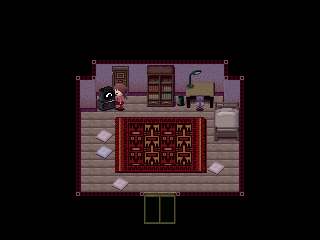
Yume Nikki’s gameplay centers on exploration rather than traditional goals or combat. Players take control of Madotsuki, a young girl who begins the game confined to her small apartment. Once she goes to sleep, she enters a vast, surreal dream world where dozens of interconnected areas await discovery. Movement is simple and intuitive—walk, open doors, and interact with dream denizens to collect “effects.”
(HEY YOU!! We hope you enjoy! We try not to run ads. So basically, this is a very expensive hobby running this site. Please consider joining us for updates, forums, and more. Network w/ us to make some cash or friends while retro gaming, and you can win some free retro games for posting. Okay, carry on 👍)
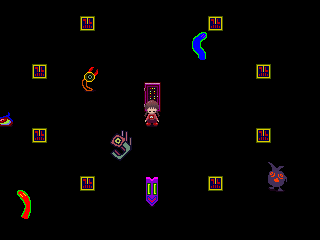
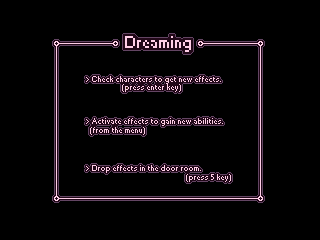
The primary objective in Yume Nikki is to find and collect 24 unique effects scattered throughout these dreamscapes. Each effect changes Madotsuki’s appearance or grants her a new ability, from harmless transformations like “long hair” to more ominous items like the “knife,” which allows her to eliminate certain creatures. Experimenting with different effects not only encourages replaying areas but also unearths hidden doorways and secret zones, deepening the sense of mystery.
The lack of a traditional user interface—no health bar, no experience points—puts the emphasis squarely on curiosity. You never truly know when a seemingly innocuous change in the environment will lead to an important discovery. Saving your progress is handled through the dream diary in Madotsuki’s room, which you can update by pinching her cheek to wake up. This mechanic cleverly ties gameplay to the dream theme while ensuring players aren’t lost in the labyrinth forever.
While some players may find the absence of explicit instructions frustrating, this design choice highlights Yume Nikki’s strength: it rewards patience and attentiveness. Each new area brings its own set of shadows, sounds, and puzzles, prompting you to piece together your own narrative. The act of exploration becomes a meditative, almost reverential experience, making every effect you collect feel genuinely earned.
Graphics
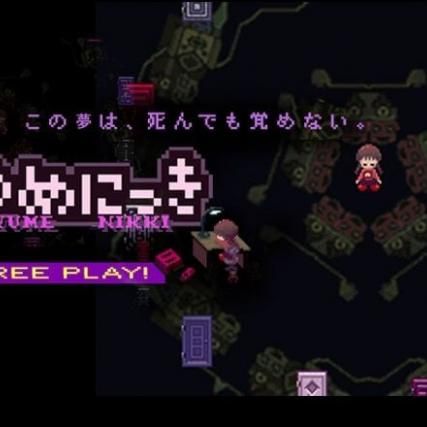
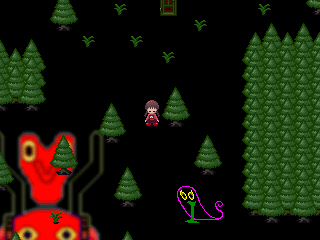
Yume Nikki employs a minimalist pixel-art aesthetic that amplifies its dreamlike atmosphere. The environments are rendered in simple, blocky tiles, yet they convey a surprising amount of emotion through clever use of color and lighting. Whether you’re wandering through a monochrome hallway or traversing a vividly colored forest, the stark visuals pull you into Madotsuki’s subconscious.
The game’s visual simplicity belies its depth. Subtle variations in palette—crimson skies, fluorescent corridors, or grayscale voids—help distinguish each area while maintaining a coherent, otherworldly feel. NPCs and creatures are often little more than silhouettes or sprites with minimal animation, yet their odd proportions and unsettling behaviors leave a lasting impression.
Occasionally, the graphics dip into abstraction, presenting impossible perspectives or warped landscapes that defy real-world logic. These moments are the game’s hallmark, driving home the notion that you’re exploring the fragmented mind of a dreamer. Unlike modern titles that rely on photorealism, Yume Nikki’s pixel art lingers in the imagination long after you’ve turned off your computer.
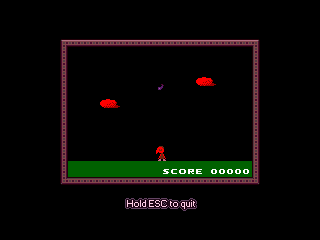
In some areas, you may encounter visual glitches or repetitive tile patterns—a byproduct of the RPG Maker engine. Rather than detracting from the experience, these quirks often add to the unsettling vibe. The occasional flicker or abrupt transition enhances the feeling that you’re tiptoeing through a fragile dreamscape.
Story
Yume Nikki offers no conventional narrative, dialogue tree, or dramatic cutscene. Instead, it invites players to construct their own story from the fragments scattered throughout Madotsuki’s dreams. Each area, each effect, and each strange creature becomes a piece of the puzzle, encouraging you to ask: What is Madotsuki dreaming about, and why?
The absence of explicit storytelling is a deliberate choice. You never learn why Madotsuki chooses to remain isolated in her dreams or what real-life circumstances led her to this nightly ritual. Instead, the game’s lore emerges organically through environmental storytelling: a bloodstained corridor here, a lonely swing set there, or a cluster of faceless figures standing motionless. These vignettes ignite your imagination and spark countless fan theories.
As you collect more effects, you gain fleeting insights into Madotsuki’s psyche. Some transformations are playful—wrapping a towel around her or letting her sneeze; others are darker, such as the ability to wield a knife. This interplay of innocence and menace paints a portrait of a character whose inner world is as captivating as it is unsettling.
Ultimately, Yume Nikki’s story is one of ambiguity and introspection. There is no “true ending” in the conventional sense; instead, the game concludes when you’ve pieced together enough elements to feel that you’ve glimpsed the heart of Madotsuki’s dream. How you interpret that heart is up to you, making the narrative experience profoundly personal and endlessly discussable.
Overall Experience
Yume Nikki stands out as an avant-garde title that defies genre conventions. Its emphasis on exploration over action, its sparse but evocative visuals, and its open-ended narrative create an experience unlike any mainstream release. For players seeking a game that challenges expectations and rewards introspection, Yume Nikki is an absolute must-play.
The journey through Madotsuki’s dreams is often tranquil, sometimes eerie, and occasionally downright disturbing. Moments of serene discovery can quickly give way to unsettling imagery, keeping you perpetually off-balance—and wholly engaged. The simple act of finding a new effect or unlocking a hidden area can evoke a rush of excitement typically associated with more action-packed games.
Yume Nikki’s experimental nature means it won’t appeal to everyone. Players accustomed to clear objectives, tutorials, and high-octane gameplay may find the lack of direction frustrating. However, for those willing to embrace ambiguity, the game offers a rich tapestry of emotions and ideas. Every playthrough feels intimate and unique, fostering a strong sense of personal investment.
In the end, Yume Nikki is less about “winning” and more about savoring the strange and beautiful world it presents. It invites reflection, inspires discussion, and lingers in the mind long after the credits—or lack thereof—roll. As an experience, it remains one of the most distinctive and memorable indie games ever created, offering a dreamscape you’ll be eager to revisit time and time again.


Reviews
There are no reviews yet.