 Retro Replay Retro Replay gaming reviews, news, emulation, geek stuff and more!
Retro Replay Review
Gameplay
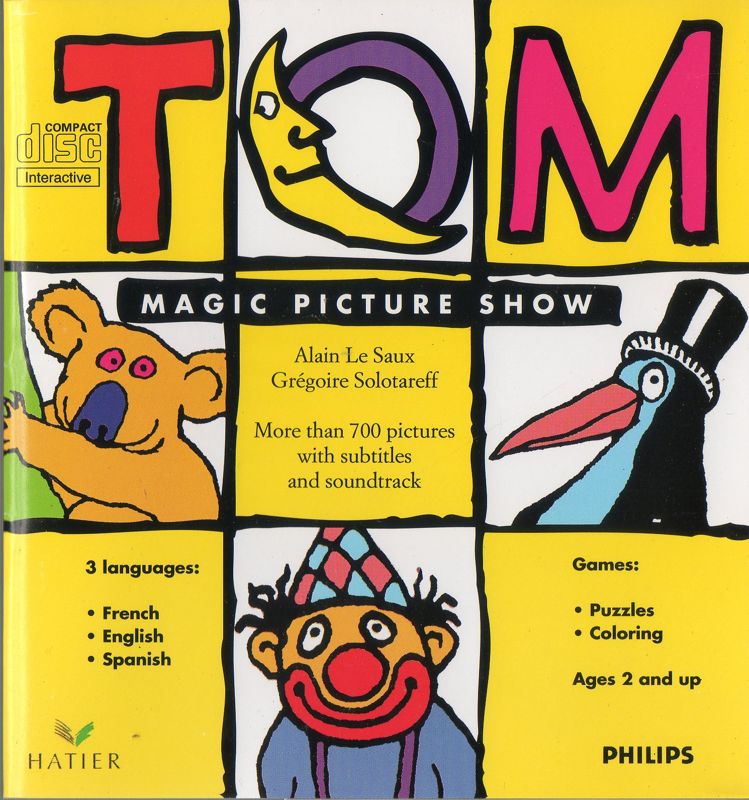
Tom: Magic Picture Show delivers a gentle and engaging introduction to early language learning with its simple, child-friendly interface. Players guide Tom through a series of picture-based activities that teach basic vocabulary in English, French, or German. Each activity is structured as a bite-sized puzzle—matching objects, identifying colors, and dragging letters—that keeps very young learners focused without overwhelming them.
(HEY YOU!! We hope you enjoy! We try not to run ads. So basically, this is a very expensive hobby running this site. Please consider joining us for updates, forums, and more. Network w/ us to make some cash or friends while retro gaming, and you can win some free retro games for posting. Okay, carry on 👍)
The variety of mini-games is one of the highlights of the experience. Children can complete jigsaw-style puzzles that slowly reveal charming illustrations, use a digital coloring book to trace and paint familiar objects, or play matching games where spoken words correspond to images on the screen. This mix of interaction styles helps reinforce vocabulary through both visual and tactile engagement.
Controls are intuitive enough for toddlers: point-and-click or drag and drop with a mouse, or simply tap on a tablet screen. There’s no hidden menu hierarchy to confuse users; each activity leads seamlessly to the next, and clear on-screen cues guide players when it’s time to switch tasks. For parents and educators, this ease of navigation means children can play independently or with minimal assistance.
Replayability is high thanks to adjustable difficulty settings and multiple language options. The same set of puzzles can be played in English, French, or German, so siblings or classmates can switch languages at will. As learners progress, the game subtly increases challenge by introducing slightly more complex words or longer phrases, ensuring continuous engagement without frustration.
Graphics
Visually, Tom: Magic Picture Show embraces a bright, cartoon-inspired art style that appeals directly to preschoolers. Soft pastel backgrounds and bold outlines make each object instantly recognizable, while friendly character designs—especially Tom himself—exude warmth and approachability. The overall aesthetic strikes a careful balance between simplicity and charm, preventing sensory overload while maintaining the player’s interest.
Each mini-game features distinct visuals that help differentiate tasks: the puzzle module gradually builds illustration pieces into a complete scene, whereas the coloring book mode offers clear outlines and a palette of vibrant hues. Transitions are smooth, and animations—like Tom clapping when a task is completed—provide positive reinforcement. There’s an underlying sense of discovery as new scenes and coloring pages unlock over time.
Though the resolution and detail level are modest, they’re perfectly suited to the target audience. Fine details are deliberately minimized so that young eyes can focus on key shapes and colors. This thoughtful design ensures that the educational objectives—identifying objects and associating words—remain front and center, rather than being obscured by overly complex artwork.
Moreover, the game dynamically shifts its visuals to match the chosen language. For instance, vocabulary items on-screen change labels to English, French, or German in a seamless fashion. This visual consistency across languages reinforces word recognition and helps children make direct comparisons when switching between modes.
Story
While Tom: Magic Picture Show doesn’t boast a deep narrative, its light storyline adds just enough structure to frame the educational content. The premise is simple: Tom invites children to his colorful picture show, where each “act” introduces a new set of words and images. This framing device provides context for the activities and gives players a sense of progression as they move from scene to scene.
Between mini-games, brief cutscenes show Tom traveling through whimsical environments—cloud cities, enchanted forests, or seaside villages—setting the stage for the next lesson. These interludes are short and sweet, designed to hold attention without distracting from the core learning objectives. Tom’s cheerful commentary and gentle encouragement help maintain enthusiasm, especially during repeated playthroughs.
The lack of a heavy plot is intentional: the focus remains squarely on language acquisition rather than dramatic twists. However, small touches—like Tom discovering hidden treasures or greeting friendly animal sidekicks—add moments of delight that resonate with young imaginations. This approach ensures that children stay motivated to unlock each subsequent picture show act.
Because each language track is fully voiced, the story elements also serve a dual purpose: they expose players to natural pronunciation and intonation in English, French, and German. Hearing Tom introduce new words in context, then using them in sentences, gives learners a more organic understanding of language flow than isolated flashcards alone.
Overall Experience
Tom: Magic Picture Show succeeds at its primary goal: offering a nurturing, entertaining environment for toddlers to learn basic vocabulary in multiple languages. The combination of puzzle challenges, a coloring book, and a soothing soundtrack creates a well-rounded educational package. Parents will appreciate the game’s ability to hold attention while imparting practical language skills.
The multilingual support is particularly commendable. Switching between English, French, and German is almost instantaneous, enabling households with diverse language backgrounds to use the game effectively. For educators, this flexibility also opens doors to classroom applications, where a single software title can serve learners of different linguistic levels.
Audio design enhances the learning process—accompanied by a gentle musical score, every spoken word is clear and deliberate. Correct answers trigger melodic applause, while mistakes prompt Tom’s friendly prompts to try again. This positive reinforcement loop encourages experimentation and helps kids learn through playful repetition rather than strict assessment.
In conclusion, Tom: Magic Picture Show is a thoughtfully crafted educational title that balances fun and learning with skill. Its child-centered design, vibrant visuals, and multilingual options make it an excellent choice for parents and teachers looking to introduce young learners to a new language. Whether played during short sessions or over extended periods, it provides consistent value and lasting appeal for ages two and up.

Reviews
There are no reviews yet.