 Retro Replay Retro Replay gaming reviews, news, emulation, geek stuff and more!




Retro Replay Review
Gameplay
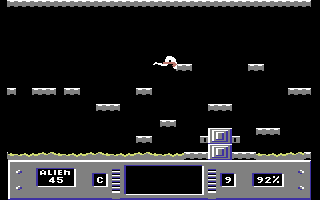
The core of Alien is built around tight, side-view exploration and high-stakes platforming. You navigate the ruined corridors of the EFU using elevators to access various sectors, each with its own layout of ledges, pits, and narrow passages. The level design encourages deliberate movement—you’ll often find yourself hesitating at a fork in the path, weighing the risk of a blind jump against the chance of discovering a new terminal or hidden cache of bullets.
(HEY YOU!! We hope you enjoy! We try not to run ads. So basically, this is a very expensive hobby running this site. Please consider joining us for updates, forums, and more. Network w/ us to make some cash or friends while retro gaming, and you can win some free retro games for posting. Okay, carry on 👍)
Combat is deceptively simple yet surprisingly strategic. Your weapon holds up to nine explosive rounds at a time, and the mechanic of “press to load, release to fire” introduces a rhythmic quality to encounters. Every shot must be aimed carefully: fire too early and you waste precious ammo; fire too late and you risk taking damage from the parasitic hordes. Reloading is only possible at specific terminals, which forces you to monitor your bullet count constantly and think two moves ahead.
The reproduction mechanic of the aliens adds a unique time-based pressure. Every two minutes, a new alien spawns—unless fewer than twenty remain—so you’re always racing the clock as you clear rooms and backtrack to the surface. This slow, inexorable increase in enemy numbers makes the game feel alive and dynamic, ensuring that no two play sessions are identical. It’s a juggling act of exploration, resource management, and pure reflex skill that keeps you on edge from start to finish.
Graphics
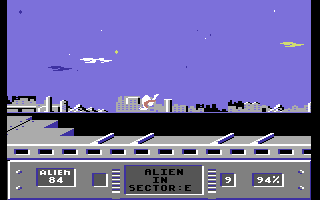
Visually, Alien captures a gritty, industrial sci-fi aesthetic. The EFU corridors are rendered in stark, cold hues of steel gray and sickly green, conveying the facility’s advanced technology and the alien contamination seeping through every crack. Detailed sprite work on both the protagonist and the parasites gives each encounter a visceral punch—creatures twitch, writhe, and burst with vivid animation.
The lighting effects are particularly noteworthy. Flickering overhead lamps cast moving shadows that can momentarily hide an alien just beyond your view, heightening suspense as you approach a new sector. Explosions from your weapon illuminate the environment for a split second, allowing you to spot hidden platforms or obstacles you might otherwise miss. This interplay of light and dark transforms each level into a claustrophobic labyrinth.
Even the minimal HUD design contributes to the atmosphere. Health bars, bullet counters, and alien tallies are displayed unobtrusively at the bottom of the screen, leaving the rest of the visual real estate for the game world itself. Text messages that guide your next objective appear in a crisp, pixel-perfect font that complements the retro-futuristic style without distracting from the on-screen action.
Story
Set on the ravaged planet Hegira, Alien drops you into the aftermath of a catastrophic infestation. With 30 billion colonists depending on the EFU for energy, the facility’s breach by parasitic aliens quickly turns into an extinction-level crisis. The narrative’s urgency shines through every gameplay beat—you’re not just a lone survivor, you’re the galaxy’s best (and only) hope for stopping the reactors from melting down.
The writing may be sparse, but it’s effective. Brief data logs and mission updates delivered after each sector clearance hint at the broader horror unfolding across the planet. You learn about the aliens’ crippling alkaline excrement and its corrosive effect on the reactors, creating an ever-present threat beyond just oncoming enemies. This layered storytelling rewards players who pay attention to details and piece together the backstory themselves.
Characterization is minimal by design, focusing attention on the immediate struggle rather than emotional subplots. As the sole survivor, you become an avatar for the player’s own determination and frustration. Every jump, every bullet spent, and every alien dispatched is a personal victory—and the value of preserving every single reactor core becomes crystal clear as you progress deeper into the facility.
Overall Experience
Alien succeeds in delivering a tense, resource-driven action-platformer that rewards strategic thinking and quick reflexes. The blend of methodical exploration, weighty combat mechanics, and time-sensitive enemy reproduction creates a constant sense of tension. Between heart-pounding alien swarms and the necessity of conserving ammo, you’ll feel the stakes in every step you take.
The game’s atmospheric graphics and sound design undergird the gameplay perfectly. You hear the distant clank of metal, the hiss of hydraulics, and the unsettling skitter of alien appendages just out of view. Visual flourishes like dynamic lighting and well-crafted sprites pull you deeper into Hegira’s crumbling energy hub, making every cleared sector feel like a small triumph against overwhelming odds.
For players seeking a challenging action-platformer with a lean but impactful narrative, Alien offers an experience that is both old-school in spirit and uniquely its own. The careful balance of exploration, limited resources, and mounting pressure from the alien infestation will keep you engaged for hours. If you’re ready to test your resolve under alien siege, this game is well worth boarding the evacuation shuttle for one last stand.


Reviews
There are no reviews yet.