 Retro Replay Retro Replay gaming reviews, news, emulation, geek stuff and more!

Retro Replay Review
Gameplay
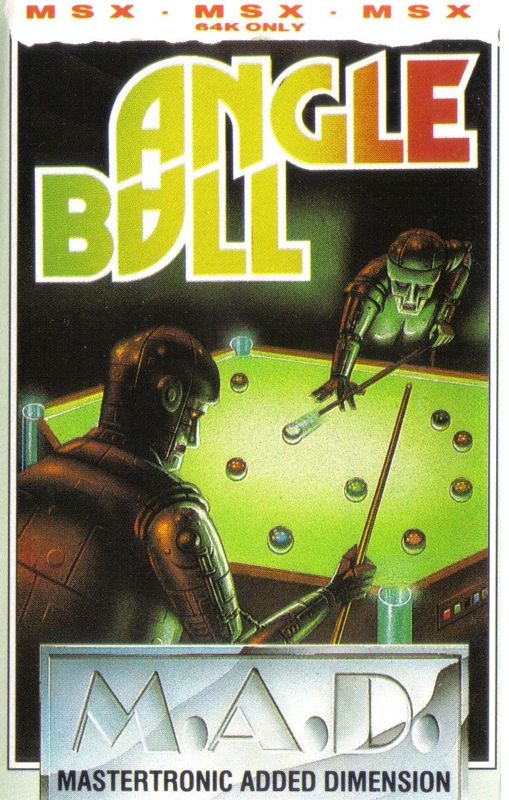
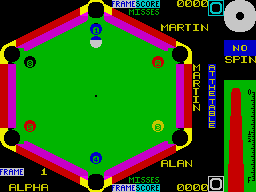
Angleball takes the familiar mechanics of pool and twists them into something entirely new by introducing a hexagonal table with six pockets. Each side of the table functions as a unique rebound surface, sending the cue ball and object balls off at odd angles that defy traditional billiards logic. The core objective remains simple—pot all the balls—but the unusual table geometry makes shot outcomes far more unpredictable and forces players to rethink even the most basic plays.
(HEY YOU!! We hope you enjoy! We try not to run ads. So basically, this is a very expensive hobby running this site. Please consider joining us for updates, forums, and more. Network w/ us to make some cash or friends while retro gaming, and you can win some free retro games for posting. Okay, carry on 👍)
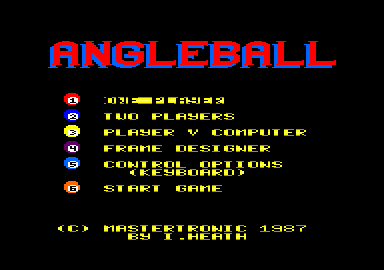
The game offers both single- and two-player modes, providing a structured progression of challenge for solo competitors. In single-player mode, you’ll tackle a series of 20 distinct table layouts, each designed with its own set of obstacles and optimal strategies. As you advance, you learn to adapt your approach—sometimes banking off multiple sides, other times setting up delicate combos—to clear the table before your three-shot limit expires.
Two-player matches can be just as intense, whether you and a friend go head-to-head on the preset layouts or design your own custom arenas using the built-in table editor. The editor is intuitive: select side lengths, pocket sizes, and place decorative obstacles to craft layouts that reward creativity and punishing miscalculations alike. While shot direction, speed, and spin adjustments are presented on a relatively broad scale, they still give enough granularity to execute finesse shots and surprise your opponent.
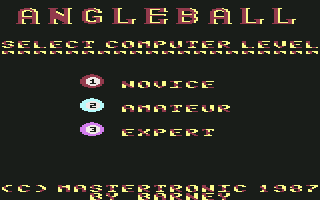
One of Angleball’s greatest triumphs is how it balances accessibility with depth. Newcomers appreciate the straightforward rules—pot within three shots or you lose—yet quickly discover that mastering the hexagonal geometry requires careful study and practice. The AI opponents scale in difficulty, making the late-stage tables genuinely demanding without feeling unfair. Overall, the gameplay loop encourages repeated runs to refine your technique and conquer the trickiest configurations.
Graphics
Visually, Angleball embraces a clean, polished aesthetic that highlights the geometry of its unusual tables. The hexagonal platforms are rendered with crisp edges, subtle metal inlays, and reflective surfaces that catch the light as balls glide across them. A soft spotlight effect centers the action, while darker backgrounds keep the focus firmly on the table and the motion of the balls.
The balls themselves are well-textured, featuring distinct patterns and colors that maintain clarity even during rapid play. Spin effects are conveyed through slight motion blur and dynamic shadow shifts, helping you gauge the ball’s trajectory after it contacts a cushion. While the graphical style leans toward realism, it never becomes overly detailed—this ensures that frame rates remain high and the interface stays responsive, even on modest hardware.
Camera angles adjust smoothly as you switch from shot setup to ball movement, delivering satisfying cinematic glimpses of successful bank shots and unfortunate misfires. Replay highlights accompany spectacular shots, showcasing slow-motion views that double as both reward and learning tool. The UI is unobtrusive: shot-setting controls and scoreboards occupy neat, semi-transparent panels along the table edges without blocking the action.
Story
Unlike many modern sports simulations, Angleball forgoes a traditional narrative campaign in favor of a progression driven by skill mastery. There’s no overarching story or cast of characters to follow, but the 20-table sequence in single-player mode creates a de facto “campaign” arc. Each new layout feels like a fresh chapter, presenting novel challenges that build on the lessons you’ve learned so far.
In lieu of cutscenes or dialogue, the game’s sense of progression comes from the mounting complexity of table designs. Early levels introduce you to simple bank shots and basic spin effects, while later stages force you to employ multi-cushion strategies and precision positioning. This design philosophy fosters a quiet, problem-solving narrative: you versus the table, with each victory representing a personal milestone.
Two-player and custom-mode matches add a social dimension that stands in for story-driven excitement. Competing against friends or family becomes its own narrative, complete with rivalries, memorable comebacks, and triumphs of skill. The table editor, in a way, lets you write your own chapters by creating bespoke arenas that reflect your strategic tastes.
Overall Experience
Angleball offers a refreshing twist on billiards that will appeal to fans of puzzle-based sports and anyone seeking a novel challenge. Its blend of intuitive core mechanics, unpredictable rebounds, and customizable layouts keeps the gameplay loop engaging for both casual pick-up sessions and marathon practice runs. The learning curve is firm but fair, rewarding careful observation and persistence.
Graphically, the game strikes a fine balance between realism and performance, ensuring that every cushion contact and spin-induced curve is clearly communicated without taxing low-end systems. While there’s no traditional storyline, the structured progression through increasingly complex tables and the head-to-head stakes of multiplayer fill that gap effectively, creating a sense of accomplishment that propels you forward.
Whether you’re intrigued by the novelty of a six-sided billiards table, enjoy refining your shot-making skills, or simply want a competitive multiplayer diversion, Angleball delivers hours of thoughtful, addictive gameplay. Its combination of strategic depth, visual clarity, and social engagement makes it a standout choice for anyone looking to spice up their cue sports repertoire.


Reviews
There are no reviews yet.