 Retro Replay Retro Replay gaming reviews, news, emulation, geek stuff and more!



Retro Replay Review
Gameplay
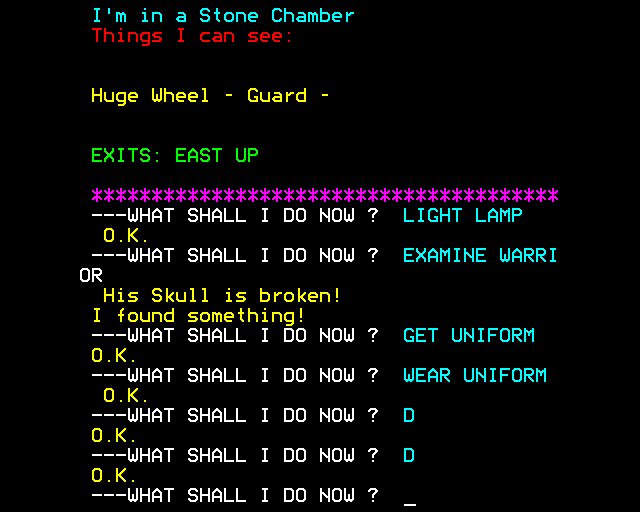
Arrow of Death Part II continues the tradition of classic illustrated text adventures, challenging players to navigate a world of exotic plant‐life and dangerous creatures. Using the Scott Adams engine, the game relies on a two‐word parser that keeps commands concise: “GET FLETCHER,” “USE ARROW,” “CLIMB TREE.” While such simplicity can feel restrictive by modern standards, it forces you to think clearly about each action and inventory item. Puzzle solutions often hinge on combining the right piece of the Arrow of Death with environmental clues scattered throughout the landscape.
(HEY YOU!! We hope you enjoy! We try not to run ads. So basically, this is a very expensive hobby running this site. Please consider joining us for updates, forums, and more. Network w/ us to make some cash or friends while retro gaming, and you can win some free retro games for posting. Okay, carry on 👍)
Puzzle design in Arrow of Death Part II is both logical and occasionally fiendish. You’ll need to explore unfamiliar lands, decipher environmental hints, and experiment with limited vocabulary commands to progress. The challenge ramps up as you venture deeper into Xerdon’s territory, where traps, riddles, and character interactions demand careful attention. Occasional dead‐ends and abrupt “You can’t do that” responses may require patience, but successfully navigating them brings a genuine sense of accomplishment.
Exploration is at the heart of the gameplay loop. You’ll map out dense forest groves, winding caverns, and ancient ruins in search of the kidnapped Fletcher who knows how to assemble the Arrow of Death. Inventory management becomes crucial when you have multiple arrow pieces and exotic items to carry. Frequent saves are recommended, particularly before high‐risk encounters, ensuring that a single misstep doesn’t force you to retrace large sections of the adventure.
Graphics
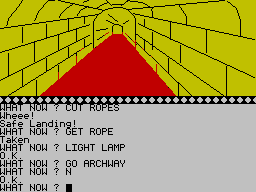
Although Arrow of Death Part II was released in an era before high‐definition artwork, its minimalist illustrations carry a distinct charm. Each scene is complemented by a simple line drawing that evokes the atmosphere of the location—towering mushrooms, snarling beasts, or mysterious doorways. These images occasionally serve as critical visual clues, enhancing your understanding of the environment without overshadowing the text.
The black‐and‐white visuals may seem rudimentary today, yet they perfectly match the concise text descriptions and encourage your imagination to fill in the gaps. Resolution is low and detail sparse, but this limitation lends itself to the nostalgic appeal of early home computer gaming. The occasional pixelated rendering of a fearsome creature or a shimmering blade adds subtle flair without distracting from the core puzzle mechanics.
Loading times for illustrations are minimal, and most screens shift seamlessly between text and graphic. While you won’t find sweeping panoramic vistas, each sketch delivers just enough context to ground your adventure. For fans of illustrated text games, the artwork is a welcome complement to the narrative, reminding you of why the Scott Adams engine was so influential in the early ’80s.
Story
Arrow of Death Part II picks up immediately after its predecessor, thrusting you back into the role of the brave adventurer who has assembled all the pieces of the deadly Arrow. Your ultimate quarry is Xerdon, a malevolent force responsible for kidnapping the Fletcher—the only person capable of putting the Arrow together correctly. With the lives of your people hanging in the balance, each step forward feels fraught with peril.
The narrative unfolds through brief but evocative text passages. Exotic flora and fauna aren’t just window dressing; they hint at puzzle solutions and world‐building details. Conversations with strange characters and cryptic messages scrawled on ancient walls deepen the overall mystery. While character development remains minimal by modern storytelling standards, the sense of urgency and high stakes keep you engaged from the forest’s edge to Xerdon’s lair.
Despite its brevity, the plot delivers a satisfying arc. You gradually piece together Xerdon’s motives, rescue the Fletcher, and confront moral choices about wielding the Arrow’s power. The climax is both tense and rewarding, tying together disparate locations and puzzles you’ve solved along the way. Even if you’re familiar with the first Arrow of Death game, this sequel manages to expand the world and raise the stakes in meaningful ways.
Overall Experience
Playing Arrow of Death Part II is akin to stepping into a piece of gaming history. Its two‐word parser and minimalist graphics may feel limiting compared to modern adventures, but they also distill puzzle‐driven gameplay to its purest form. Successfully navigating this world requires patience, creativity, and a willingness to embrace old‐school mechanics.
The game shines for those who appreciate thoughtful puzzle design and the thrill of text‐based exploration. Its concise narrative and atmospheric illustrations create an immersive experience that rewards careful observation and logical reasoning. At the same time, newcomers to vintage adventures should be prepared for occasional parser frustrations and the need to draw their own mental pictures in place of fully rendered 3D environments.
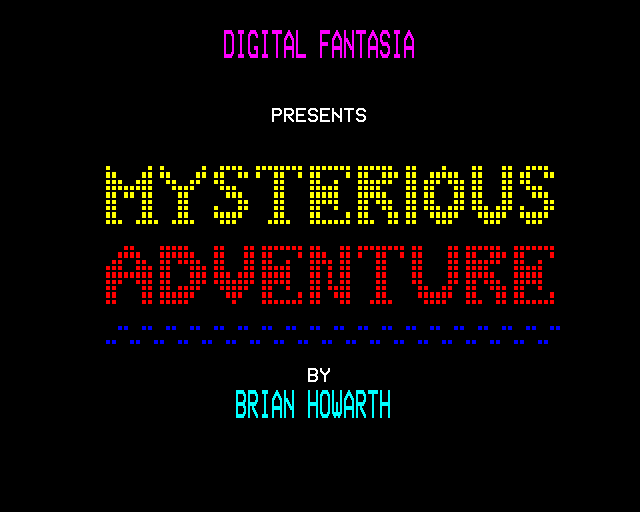
Ultimately, Arrow of Death Part II offers a satisfying continuation of the Mysterious Adventure series. It stands as a testament to Brian Howarth’s talent for crafting engaging, illustration‐enhanced text games. If you’re seeking a challenging, nostalgia‐infused journey—or if you simply want to rescue the Fletcher and assemble the Arrow of Death once and for all—this game delivers a memorable expedition through alien landscapes and perilous puzzles.


Reviews
There are no reviews yet.