 Retro Replay Retro Replay gaming reviews, news, emulation, geek stuff and more!



Retro Replay Review
Gameplay
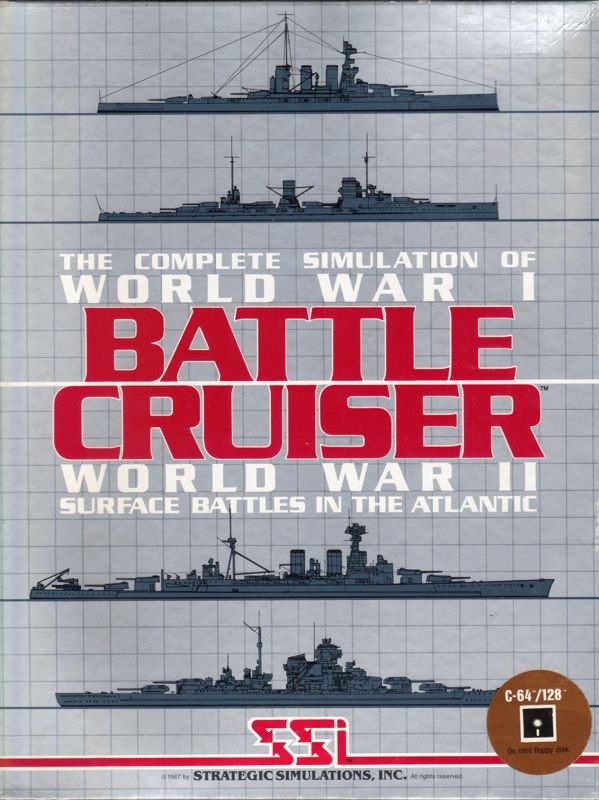
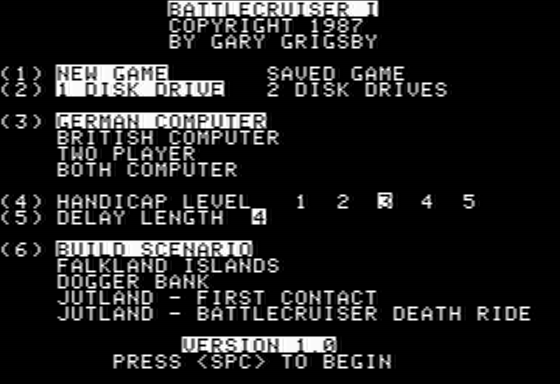
Battle Cruiser delivers a deeply strategic experience for naval warfare enthusiasts, emphasizing methodical planning over twitch reflexes. From the outset, you choose between WWI engagements pitting Great Britain against Germany or the WWII-era clashes involving Britain, France, Germany, and Italy. Each battle unfolds on a customizable map, allowing you to tweak weather conditions, fleet compositions, and time of day. Such flexibility means no two battles feel the same, and you can simulate historical clashes or craft entirely new scenarios.
(HEY YOU!! We hope you enjoy! We try not to run ads. So basically, this is a very expensive hobby running this site. Please consider joining us for updates, forums, and more. Network w/ us to make some cash or friends while retro gaming, and you can win some free retro games for posting. Okay, carry on 👍)
The heart of the gameplay lies in commanding up to 20 ships at once, issuing orders via a clean command interface that balances accessibility with depth. During combat, the computer meticulously tracks each shell’s trajectory, impact point, and subsequent damage—accounting for armor thickness, range, shell type, and even sea state. This level of detail rewards careful planning: angle your cruisers to minimize exposure, spread your destroyers to screen against torpedoes, and coordinate long-range bombardments with capital ships to suppress enemy fire.
Beyond its core scenarios, Battle Cruiser shines in its scenario and ship editors. You can modify existing ship statistics, design brand-new vessels, or draw custom maps for bespoke engagements. This user-friendly editor makes it easy to recreate obscure historical battles or test “what-if” matchups—such as hypothetical German battle cruiser squadrons engaging Italian heavy cruisers in the Mediterranean. The freedom to tinker with nearly every aspect of the simulation ensures endless replayability.
Graphics
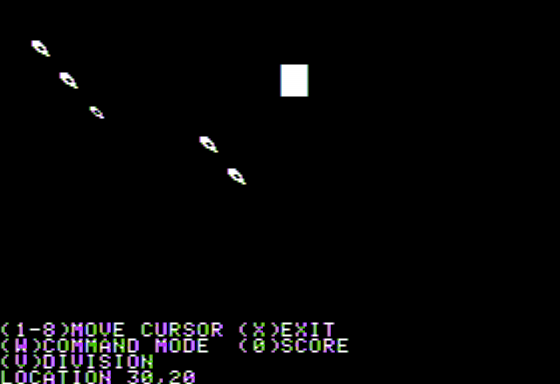
Visually, Battle Cruiser opts for a functional, top-down map view rather than flashy 3D models. Ships are represented by scaled icons with clear hull classifications and facing indicators. While this approach may seem dated compared to modern 3D warship simulators, it ensures maximum clarity in fleet maneuvering and situational awareness—critical when dozens of vessels converge into chaotic salvos of gunfire and torpedoes.
Environmental effects such as fog, rain, and night conditions are depicted through subtle overlays on the map, affecting visibility ranges and detection. These effects not only look crisp on 2D charts but also carry tangible gameplay consequences; fog banks can conceal your screening force, while nighttime raids demand careful radar management. The minimalistic UI keeps essential data—speed, heading, ammunition remaining, and damage—front and center, preventing clutter during intense battles.
Ship sprites, while simple, vary by class and nation, letting you distinguish British dreadnoughts from German battle cruisers at a glance. Explosions and torpedo wakes are animated sparingly, focusing attention on the tactical flow rather than spectacle. For fans of traditional wargames, this old-school aesthetic reinforces the feeling of piloting real fleets in meticulously plotted operations.
Story
Battle Cruiser doesn’t follow a linear narrative but instead invites players to step into the captains’ shoes during pivotal naval wars of the 20th century. In WWI mode, you can recreate breakthroughs like the Battle of Jutland, testing whether different deployment strategies might have shifted the historical outcome. The WWII module broadens the scope, letting you orchestrate fleet engagements in the North Sea, Mediterranean convoy battles, or hypothetical coastal bombardments.
The game’s true storytelling emerges through emergent gameplay: a light cruiser maneuvering under heavy fire becomes a daring saga, while a last-ditch torpedo spread sinking an enemy battleship writes its own legend. Every encounter feels personal, written by your decisions and the RNG interplay of shell hits and near misses. As a result, seasoned players often recount favorite “what-happened-next” moments as riveting tales worthy of a naval chronicle.
Optional scenario briefings provide historical context, outlining fleet strengths, commander reputations, and strategic objectives before each battle. This briefing library not only grounds each mission in real-world events but also inspires players to explore lesser-known naval clashes and craft their own “what-if” narratives using the scenario editor.
Overall Experience
Battle Cruiser is a simulator at heart, catering to wargamers who savor depth, historical accuracy, and extensive customization. Its learning curve can be steep—first-time players may feel overwhelmed by the myriad ship statistics and command options—but the included tutorials and scenario walkthroughs help bridge the gap. Once mastered, the game offers an unmatched sense of command responsibility.
The blend of WWI and WWII content ensures longevity, as you switch between early dreadnought tactics and later radar-guided fleet maneuvers. The robust damage model and scenario editor make each session feel uniquely tailored, while the emphasis on strategic decision-making keeps you mentally engaged from first gun flash to last casualty report.
For those searching for cinematic graphics or joystick-driven action, Battle Cruiser might feel too austere. However, if you crave an immersive, intellectually demanding wargame that lets you rewrite naval history and tinker with every aspect of fleet design, this title stands as a compelling choice. Its combination of exhaustive ship rosters, detailed combat modeling, and flexible editors ensures hours of engrossing gameplay for any serious naval strategist.


Reviews
There are no reviews yet.