 Retro Replay Retro Replay gaming reviews, news, emulation, geek stuff and more!

Retro Replay Review
Gameplay
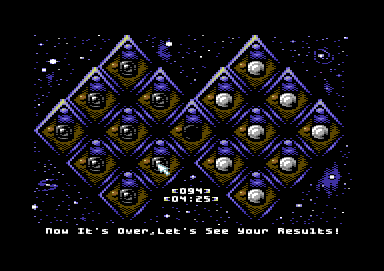
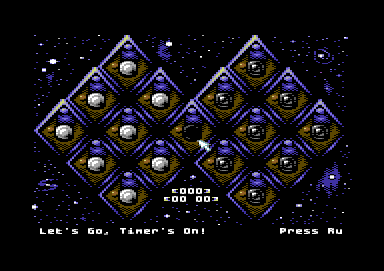
Entity shines in its pure, unadulterated puzzle mechanics, faithfully recreating a Victorian-era solitaire conundrum on a grid of 17 overlapping squares. At any moment, there are 8 white tiles, 8 black tiles, and a single empty space. Your mission is elegantly simple: starting with white on the left and black on the right, you must swap their positions by slipping tiles into the vacant spot or leaping over an adjacent tile into the gap. These two types of moves—slides and jumps—combine to create a deceptively deep challenge that rewards both methodical planning and moments of inspiration.
(HEY YOU!! We hope you enjoy! We try not to run ads. So basically, this is a very expensive hobby running this site. Please consider joining us for updates, forums, and more. Network w/ us to make some cash or friends while retro gaming, and you can win some free retro games for posting. Okay, carry on 👍)
Moves must be made at right angles to the empty square, forbidding diagonal manoeuvres and reinforcing a chessboard-like precision. This restriction may at first seem limiting, but it actually fosters a satisfying blend of pattern recognition and forward-thinking. Each decision cascades into new possibilities (and potential dead ends), so players quickly learn to visualize sequences of moves several steps ahead, almost like solving a mini-maze in your head. For those who crave measurable benchmarks, Entity even includes a built-in simulation that demonstrates the all-time record of 46 moves—an invitation to challenge yourself or simply admire the optimal solution.
Despite its succinct rule set, the puzzle presents a notable learning curve. Early attempts often spiral into disarray, but once you internalize the spatial relationships and understand how to orchestrate tile swaps, the game unfolds with a graceful logic. The balance between accessible entry and enduring complexity means that you’ll never feel out of your depth, even as you push toward fewer and fewer moves. Whether you’re a casual puzzler or a die-hard enthusiast, Entity offers a satisfying workout for your brain.
Replayability is baked right in. With no random elements, every puzzle begins in the same configuration, but that only heightens the drive to refine your technique. Each new playthrough feels like a fresh duel between your wits and the game’s elegant design. Add to that the slick move counter and optional hints (if you want a gentle nudge back on track), and you have a puzzle experience that’s as approachable as it is addictive.
Graphics
On the visual front, Entity opts for a minimalist yet tasteful presentation. The board is rendered in crisp, contrasting tones that clearly distinguish white tiles from black, while the background remains muted, keeping the focus squarely on the puzzle. The overlapping diamond layout is drawn with clean lines, ensuring you never lose sight of the grid’s structure or the paths your tiles might take.
Subtle animations accompany each slide and jump, offering satisfying feedback without overstaying their welcome. There’s a gentle easing effect as tiles glide into place, and jumps come with a slight arc that conveys momentum. These details may seem small, but they bring a tactile sense of weight and movement to what could otherwise be a static experience.
The interface itself is intuitive, with clearly marked buttons or keystrokes for undo, reset, and accessing the built-in solution demo. Icons are legible, menus unobtrusive, and everything loads quickly, so there’s no fumbling around when you just want to dive into the next puzzle attempt. Overall, the graphics do exactly what they need to: they support the puzzle without pulling attention away from it, striking a fine balance between form and function.
For players who appreciate a bit of atmosphere, the optional Victorian-style backdrop and period-appropriate music track add just enough flavor to evoke the game’s 19th-century roots. It’s not overblown or ostentatious—merely a tasteful nod to the puzzle’s lineage that enriches the experience without turning it into a historical simulation.
Story
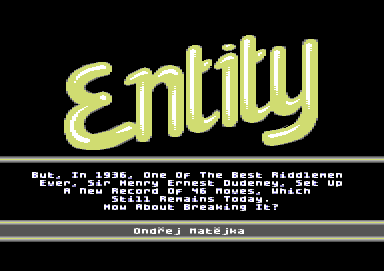
While Entity isn’t narrative-driven in the traditional sense, it weaves a subtle historical thread that enhances its charm. The puzzle dates back to Victorian England, a time when parlor games and solitary puzzles were prized diversions among the literate classes. By preserving this heritage, the game gives you a glimpse into how past generations challenged their minds for entertainment and self-improvement.
The packaging and in-game lore reference this lineage, offering a concise primer on the puzzle’s origins. You’ll learn how enthusiasts in the 19th century would pass around printed instructions, challenge friends to beat one another’s move counts, and even host small gatherings focused on mastering the puzzle. This context turns each play session into more than just a mental exercise—it becomes a tiny rite of passage in a centuries-old tradition of logical recreation.
There’s an understated romance in knowing you’re engaging with the same problem that might have occupied a Victorian gentleman or lady by candlelight. You aren’t following a branching storyline or investigating plot twists, but there is a sense of connection across time. The game invites you to step into the shoes of its original players, carry on their challenge, and perhaps even eclipse them by matching or beating the venerable 46-move record.
Although fans of narrative-driven titles may find the story element sparse, those who appreciate context will find it enriches the puzzle’s minimalist nature. The story isn’t a distraction—it’s a seasoning that adds depth to the core gameplay without overwhelming it.
Overall Experience
Entity delivers a focused, elegantly designed puzzle that feels equally at home in a modern gaming library or a museum of historical curiosities. Its strength lies in distilling a 19th-century brainteaser into a sleek digital format, complete with helpful simulations and a streamlined interface. There’s no fluff—just a pure, distilled challenge that engages your spatial reasoning and planning skills.
Whether you have five minutes between meetings or a leisurely afternoon to kill, Entity accommodates your pace. Quick sessions let you chip away at your personal best, while longer stretches provide the space to explore and refine strategies. The absence of timers or extraneous modes keeps you focused, yet the drive to improve your move count ensures lasting motivation.
For puzzle aficionados, Entity stands out as a must-have. Its clarity of design, coupled with the historical narrative flavor, sets it apart from run-of-the-mill tile-sliding games. Even casual players seeking a thoughtful diversion will appreciate how quickly the game becomes engrossing. It’s the sort of title you revisit often, savoring the moment when a tricky sequence finally clicks into place.
In sum, Entity offers a rare blend of intellectual rigor and aesthetic restraint. It respects your time by delivering a pure puzzle experience, then rewards you with moments of genuine “aha!” satisfaction. If you’re on the lookout for a brain-teaser that balances heritage, challenge, and elegance, this Victorian-inspired gem is well worth your investment.


Reviews
There are no reviews yet.