 Retro Replay Retro Replay gaming reviews, news, emulation, geek stuff and more!

Retro Replay Review
Gameplay
Invasion blends the precision of classic real-time strategy with a streamlined control scheme that places a heavy emphasis on tactical movement and bomb deployment. You oversee a small but versatile squad of soldiers, guiding them across alien terrain using a simple cursor-based interface. Units move and automatically engage hostile forces when in range, freeing you to focus on the broader strategy rather than micromanaging every shot.
(HEY YOU!! We hope you enjoy! We try not to run ads. So basically, this is a very expensive hobby running this site. Please consider joining us for updates, forums, and more. Network w/ us to make some cash or friends while retro gaming, and you can win some free retro games for posting. Okay, carry on 👍)
The core objective—planting and detonating two bombs next to the enemy’s weather control station—creates a tense cat-and-mouse dynamic. You must decide when to split your forces between clearing enemy patrols and escorting explosive charges. Every decision carries weight: leave bomb carriers unprotected, and they’ll be picked off; overwhelm enemy positions too early, and you risk running out of time to complete your mission.
Beyond the main goal, Invasion rewards creative tactics. You can use the environment to your advantage, funneling enemies into chokepoints or staging a feint attack to lure defenders away from the tower. The balance between aggression and caution keeps each mission engaging. Mistakes are punishing—if you lose too many units, your odds of successfully fleeing the planet plummet—so planning, timing, and adaptability are crucial.
Graphics
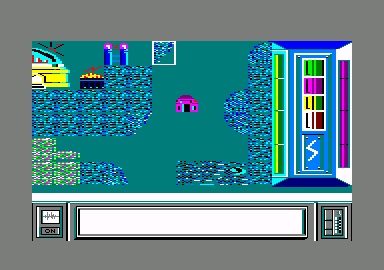
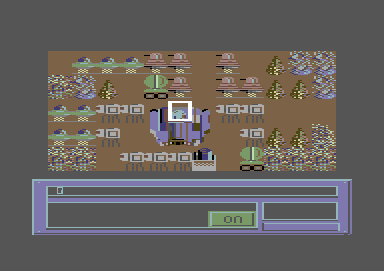
Visually, Invasion embraces a top-down perspective with clean, colorful sprites that clearly distinguish units, structures, and terrain types. While the resolution and palette are modest by modern standards, the design choices ensure that every element on the battlefield is instantly recognizable. Alien flora, rocky outcroppings, and the looming weather station each have their own visual identity, aiding both immersion and tactical clarity.
The user interface is thoughtfully integrated into the playfield. A discreet status bar displays unit health, bomb counts, and mission timers without obscuring the action. The cursor icon changes contextually—shifting between movement, attack, and bomb-planting modes—providing intuitive feedback so you always know the function you’re about to execute.
Animated effects are sparingly used but effective: explosions are brief yet impactful, and unit animations communicate urgency when under fire. The result is a crisp, functional presentation that never distracts from strategy. Invasion’s visuals may feel retro, but their clarity and purposeful design serve the gameplay exceptionally well.
Story
Invasion’s narrative is concise and mission-driven: your forces have been dispatched to neutralize an alien weather control station threatening interstellar shipping routes. There’s no sprawling lore or lengthy cutscenes—each mission briefing delivers just enough context to explain your objectives and the stakes involved. This brevity keeps the focus squarely on the action.
Despite its simplicity, the story’s urgency comes through in the gameplay itself. Once the bombs detonate, alarms blare and timers tick down, reinforcing the sense that your window to escape is narrowing. This integration of narrative tension and game mechanics grounds the plot, making every successful withdrawal feel like a hard-earned triumph.
For players craving deeper worldbuilding, the minimalism may feel like a missed opportunity. However, those who prefer a lean storyline that fuels rather than overshadows strategic combat will appreciate Invasion’s direct approach. The setting—an unforgiving alien planet—is sketched in just enough detail to spark the imagination without bogging you down in exposition.
Overall Experience
Invasion offers a compact but highly satisfying strategic challenge. The seamless blend of real-time movement, unit management, and bomb-planting objectives keeps the pacing brisk and the tension high. Each mission feels like a carefully choreographed dance between assault and extraction, demanding both quick reflexes and methodical planning.
Replayability stems from multiple difficulty settings and the encouragement to refine your tactics. You’ll revisit levels to shave precious seconds off your escape time or to experiment with alternate approaches—perhaps using a diversionary squad to clear the path for a bomb runner. The game’s scoring system (added externally) further incentivizes efficient, low-casualty runs.
Ultimately, Invasion is a testament to early real-time strategy design, offering a distilled experience that remains engaging decades after its release. It’s ideally suited for players who appreciate tight, goal-oriented missions and a clear tactical framework. If you’re curious about the genre’s roots or simply enjoy high-stakes strategic gameplay, Invasion is well worth your time.


Reviews
There are no reviews yet.