 Retro Replay Retro Replay gaming reviews, news, emulation, geek stuff and more!

Retro Replay Review
Gameplay
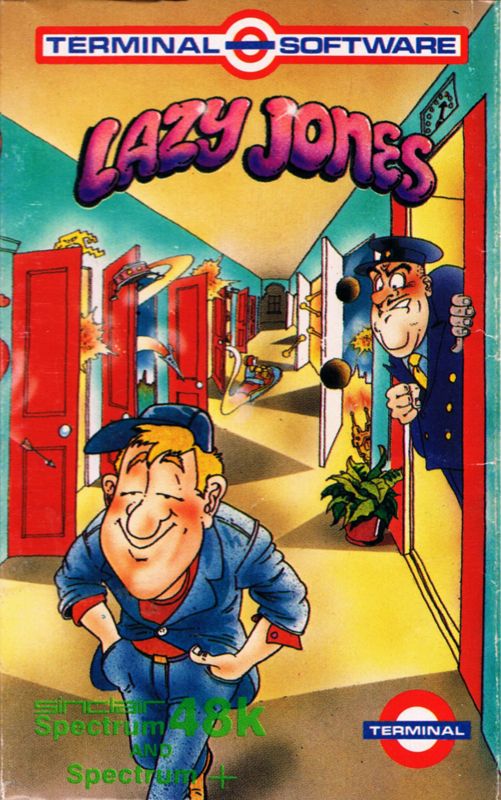
Lazy Jones centers on a deceptively simple yet endlessly engaging loop: you control a carefree janitor who sneaks into back rooms of a hotel to play miniature arcade titles. Movement is handled with a classic four-way control scheme, allowing you to navigate floors, hallways, and various themed rooms. The core challenge lies in timing—slip into a room, play the mini-game, then dash out before the patrolling security guards spot you.
(HEY YOU!! We hope you enjoy! We try not to run ads. So basically, this is a very expensive hobby running this site. Please consider joining us for updates, forums, and more. Network w/ us to make some cash or friends while retro gaming, and you can win some free retro games for posting. Okay, carry on 👍)
Within the hotel there are 18 distinct rooms, each representing a different mini-experience. Fifteen of these are genuine in-game challenges inspired by early arcade and computer classics—ranging from dodging rolling barrels to collecting parts in a cluttered storeroom. Three rooms serve other functions: one lets you grab a drink from a bartender while avoiding a drunken patron, another offers access to a safe puzzle, and the third is a simple “rest” area with no interactive gameplay. This variety keeps each session fresh.
What really marks Lazy Jones’ gameplay is its balance of risk and reward. You accumulate points by beating high scores in the mini-games, but you also rack up penalties if the guards catch you loitering too long. Some rooms let you earn extra lives or bonus shields that can be tactically used to extend your spree. The tension of “one more room” urges you back for just one more run, making the title highly addictive.
Even though these mini-games are rooted in extremely basic mechanics by modern standards, they’re cleverly designed to be bite-sized yet challenging. You’ll find yourself mastering reflexes in one room, steadying aim in another, and timing jumps perfectly elsewhere. The rapid switching between these micro-genres keeps the overall experience vibrant, despite the game’s minimal interface.
Graphics
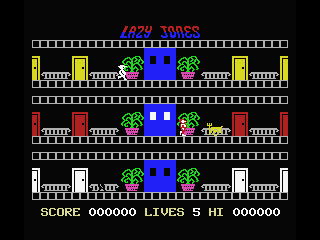
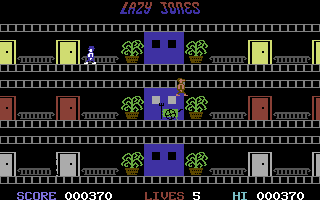
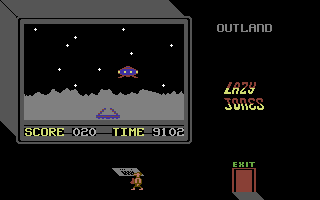
As a product of the 1980s, Lazy Jones sports a charmingly retro pixel aesthetic that’s bursting with character. Each room uses a limited palette, but clever sprite design ensures that every element is instantly recognizable: the bartender’s swaying silhouette, the janitor’s mop upon his shoulder, and the menacing security guard patrols. Though simple, the visuals convey all the vital information at a glance.
The overhead view of the hotel lobby and corridors is clean and uncluttered, allowing you to focus on sneaking around without visual noise getting in the way. The mini-game screens switch to side-view or top-down perspectives accordingly, showcasing a surprising amount of detail given the era’s technical constraints. Animations are short but effective—guards tilt their heads when surprised, and your character gives a little dance when picking up points.
Color choices lean heavily on high contrast to distinguish interactive objects from background tiles. This choice not only evokes nostalgia for users familiar with Commodore 64 titles but also aids readability on modern displays. While you won’t find high-definition textures or dynamic lighting here, the minimalist charm is part of its enduring appeal.
Moreover, the consistent art style from room to room weaves a coherent world despite the disparate mechanics. Whether you’re spilling drinks in the bar or evading barrels in a mine-shaft mini-game, the visual continuity keeps you immersed in Lazy Jones’ quirky universe.
Story
At its heart, Lazy Jones tells the tongue-in-cheek tale of a hotel janitor whose true passion lies in gaming rather than sweeping floors. There’s no deep narrative arc—rather, the game embraces its premise with tongue firmly in cheek. You infiltrate private rooms under the cover of your uniform, all in pursuit of pixelated glory and high-score bragging rights.
The minimal story structure serves a practical purpose: it sets up a believable reason for the protagonist’s ventures without bogging the player down with cutscenes or dialogue. The only narrative cues come from the hotel’s signage, guard patrols, and the occasional bartender’s grumble. It’s a refreshing change of pace from modern blockbusters that often sacrifice gameplay for exposition.
Within the small world of the hotel, a cast of background characters comes to life: the bartender leaning on his counter, the drunken patron lurching around, and the ever-watchful security guards. Though none of these figures carry personal backstories, their behavioral quirks add a comedic touch. You’re not saving princesses or galactic empires—just dodging authority to indulge in retro gaming.
This bare-bones approach to storytelling allows gamers to project their own narratives onto Jones’ nightly escapades. Are you a tired worker seeking a midnight diversion? A reckless rule-breaker on a quest for thrills? The story is what you make of it, keeping the focus squarely on gameplay and exploration.
Overall Experience
Playing Lazy Jones today feels like opening a time capsule of early home-computer culture. Its micro-game structure rewards quick thinking, while the cat-and-mouse dynamic with hotel security brings palpable tension. The learning curve is gentle, but true mastery demands memorization of guard patterns and precise timing in each mini-game.
For retro enthusiasts, Lazy Jones is a delightful nod to the roots of gaming, packed into a single package. Modern audiences may find its simplicity refreshing in an era dominated by sprawling open worlds. The short bursts of gameplay are perfect for filling brief breaks or challenging friends to beat your high score.
That said, players seeking deep narratives or cutting-edge visuals may find it too rudimentary. There are no motion-captured animations or orchestral soundtracks here, only chiptune melodies and basic sound effects. However, if you prize addictive gameplay loops and nostalgic charm over flashy production values, Lazy Jones delivers in spades.
In sum, Lazy Jones stands as a testament to the power of simple design executed with polish. Its blend of mini-games, stealth elements, and high-score chasing provides a uniquely engaging experience. Whether you’re a collector of retro titles or a newcomer curious about gaming’s origins, Lazy Jones is worth a place in your digital library.


Reviews
There are no reviews yet.