 Retro Replay Retro Replay gaming reviews, news, emulation, geek stuff and more!
Retro Replay Review
Gameplay
Magnetron builds on the solid foundation laid by Quazatron, offering a blend of action, puzzle-solving, and strategic resource management. As KLP-2, you navigate each space station to either overload or shut down the nuclear reactors by carefully transporting charged fuel rods. The core mechanic of balancing the rod’s weight and charge creates an engaging push-and-pull dynamic: carry too much weight and your movement and slope traversal slow to a crawl; mismanage charges and the station’s arrow-tiles will send you careening off-course or backtracking.
(HEY YOU!! We hope you enjoy! We try not to run ads. So basically, this is a very expensive hobby running this site. Please consider joining us for updates, forums, and more. Network w/ us to make some cash or friends while retro gaming, and you can win some free retro games for posting. Okay, carry on 👍)
Combat encounters further enrich the gameplay loop. Enemies, each marked with a unique rank and droid number, patrol corridors with varying weaponry and AI behaviors. Entering grapple mode by standing still and holding the fire button initiates a tense minigame that recalls Paradroid’s iconic personality transfer system. You’re presented with a 9×9 symbol grid, and must swiftly rearrange rows to disarm the enemy or fully commandeer their chassis — a rewarding risk-versus-reward gamble that keeps every skirmish fresh.
The final step in each station involves a reactor puzzle. When you approach a reactor, you can insert or remove a single rod, adjusting the net charge to trigger overload (for destruction) or deep negative buildup (for shutdown). Coordinating four reactors in succession tests not only your puzzle-solving acumen but also your route-planning and time management. Every decision—whether to pick up an extra rod or backtrack for a recharge—carries weight, making each level feel like a carefully orchestrated heist.
Graphics
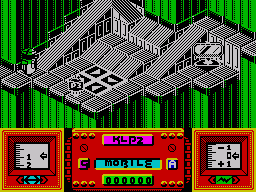
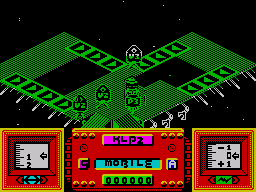
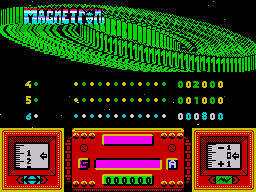
Visually, Magnetron embraces a retro-futuristic aesthetic that evokes the golden age of 8-bit systems while incorporating cleaner animations and more detailed sprites. The stations are rendered with crisp isometric perspective, giving depth to corridors, reactors, and control rooms. Subtle color palettes distinguish different areas: icy blues and grays for the reactor cores, warm oranges for administrative sectors, and neon highlights for hazard zones.
Character and enemy designs are equally distinct. KLP-2’s angular robot frame is easy to spot against textured floors, and each enemy droid variant features unique armor plating, color bands, and weapon attachments. When you enter grapple mode, the animation of circuitry flickering on screen and the subsequent grid overlay feels both nostalgic and modern, thanks to smooth transitions and satisfying sound cues.
While Magnetron doesn’t push the boundaries of contemporary graphics, it thrives on clarity and style. Every tile type—be it an arrow panel, conveyor belt, or computer terminal—has a readable icon, ensuring that split-second decisions aren’t hampered by visual confusion. The occasional particle effects, such as reactor bursts or weapon impacts, accentuate the action without overwhelming the screen.
Story
Magnetron’s narrative is concise and mission-driven. You play as KLP-2, a robotic operative tasked with dismantling a network of malfunctioning or hostile space stations orbiting planet Quartech. While the premise is straightforward—destroy or disable reactors in four successive stations—the sparse storytelling leaves room for interpretation, creating an atmosphere of isolation and high stakes.
Throughout the stations, computer terminals relay cryptic logs, maintenance logs, and intercepted communications that hint at corporate sabotage and rogue AI experiments. These snippets flesh out a universe where human engineers have long departed, leaving behind layers of bureaucracy, hidden agendas, and a creeping sense of dread. The lore isn’t forced but rather discovered, rewarding players who explore side corridors and endure tougher enemy zones.
By the time you reach the final station’s control hub, the story reaches a tense climax. Reactor doors grind open under emergency lockdown, alarms pulse, and you sense that every second now carries the weight of planetary security. The minimalist narrative approach allows Magnetron’s gameplay to tell its own story—of precision, adaptability, and the relentless march of automation gone awry.
Overall Experience
Magnetron offers a tightly woven package that balances action, puzzle elements, and strategic planning. Early levels act as a gentle tutorial, introducing weight-and-charge puzzles alongside basic combat. As you progress, station layouts grow more complex: slopes, conveyor belts, and one-way passages force you to optimize your path, while tougher enemy droids compel you to decide between stealthy avoidance and high-stakes grappling.
The learning curve is well-judged. Magnetron rewards experimentation—sometimes a heavier rod can be carried if you exploit an arrow-tile path, or mastering the grapple minigame can turn a formidable foe into a traveling weapons cache. There’s a genuine sense of accomplishment when you flawlessly shut down all four reactors and watch the lights dim, knowing you’ve mastered both movement and circuitry puzzles under pressure.
Ultimately, Magnetron is more than a nostalgia trip; it’s a testament to how classic game design principles can still shine. Whether you’re drawn in by its retro presentation, its clever fusion of mechanics, or its brisk pacing, Magnetron stands out as an engaging, replayable title. For players seeking a mix of cerebral puzzles and action-packed robot combat, this space-station romp delivers on all cylinders.


Reviews
There are no reviews yet.