 Retro Replay Retro Replay gaming reviews, news, emulation, geek stuff and more!
Retro Replay Review
Gameplay
Nodes of Yesod delivers a classic arcade-adventure experience rooted in exploration and platforming challenges. Players assume the role of Charlemagne Fotheringham-Grunes (Charlie), navigating a sprawling network of lunar caverns in search of eight mystical keys known as alchiems. The core mechanics revolve around precise jumping, timing, and the strategic use of two primary devices: the mole and the burrowing chum.
(HEY YOU!! We hope you enjoy! We try not to run ads. So basically, this is a very expensive hobby running this site. Please consider joining us for updates, forums, and more. Network w/ us to make some cash or friends while retro gaming, and you can win some free retro games for posting. Okay, carry on 👍)
The mole device introduces a unique layer of depth to the side-scrolling action. After discovering the mole, Charlie can pause by pressing up on the joystick and remotely control this versatile robot to attack certain enemies. This creates moments of tactical decision-making as players weigh the risks of sending the mole into hazardous areas or keeping Charlie on the move. Since not all foes are vulnerable to the mole’s assault, quick thinking and adaptability become essential skills.
Complementing the mole is the burrowing chum, a handy tool that allows Charlie to dig through select walls and uncover hidden pathways. This mechanic encourages careful observation of the environment, rewarding curious players who probe every corner of the caverns. Encountering a red spaceman brings an element of tension, as contact with this roaming adversary causes Charlie to lose one of his hard-earned keys, raising the stakes for both exploration and survival.
Graphics
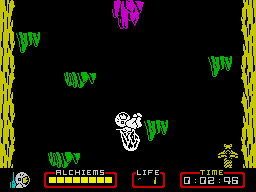
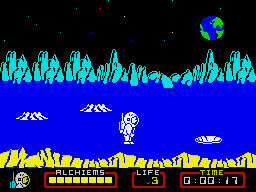
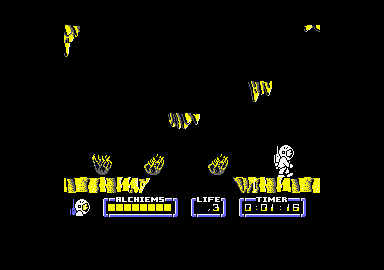
Visually, Nodes of Yesod captures the charm of 8-bit home computer graphics, with crisp, colorful sprites that stand out against the darker tones of the lunar caverns. The game’s palette is economical but effective, using contrasting shades to define platforms, hazards, and interactive objects. Character animations are simple yet expressive—Charlie’s jumps and the mole’s movements feel responsive and clear.
The level designs evoke a sense of depth despite the hardware limitations, with multi-layered backgrounds hinting at greater vastness beyond the immediate playfield. Subtle parallax scrolling enhances the illusion of a three-dimensional moon environment, while the monolith’s imposing silhouette looms as a constant reminder of the ultimate objective. Decorative details such as rocky outcrops, crystalline formations, and stray alien flora lend each cavern a distinctive atmosphere.
While modern standards might view the visuals as rudimentary, Nodes of Yesod’s aesthetic has a timeless appeal. The graphical style not only supports gameplay clarity—players can quickly discern platforms and hazards—but also fosters an immersive retro mood. Fans of vintage gaming will appreciate the authenticity of these visuals, which remain evocative decades after the original release.
Story
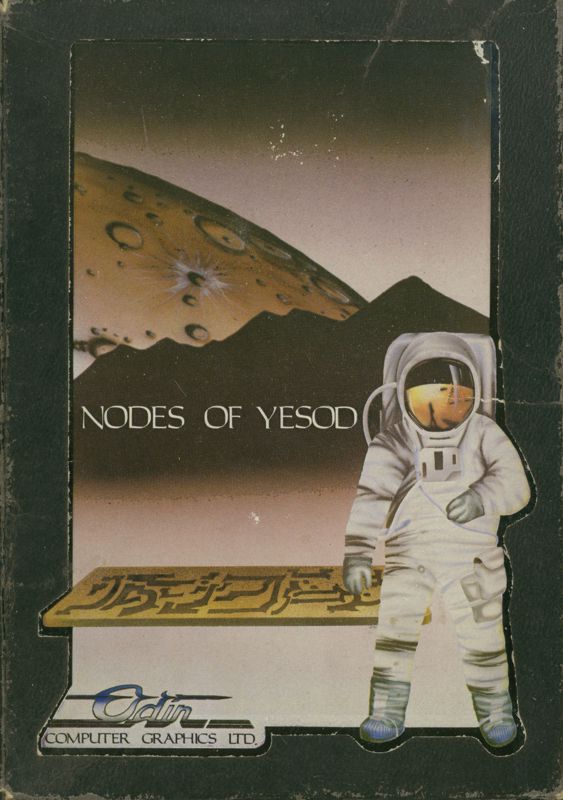
The narrative premise of Nodes of Yesod is delightfully straightforward: strange signals emanate from the moon, prompting I.C.U.P.S.—the International Commission for Universal Problem Solving—to dispatch their best agent, Charlie, to investigate. Upon arrival, Charlie discovers that the source of the signals is a mysterious monolith, and his mission becomes clear: destroy the artifact before its power can threaten Earth.
Though the storyline is minimal, it provides just enough context to motivate the player’s actions and frame the game’s objectives. Each recovered key brings Charlie one step closer to the monolith, tying the exploration-driven gameplay to a tangible narrative goal. Brief text excerpts between levels underscore Charlie’s progress and fuel anticipation for the final confrontation.
Nodes of Yesod excels in weaving its plot seamlessly into the mechanics, allowing the adventure to unfold organically. The mystery of the monolith and the sparse yet intriguing backstory of the lunar caverns invite players to fill in the gaps with their own imaginations. This streamlined storytelling approach ensures that narrative never overshadows the game’s primary draw: exciting, methodical exploration.
Overall Experience
Nodes of Yesod stands as a shining example of early arcade-adventure design, combining tight controls, inventive gadgets, and an engaging sense of discovery. The balance between platforming skill and puzzle-solving keeps the pacing fresh, while the risk of losing keys to the red spaceman adds a satisfying tension to each play session. For gamers who relish methodical exploration, this title offers a rewarding challenge.
The game’s difficulty curve feels fair, though newcomers to the genre may encounter a learning period as they master the mole’s controls and identify diggable walls. Once these mechanics click, however, the pull of uncovering every hidden alcove becomes irresistible. Replay value is high, as players can strive to beat their best times, dust off missed secrets, or simply revel in the retro charm.
Ultimately, Nodes of Yesod delivers an experience that remains engaging more than three decades after its debut. Its blend of exploration, resource management, and classic platforming makes it a must-play for enthusiasts of vintage gaming or anyone seeking a deep, atmospheric adventure on the lunar surface. Whether you’re in it for the challenge or the nostalgia, Charlie’s mission to destroy the monolith is one you won’t soon forget.


Reviews
There are no reviews yet.