 Retro Replay Retro Replay gaming reviews, news, emulation, geek stuff and more!


Retro Replay Review
Gameplay
Prodigy delivers a unique blend of action and caretaking that sets it apart from other isometric adventures. You take on the role of Solo the Synthelman, whose primary objective is to shepherd Nejo, a vulnerable childlike humanoid, through four distinct worlds. This dual-focus dynamic—balancing offensive maneuvers against hordes of mechanical nasties and ensuring Nejo’s well-being—creates a compelling risk-and-reward loop that keeps you on your toes.
(HEY YOU!! We hope you enjoy! We try not to run ads. So basically, this is a very expensive hobby running this site. Please consider joining us for updates, forums, and more. Network w/ us to make some cash or friends while retro gaming, and you can win some free retro games for posting. Okay, carry on 👍)
Each world introduces its own environmental mechanics and hazards. In the Ice Zone, you’ll find oxygen bubbles floating through the frigid air; let Nejo go too long without popping these, and he’ll start suffocating. The VegieZone demands constant attention to Nejo’s hunger meter, while the Tech Zone tests your reflexes with conveyor belts and laser gates. Finally, the Fire Zone’s heat vents and flame turrets will punish any lapse in concentration. Teleports link each zone, but they also serve as choke points packed with foes eager to snatch Nejo away.
The controls are responsive and intuitive, allowing you to dash, jump, and fire Solo’s energy weapon with minimal fuss. What elevates the experience, however, is the need to switch between offense and caretaking on the fly. You might be blasting a mechanical spider one moment and rushing Nejo to a shower station the next, all while keeping an eye on the teleport countdown timer. It’s a juggling act that feels remarkably fresh, even by today’s standards.
Boss encounters punctuate each zone, forcing you to exploit both your fighting skills and Nejo’s temporary power-ups. These showdowns emphasize the game’s central tension: can you protect Nejo under fire, or will you be forced to start the entire zone over? Victory brings a profound sense of accomplishment, and for many players, these battles are the highlights of Prodigy’s engaging gameplay loop.
Graphics
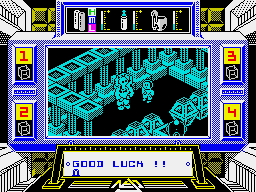
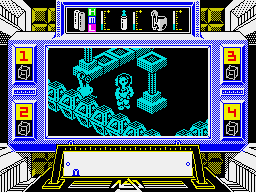
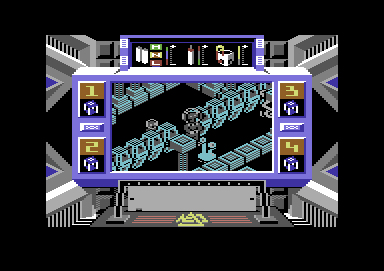
Prodigy’s isometric perspective stands out for its smooth, continuous scrolling—a rarity among its contemporaries. Instead of the jerky, tile-by-tile shifts common in other games, the camera glides fluidly as you navigate each world, lending a cinematic quality to exploration and combat. This seamless movement makes it easier to track both Solo and Nejo, reducing the frustration that often comes with poor camera work in isometric titles.
The art style embraces a vibrant, neon-tinged palette that complements the game’s mechanical settings. In the Ice Zone, frosty blues and whites dominate, punctuated by the occasional red heat lamp; VegieZone bursts with succulent greens and earthy browns; Tech Zone is awash in metallic grays and flickering orange lights; while the Fire Zone sizzles with deep reds and blazing yellows. This color-coding helps you quickly adapt to each environment’s unique demands.
Despite the relatively limited hardware of its era, Prodigy features detailed sprite work and fluid animations. Solo’s movements are crisp, and his laser blasts leave satisfying trails of light. Nejo’s expressive animations—shivering in the cold, rubbing his belly when hungry, or giggling under the shower spray—bring an unexpected charm to the proceedings. Enemy designs vary widely, from scuttling gear-driven spiders to hulking mech-brutes, keeping visual interest high throughout your playthrough.
Background details, such as steam vents hissing in the Ice Zone or the flicker of malfunctioning consoles in the Tech Zone, enrich each setting. While there are occasional moments of sprite-popping when too many enemies clutter the screen, these instances are rare and do little to detract from the overall presentation. In every respect, Prodigy’s graphics serve the gameplay, creating an immersive world you’ll want to revisit.
Story
At its core, Prodigy spins a simple yet effective yarn of rebellion and rescue. The tyrannical Wardlock, master of a sprawling mechanical realm, has engineered two humanoids—Solo and Nejo—for his own twisted amusement. When Nejo’s naïve wonder turns to terror, Solo rebels, determined to guide the child out of this contraption-laden nightmare. It’s a classic underdog tale, framed within a high-stakes sci-fi setting.
Story beats unfold primarily through brief cutscenes and environmental storytelling. A shattered control panel here, a deactivated robot hulk there—each clue hints at Wardlock’s insidious experiments. Though dialogue is minimal, the bond between Solo and Nejo resonates strongly. You’ll find yourself rushing back to Nejo’s side after every skirmish, spurred on by genuine concern for his safety. This emotional undercurrent elevates Prodigy beyond a mere action game.
World-specific lore is scattered throughout each zone in the form of data logs and graffiti-like wall scrawls. Deciphering these messages reveals Wardlock’s escalating desperation to maintain control, as well as hints at Solo’s mysterious origins. Players inclined to explore every nook and cranny will be rewarded with pieces of the larger narrative puzzle, making each replay feel more rewarding.
While Prodigy doesn’t burden you with lengthy cutscenes or exposition dumps, its lean storytelling is a strength rather than a weakness. The game trusts you to piece together the stakes and motivations, fostering a deeper engagement with the world. By the time you confront Wardlock himself, the stakes feel genuinely personal, and the narrative payoff is well worth the journey.
Overall Experience
Prodigy strikes a rare balance between challenge and accessibility. Early levels ease you into the dual responsibilities of combat and caretaking, but by the time you reach the Fire Zone, every decision matters. Resource management—oxygen bubbles, food pickups, shower stations—becomes as crucial as ammo reserves and health packs. This multidimensional gameplay ensures that no two runs feel exactly alike.
The learning curve is firm but fair. Newcomers may struggle initially with the camera’s isometric angle or the urgency of babysitting Nejo under enemy fire. However, frequent checkpointing and generous teleport thresholds prevent frustration from boiling over. Players willing to invest the time will find that each world’s unique mechanics provide fresh hurdles and keep the overall experience from becoming repetitive.
Sound design and music further enhance immersion. A pulsing synth soundtrack adapts to each zone’s atmosphere, while crisp sound effects—mechanical whirs, energy blasts, and Nejo’s delighted giggles—punctuate the action. Audio cues also serve gameplay purposes, warning you of incoming threats or alerting you when Nejo needs attention.
Ultimately, Prodigy is a hidden gem for fans of isometric action-adventures. Its inventive gameplay loop, charming graphics, and lean but effective storytelling combine into an experience that’s both challenging and rewarding. Whether you’re a retro enthusiast or simply looking for a fresh take on rescue missions, Prodigy offers an unforgettable journey through four perilous zones and a mechanical world you’ll be eager to escape with Nejo in tow.



Reviews
There are no reviews yet.