 Retro Replay Retro Replay gaming reviews, news, emulation, geek stuff and more!



Retro Replay Review
Gameplay
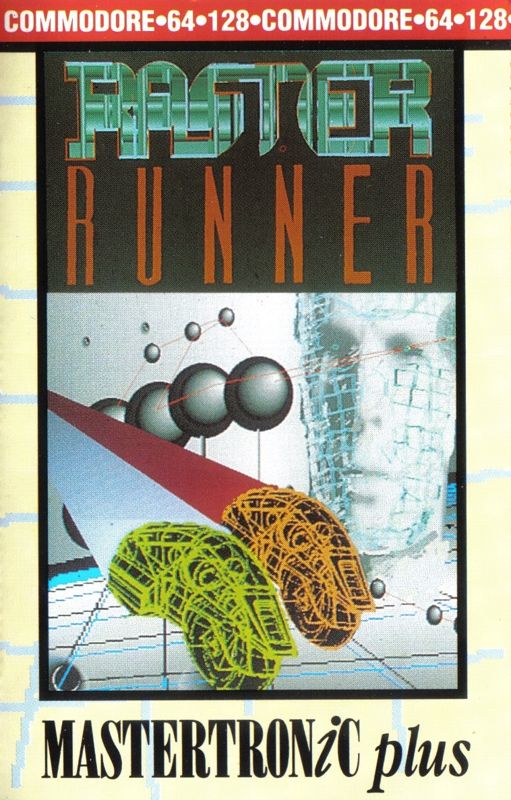
Raster Runner’s core gameplay loop is immediately gripping. From the very first match, you’ll notice the simple yet razor-sharp objective: outmaneuver your opponent by drawing an energy trail behind your bike, then box them in until they have nowhere left to go. Each collision with a trail or arena boundary costs a life, so every high-speed turn feels laden with tension. The inclusion of a three-charge force field adds a layer of tactical depth—knowing when to deploy it can turn the tide in a close duel.
(HEY YOU!! We hope you enjoy! We try not to run ads. So basically, this is a very expensive hobby running this site. Please consider joining us for updates, forums, and more. Network w/ us to make some cash or friends while retro gaming, and you can win some free retro games for posting. Okay, carry on 👍)
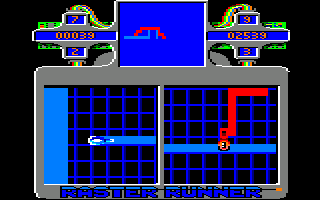
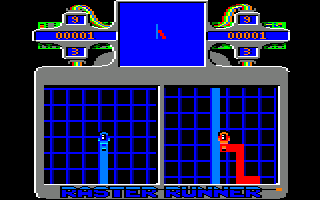
Matches unfold on a neon-lit arena viewed from a top-down perspective, with a small overview map positioned at the corner of your screen. This mini-map is more than just a convenience; it’s a lifeline, especially when multiple trails crisscross the field in the late stages of a fight. Skilled players will constantly glance between their bike and the map, plotting out trap formations or escape routes. The learning curve is shallow enough for beginners to feel welcome, yet the interplay of positioning and resource management keeps veterans coming back.
The developers have also introduced subtle variations in arena design and bike handling. Some levels feature tighter corridors that reward precision, while others have open expanses where raw speed and bait-and-switch tactics dominate. Bike responsiveness feels spot-on—turning sharply or skimming past your opponent’s trail requires split-second timing. Plus, local and online multiplayer modes ensure that every match is a fresh test of reflexes and strategy.
Graphics
Visually, Raster Runner delivers a sleek, cyber-futuristic aesthetic. The arenas glow with pulsating neon grids, and the energy trails left by your bike crackle with vibrant colors. While the style is minimalist, the contrast between the dark backdrop and the bright trails ensures clarity even when the screen gets chaotic. This art direction not only looks striking but also aids gameplay, as it’s crystal-clear when and where you or your opponent have drawn a line.
Particle effects for force-field activations and crashes provide satisfying feedback. When you deploy a shield, a shimmering dome envelops your bike for a fraction of a second, projecting a distorted, refractive glow. If you do crash, the ensuing explosion of light properly conveys the stakes of a failed maneuver. These visual flourishes elevate the tension without overloading the senses.
The user interface is clean and unobtrusive. Lives remaining, force-field charges, and the overview map are arranged neatly around the periphery, allowing the action center stage. Animations are fluid, and the frame rate remains consistent even in the most frantic moments. Overall, Raster Runner’s graphics strike a fine balance between stylish presentation and functional clarity.
Story
While Raster Runner is primarily a competitive arcade experience, it provides enough narrative context to keep players invested. Set in a sleek, dystopian future, the game positions you as a contender in an underground sport where rival cyclists wager reputation and wealth. Brief cutscenes bookend tournament matches, offering glimpses of rivalries, alliances, and the stakes at play in this neon-soaked subculture.
Character profiles—unlocked as you progress—shed light on the backgrounds and motivations of various challengers. You’ll meet former corporate enforcers, rogue hackers, and prodigy prodigals, each bringing their own flair to the arena. Although the story elements are optional, they enrich the competitive loop by giving faces and narratives to the names on the leaderboard.
For players who crave more narrative depth, Raster Runner offers a light campaign mode. Here, a series of one-on-one showdowns and survival trials gradually raises the tension, culminating in a final showdown against the reigning champion. While not as sprawling as a single-player RPG, this structure adds meaningful progression beyond simply increasing difficulty.
Overall Experience
Raster Runner excels at delivering high-octane, bite-sized matches that are easy to pick up and hard to put down. Its blend of straightforward mechanics with strategic nuance makes for a compelling arena battler. Whether you’re squaring off against friends on your couch or seeking out global rivals online, every game feels like an intellectual duel cloaked in a blur of neon light.
The balance between risk and reward—managing force-field charges, reading the mini-map, and setting up traps—ensures that outcomes are never predetermined. Even in replay sessions, the variable arena layouts and diverse opponent AI keep matches fresh. Moreover, the game’s audiovisual polish enhances immersion without detracting from the precise control needed to master those split-second decisions.
In sum, Raster Runner is a masterclass in competitive arcade design. Its polished graphics, tight controls, and layered gameplay systems combine to form an experience that’s both instantly thrilling and endlessly replayable. If you’re looking for a futuristic two-player showdown that rewards both reflexes and cunning, Raster Runner should be near the top of your wishlist.


Reviews
There are no reviews yet.