 Retro Replay Retro Replay gaming reviews, news, emulation, geek stuff and more!
Retro Replay Review
Gameplay
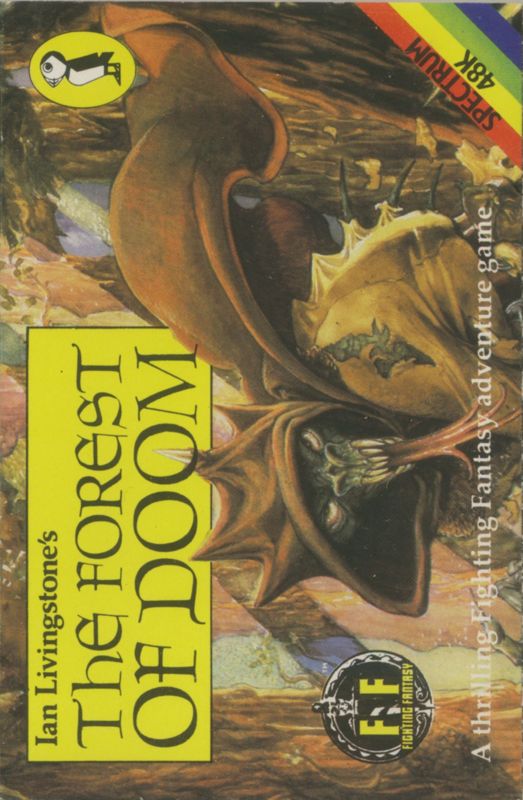
The Forest of Doom faithfully recreates the classic Fighting Fantasy experience by delivering a branching, choice-driven adventure straight from Ian Livingstone’s gamebook #3. You begin your journey after a chance encounter with Bigleg, a dying dwarf, who urges you to seek out the wizard Yaztromo. From there, you navigate multiple-choice narrative paths through the perilous Darkwood Forest in search of the lost Dwarfish Runes of the Ancients. Each decision point on the endless scroll of text can lead to treasure, traps, or deadly combat.
(HEY YOU!! We hope you enjoy! We try not to run ads. So basically, this is a very expensive hobby running this site. Please consider joining us for updates, forums, and more. Network w/ us to make some cash or friends while retro gaming, and you can win some free retro games for posting. Okay, carry on 👍)
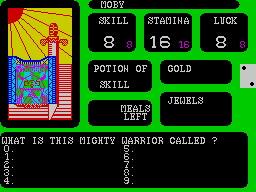
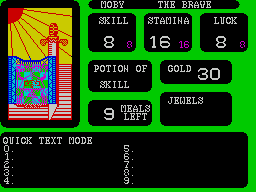
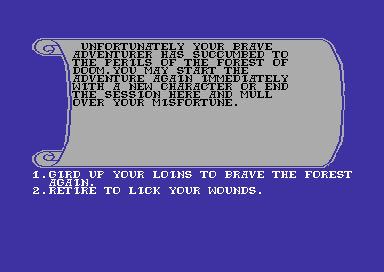
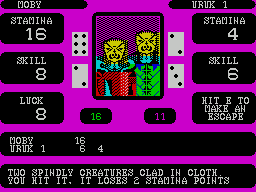
Under the hood, the game automates all the die‐rolling mechanics you’d normally handle in tabletop sessions. Character generation and tracking of combat statistics, inventory management, and meal rations are handled seamlessly by the interface. You start equipped with a trusty sword and a backpack stocked with nine meals—critical resources as you face hill trolls, giant spiders, and other woodland terrors. Combat encounters resolve instantly with clear feedback on hits, damage, and victory or defeat.
The pacing strikes a balance between strategic resource management and fast‐paced decision making. Every choice, from whether to explore a ruined chapel to how you allocate your scarce food supplies, carries weight. While some paths loop back or end abruptly, the constant threat of hunger or injury keeps tension high. Replayability is strong for players who relish multiple runs to uncover hidden routes and secret encounters.
Graphics
Graphically, The Forest of Doom leans heavily on atmospheric text and minimalist illustrations rather than full‐blown 3D environments. The UI presents an endless scroll of narrative text punctuated by occasional still artwork—detailed line drawings that evoke the original Fighting Fantasy book’s imagery. These vignettes appear at key moments, heightening the drama of finding a rune or facing a hill troll in a moonlit glade.
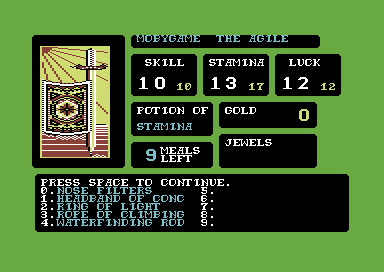
The user interface is clean and functional, with readable fonts and clear labels for your statistics and inventory. A simple status panel shows your Skill, Stamina, and Luck values, as well as the meals remaining in your backpack. Combat text flashes in a highlighted box, ensuring you never miss the result of an axe swing or a greedy roll of the dice.
While some modern gamers may find the lack of animated sequences or elaborate sound effects outdated, the retro presentation carries its own charm. The sparse visuals leave more room for your imagination, recalling the feel of thumb-worn gamebooks and turning each illustrated scene into a mental movie. It’s a deliberate stylistic choice that complements the old‐school gameplay rather than detracting from it.
Story
The narrative hook in The Forest of Doom is classic high fantasy: Stonebridge’s mayor, Gillibran, implores you to recover the ancestral runes needed to protect the town from marauding hill trolls. Your quest begins when Bigleg, a dying dwarf you meet on a roadside, greets you with his dying breath and points you toward wizard Yaztromo’s tower. In his cluttered workshop, Yaztromo outfits you with magical trinkets to aid your perilous journey.
From there, the story branches through dozens of scenes in Darkwood Forest: you can choose to investigate a ruined watchtower, rescue a kidnapped shepherd, or stealthily bypass troll camps. Each location feels distinct, with narrative flourishes that hint at ancient mysteries buried beneath gnarled oak roots. The dialogue is concise but evocative, conjuring vivid encounters in a few well-chosen sentences rather than lengthy cutscenes.
Although the overarching quest is straightforward—recover eight runes and return them to Gillibran—the multiple endings and hidden paths add depth. You might find yourself allying with a reclusive elf, stumbling into an underground dwarven city, or facing moral dilemmas when pitying a starving troll. For fans of choose-your-own-adventure storytelling, the twists and surprises make each playthrough feel fresh.
Overall Experience
The Forest of Doom offers a nostalgic trip for longtime Fighting Fantasy fans and an accessible introduction for newcomers to interactive fiction. Its clear, text-driven interface and automated RPG mechanics remove the barrier of manual die rolls and bookkeeping, allowing players to focus on exploration and decision making. The blend of resource management, chance, and narrative consequence delivers a satisfying sense of discovery and danger.
While the simplicity of graphics and reliance on text may not appeal to those seeking flashy visuals or real-time action, the game’s strengths lie in its faithful adaptation of Ian Livingstone’s source material. The story’s pacing, combined with strategic use of limited rations and spells, creates a tense, engaging loop that encourages repeated runs to uncover every secret route and alternate outcome.
For anyone intrigued by classic gamebook adventures or looking for a lightweight RPG experience on a modern device, The Forest of Doom is well worth exploring. Its balance of choice, challenge, and old-school charm makes it an enduring title in the interactive fiction genre—one that invites you back into Darkwood Forest time and again to test your wits against trolls, traps, and ancient dwarven mysteries.



Reviews
There are no reviews yet.